
The SilverSneakers Way of Coaching helps shape the culture of your class. Effective coaching improves understanding, supports motivation, and reinforces proper form and alignment while building meaningful connections with participants.
As an instructor, you begin by planning what you will teach and how you will teach it. As you move from general instruction to individual adaptation, you can layer in more specific cues, feedback, and encouragement.
Your tone, language, and presence all contribute to creating a positive, supportive, and engaging class experience.
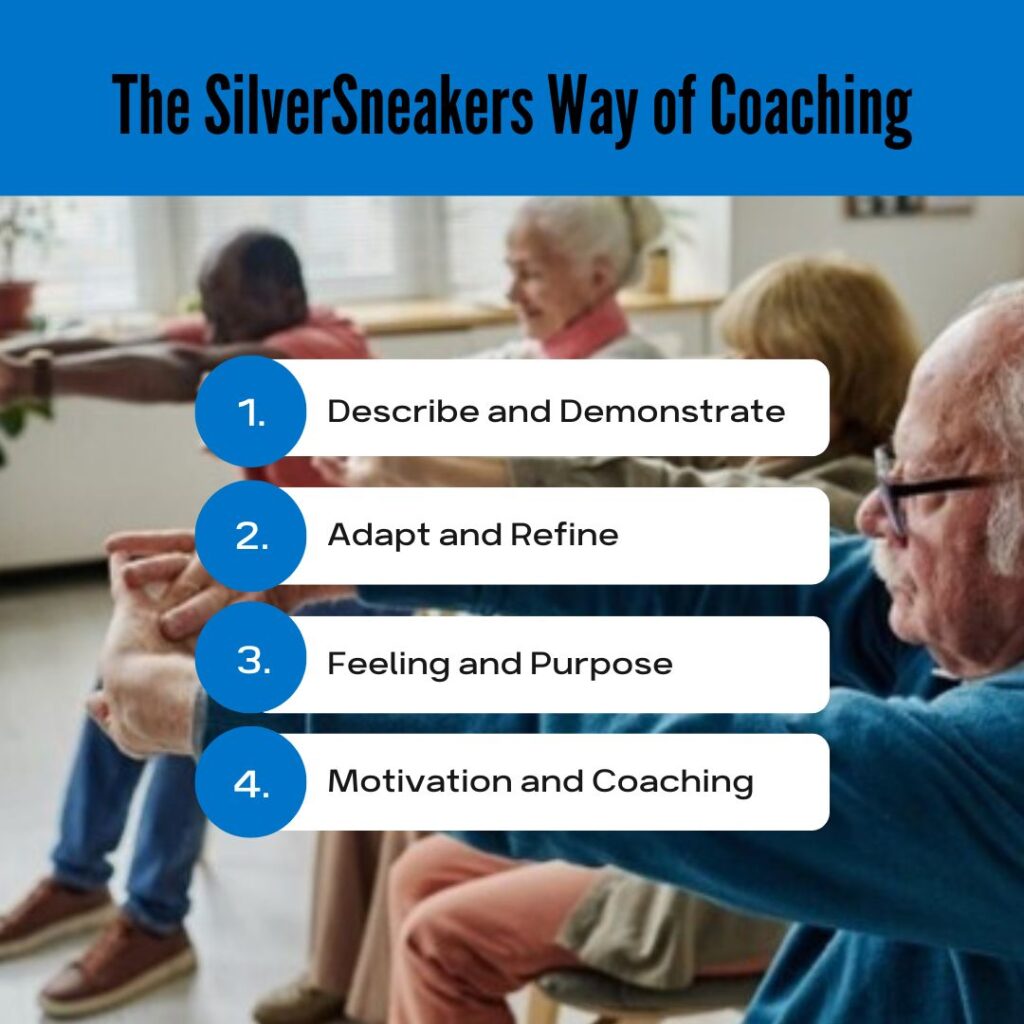
Describe and Demonstrate
Begin by naming the exercise and providing one to three clear cues that support safe and effective movement.
Example for a sit-to-stand:
- “Move forward toward the front of your chair and prepare to stand.”
- “Place your feet about hip-distance apart and hinge forward from your hips.”
- “Press your feet into the floor and engage your gluteal muscles.”
- “You may remain seated with muscle engagement or stand if you feel comfortable.”
- “If you are standing, return to a seated position with control.”
Use simple and direct language to support understanding and confidence.
Adapt and Refine
Provide options to support different ability levels and needs.
- Offer progressions and regressions
- Encourage movement within a comfortable range
- Reinforce proper alignment and posture
Example cues:
- “Maintain an upright posture and keep your chest lifted.”
- “Move within a comfortable and pain-free range.”
- “You are doing a great job. Stay strong and steady.”
You may also adjust your communication style by simplifying instructions or repeating cues to support participants who benefit from additional clarity.
Feeling and Purpose
Help participants understand how the movement should feel and why it matters.
- Use cues that describe muscle engagement and body awareness
- Connect movements to activities of daily living
Example cues:
- “Feel the muscles in your legs working as you press into the floor.”
- “This movement helps support standing up from a chair more easily.”
Motivation and Coaching
Create a positive and encouraging environment.
- Offer supportive and motivating feedback
- Encourage effort and progress
- Help participants feel successful
Example cues:
- “Just a few more repetitions.”
- “Your form looks strong and controlled.”
- “You are building strength with each movement.”
Simple encouragement, eye contact, and participant recognition can also support engagement and connection throughout class.