Warm-up and Range of Motion
This segment focuses on increasing circulation and preparing the body for movement. Dynamic range-of-motion exercises help reduce stiffness and prepare the joints for the Work segment.
How to Teach
- Begin by greeting participants and providing a brief overview of the class
- Encourage hydration before, during, and after class
- Use clear and simple communication to help participants feel comfortable and oriented
- Maintain a consistent class opening to support familiarity and confidence
You may follow the Master Class for the Warm-up and Range of Motion segment or design your own following this sequence: Lower Body, Upper Body, Core.
- Begin with larger joints such as hips and shoulders
- Progress to smaller joints such as neck, elbows, wrists, ankles, and fingers
- Cue in layers to encourage participants to start small and gradually increase range of motion
- Example: “Start with a small march. Lift your toes as high as comfortable. Now lift your knees a little higher.”
Instructor Tips
- Start at a slower pace and increase gradually as participants demonstrate control
- Use repetition and simple cueing to support understanding
- Incorporate light engagement such as counting together or using familiar movement patterns
- Prepare muscles used for sit-to-stand movements:
- Gluteal muscles, hips through gentle flexion and extension
- Knees through marching or bending movements
When to Transition to the Work Segment:
- Observe movement quality and ensure participants appear warm and ready
- Ask for feedback such as “Are you feeling warmed up and ready to continue?”
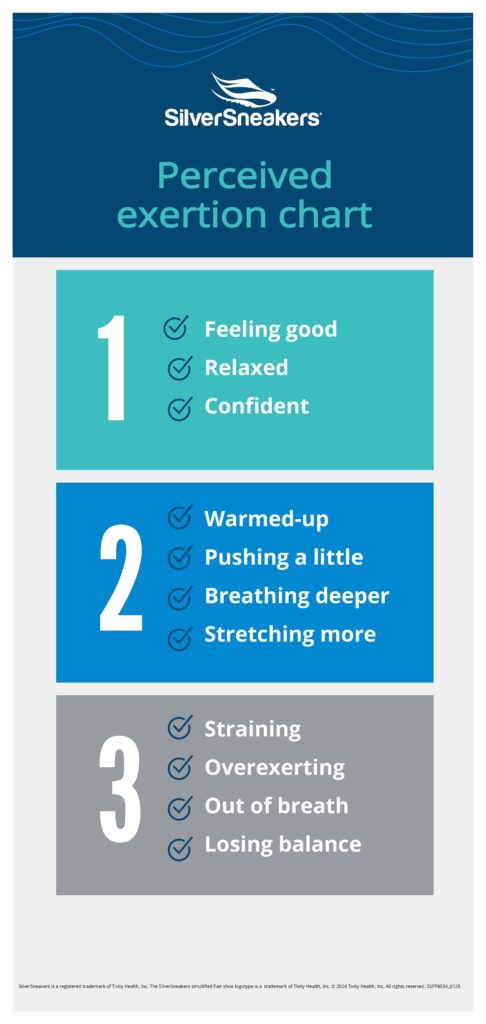
- Perform a perceived exertion check using a simple 1 to 3 scale