
The Spine Is Designed to Move
The spine allows the body to bend, extend, rotate, and move side to side. These motions support everyday activities like walking, reaching, turning, and lifting.
In your classes, safe spinal movement means encouraging controlled, intentional motion, not avoiding movement altogether. When participants move with awareness and support, they can maintain mobility and build confidence over time.
Balance Mobility and Stability
Efficient movement depends on the balance between mobility and stability.
Some muscles support the spine by providing control and alignment, while others allow movement through available range. In your classes, your goal is not to choose one over the other, but to help participants develop both.
Too much stiffness or too much uncontrolled movement can increase strain. Balanced movement supports comfort and efficiency.
A Simple Way to Think About It
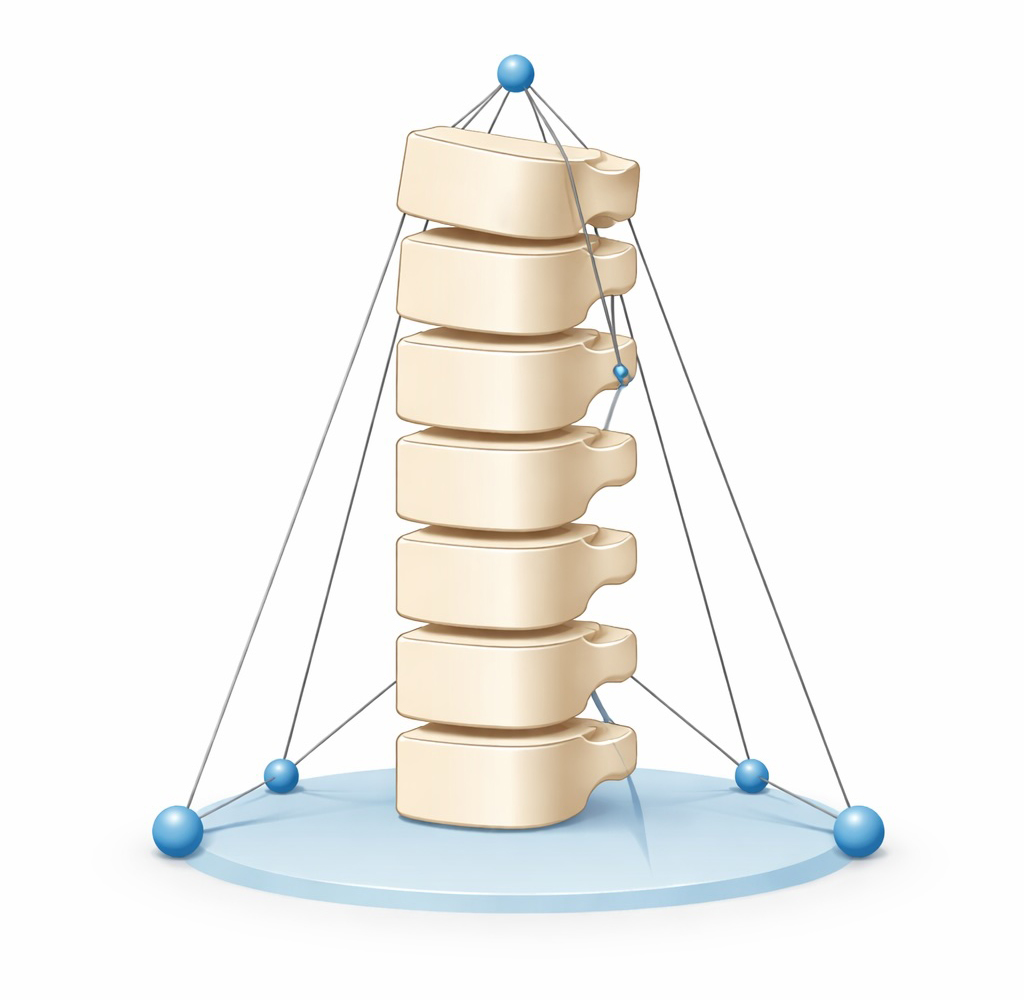
Think of the spine like a stack of building blocks supported by wires.
- The building blocks represent your bones and joints—they need to move and adapt
- The wires represent your muscles, they provide support and control
If the system is too loose, the structure becomes unstable.
If it’s too rigid, movement becomes limited and strained.
Your role is to help participants find the right balance, where movement is supported, not restricted.
Use Neutral Spine as a Guide
Neutral spine is a natural alignment that supports efficient movement. It is not a fixed position or something participants need to hold at all times.
You can use neutral spine as a reference point to:
- Improve body awareness
- Support alignment
- Reinforce control during movement
It’s normal and appropriate for the spine to move away from neutral during exercise, if that movement is controlled.
Posture Is Meant to Change
Posture is not static. It naturally adapts based on the movement being performed.
Rather than striving for perfect posture, help participants move with control and confidence as posture changes during exercise and daily activities. This approach can support comfort, balance, and function.
Movement Exists on a Spectrum
Each participant brings different abilities, experiences, and comfort levels to class.
What feels appropriate for one person may not feel the same for another. By offering options and encouraging self-awareness, you help participants find movement that works for them.
This approach supports confidence, consistency, and long-term participation.
When you approach the spine as a structure designed for movement, you shift from protecting movement to guiding it. This mindset helps you create inclusive classes that support mobility, strength, and independence.
In the next lesson, you’ll explore the anatomy of the spine and core. Understanding how the body is structured will help reinforce these principles and support your exercise programming decisions.