
General Principles for Modifications
When needed, adjust exercises to support comfort, control, and participation:
- Adjust Range of Motion (ROM): Shorten bending, twisting or reaching movements if discomfort occurs.
- Example: Add postural support to reduce ROM (e.g., ball behind the lower back when seated)
- Change the Base of Support: Widen stance, use a chair for seated or supported variations or allow wall support for balance.
- Example: Use a wider or staggered stance for standing strength exercises
- Adjust Intensity: Reduce resistance, slow tempo or lower repetitions to maintain controlled movement.
- Alternate Positions: Avoid prolonged sitting or standing to reduce stiffness.
- Example: Provide seated options for hinge-based or forward-leaning movements
Cueing for Safe and Effective Movement
Neutral Spine:
- “Imagine a string gently pulling the crown of your head up”
- “Keep your shoulders stacked over your hips”
- “Maintain your natural spinal curves”
Controlled Movement:
- “Move with control, like you’re in slow motion”
- “Exhale on effort, inhale as you return”
- “Focus on quality over quantity”
Instructor Tips:
- Demonstrate multiple options (standing, seated, supported)
- Coach regressions in lever length or ROM if alignment is compromised
- Use positive language: “Keep your spine lengthened” vs instruction: “Don’t arch”
Observation and Assessment in Class
Participants with back pain or stiffness may move differently, and careful observation is key to safety.
1. Common Altered Patterns:
- Compensation: Using hips, shoulders or arms to compensate for limited core/back strength
- Asymmetry: One side moving differently than the other (e.g., uneven stride)
- Limited ROM: Avoiding bending, twisting or reaching
- Guarded Movements: Stiff, hesitant or slow motions due to fear of pain
2. Signs of Fatigue or Breakdown:
- Slouching or rounded spine
- Uneven steps or reliance on support
- Holding breath during exertion
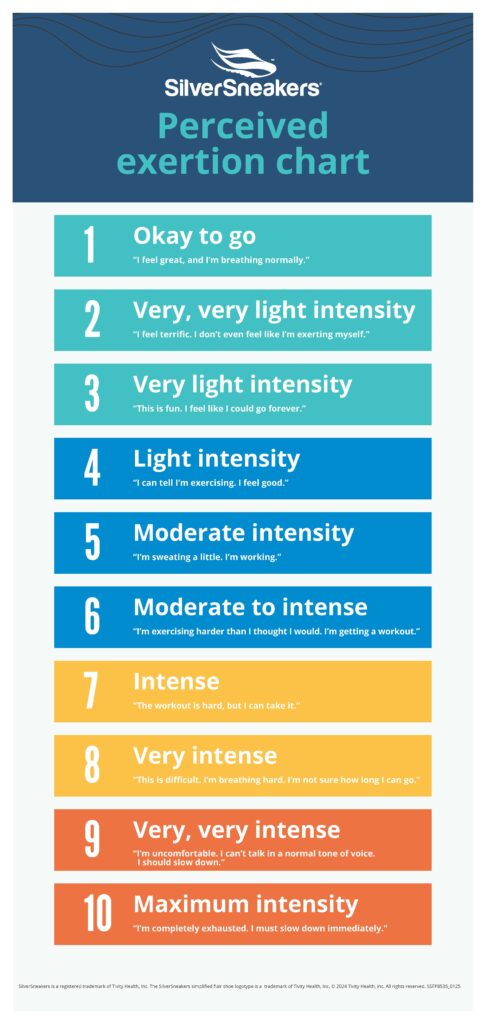
- Cue a minimum of three times for breathing, posture, hydration and perceived exertion.
3. Posture and Alignment Checks:
- Shoulders stacked over hips
- Neutral spine curves maintained
- Weight evenly distributed on both feet
4. Balance Awareness:
- Watch for wobbling, shuffling, or hesitation
- Encourage support use before fatigue leads to instability
5. Feedback and Communication:
- Verbal cues: “Lift your chest to lengthen your spine”
- Visual cues: Demonstrate correct alignment
- Imagery cues: “Reach the crown of your head toward the sky”
- Discussion: Ask about pain, comfort and perceived exertion; encourage honesty
6. Guiding Progression and Regression:
- If posture and control are strong → progress to longer holds, slightly increased ROM or light resistance
- If fatigue, altered movement or pain appear → regress to reduce ROM, use seated support or slow tempo
Lesson Takeaways:
- Modify movements by adjusting range, intensity, support, and positioning
- Cue neutral spine and controlled movement to promote safety and effectiveness
- Observe posture, balance and fatigue, using feedback to guide progression or regression
- Recognize participants pain or discomfort and encourage them to seek guidance from their physician or other qualified healthcare provider
To help you put these concepts into practice, the following Instructor Resources page will provide additional support for your class delivery.