
Leading a safe and effective exercise experience for participants with varying fitness levels, chronic conditions, and health goals can be both rewarding and complex.
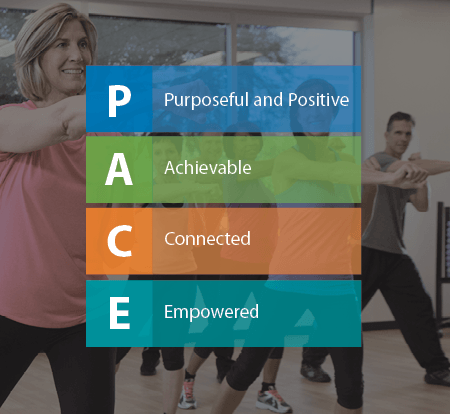
Using the PACE SilverSneakers® member engagement model from SilverSneakers Foundations will help you approach each class with clarity, consistency, and professionalism.
The PACE model guides how you deliver exercise options while supporting individual needs and maintaining program standards.
PACE Model
P – Purposeful and Positive
Plan each class with intention. Select movements that support the goal of each segment and prepare progressions and regressions to meet a variety of needs.
A – Achieve
Set clear, achievable goals for the class, such as working within a comfortable range of motion. Encourage participants to connect the class to their own goals for strength, mobility, or function.
C – Connect
Relate exercises to daily life. Helping participants understand how movement supports everyday activities can increase motivation and engagement.
Example: “This rotation may help with reaching or putting on your seatbelt.”
E – Empower
Encourage participants to choose the range of motion and intensity that feels right for them. By offering options, you support independence without needing to call out specific conditions.
Our members appreciate authentic, knowledgeable instructors. The guidelines and tips in this section can help you become the best instructor you can be!
Observe – Be observant when teaching class. Teach from a standing position as much as possible and face your class so you can better observe and interact with them.
Demonstrate – Demonstrate with precision, using concise verbal cues, clear visual cues and impeccable form and alignment. An effective teaching strategy for Classic would be to work across the front of the room and into the center of the room when appropriate, while keeping your “home base” for instruction at the front of the room. This practice helps all participants feel like they are part of the community.
Communicate – Speak slowly and clearly, making sure your cues are simple and direct. Keep the tone of each cue positive, avoiding the use of negative cues like “don’t.” Be certain to demonstrate the proper form and alignment for each exercise instead of showing how “not” to perform any specific movement.
Preparation – Always be prepared to teach. Great instructors come with a plan and are ready to make on-the-spot adjustments.
Pre-class instructions – Pre-class instruction is critical for a safe and successful class experience. It sets the stage and helps prepare students for an effective class.
Lesson Takeaways:
- Use the PACE coaching model to lead each class with purpose, connect movement to participants’ goals and empower them to choose options that feel right for them.
- Effective leadership also requires preparation, clear communication, accurate demonstrations and ongoing observation before and during class.