
What Are Intervertebral Discs?
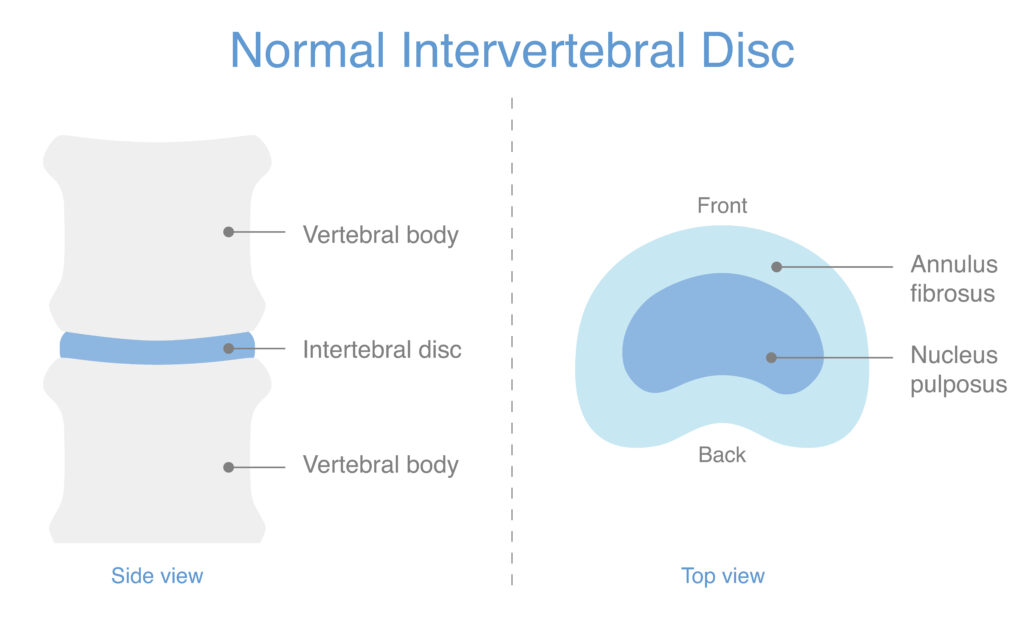
Intervertebral discs are soft, gel-like structures located between most of the vertebrae in the spine. They act as shock absorbers, helping distribute forces during movement and allowing the spine to bend, twist, and move smoothly.
Each disc has two primary components:
- The annulus fibrosus, a tough outer ring that provides structure and containment.
- The nucleus pulposus, a soft, gel-like center that allows flexibility and absorbs load.
Together, these components help maintain the natural curves of the spine while protecting the spinal cord and nerve roots.
Age-Related Changes in Disc Health
As part of the normal aging process, intervertebral discs gradually change over time. Common age-related changes include:
- Loss of fluid content, which makes discs less elastic
- Reduced disc height, which can alter spinal spacing
- Decreased shock-absorbing capacity
- Increased stiffness during movement
These changes can contribute to discomfort, reduced mobility, or nerve irritation, particularly when movement patterns place excessive stress on the spine.
Applied Insight: When discs become less resilient, efficient movement and balanced alignment become even more important. Maintaining neutral posture and distributing movement across the spine helps reduce unnecessary pressure on aging discs.
How Disc Changes Affect Movement
When disc cushioning decreases:
- Bending, lifting, or twisting may feel more restrictive
- Stress on vertebrae and surrounding joints increases
- Nerve-related symptoms, such as tingling or radiating discomfort, may appear
- Some individuals may avoid movement out of fear, which can lead to further stiffness and weakness
Applied Insight: Encourage slow, controlled movements and gradual progression to help support comfort and confidence during exercise.
The Role of Exercise in Supporting Disc Health
Research consistently shows that regular physical activity supports disc health and spinal function. Exercise helps:
- Promote blood flow and nutrient delivery to spinal tissues
- Maintain mobility and flexibility
- Strengthen muscles that support and protect the spine
- Reduce stress placed directly on spinal structures
Applied Insight: Movement that emphasizes control, alignment, and consistency supports disc health more effectively than high-impact or uncontrolled motion. Regular, moderate exercise helps maintain spinal resilience over time.
Lesson Takeaways
- Intervertebral discs allow flexibility and absorb forces throughout the spine.
- Aging affects disc hydration, elasticity, and shock absorption.
- Poor movement patterns can increase disc stress and discomfort.
- Regular, well-aligned movement supports disc health and function.
Understanding how the discs support the spine helps reinforce why controlled, gradual movement matters. Next, let’s look at the muscles of the back and core that help support and stabilize the spine.