
Overview of the Spine
The spine, also called the vertebral column, is a central structure that supports the body, allows movement, and protects the spinal cord. It enables us to stand upright, sit, bend, rotate, and transfer forces between the upper and lower body during daily activities and exercise.
The spine is made up of 33 small bones called vertebrae. Each vertebra has an opening that forms a protective canal for the spinal cord, which carries messages between the brain and the rest of the body. Healthy spinal movement depends on the interaction between bones, joints, muscles, ligaments, and nerves working together efficiently.
As people age, changes in bone density, joint mobility, and posture can affect how the spine moves and feels. Understanding how the spine is structured helps instructors recognize why certain movement patterns are safer and more effective than others.
Regions of the Spine
The vertebral column is divided into five regions, each with a distinct role in posture and movement:
- Cervical Spine (Neck) – 7 vertebrae
- Thoracic Spine (Mid-back) – 12 vertebrae
- Lumbar Spine (Low back) – 5 vertebrae
- Sacrum – 5 fused vertebrae
- Coccyx (Tailbone) – 4 fused vertebrae
Together, these regions create a structure that balances mobility and stability throughout the body.
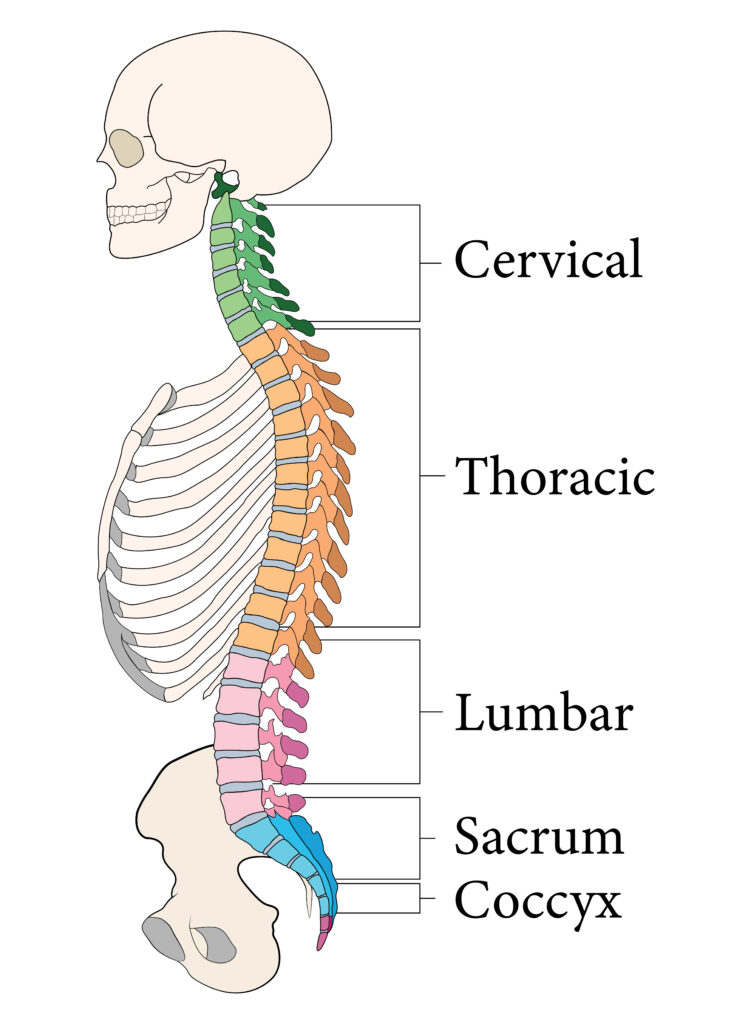
Cervical Spine (Neck)
The cervical spine supports the head, which weighs approximately 9–11 pounds. When the head moves forward or out of alignment, the effective load on the cervical spine increases significantly. Over time, this added stress can contribute to neck and shoulder discomfort, headaches, and nerve-related symptoms in the arms or hands.
Applied Insight: Neutral head and neck alignment helps reduce unnecessary strain on the cervical spine. When the head stays stacked over the shoulders, the neck muscles can support posture more efficiently during standing, seated, and dynamic movement.
Thoracic Spine (Mid-Back)
The thoracic spine is designed primarily for rotation and extension. It works closely with the hips to allow smooth, controlled trunk movement. Limited mobility in the thoracic spine may lead the body to compensate by moving excessively through the lumbar spine, which can increase injury risk.
Applied Insight: Healthy thoracic mobility allows rotation and reaching movements to be distributed through the upper back rather than forced into the lower back. This supports safer movement patterns during daily tasks and exercise.
Lumbar Spine (Low Back)
The lumbar spine is built for stability rather than rotation. Each lumbar vertebra allows only a small amount of rotational movement, making the lower back vulnerable to strain when twisting is excessive or uncontrolled. The lumbar spine primarily supports flexion, extension, and side bending when properly stabilized.
Applied Insight: Maintaining lumbar stability during bending and lifting helps protect the discs and joints of the lower back. Movement is meant to come from the hips and thoracic spine, with the lumbar spine providing a stable base.
Sacrum and Coccyx
The sacrum is a fused bone that connects the spine to the pelvis, creating a strong foundation for weight-bearing and lower-body movement. The coccyx, or tailbone, sits at the base of the spine and provides attachment points for muscles and ligaments involved in pelvic floor function and seated balance.
Although these structures do not move significantly, their alignment plays an important role in overall posture and force transfer through the body.
Applied Insight: Balanced alignment of the pelvis supports efficient movement and helps distribute forces evenly between the upper and lower body during standing and seated activities.
Why This Matters for Exercise
Understanding the roles of each spinal region helps instructors appreciate why certain movement patterns are emphasized in safe exercise programming. Proper alignment across the cervical, thoracic, lumbar, and pelvic regions allows the body to move more efficiently, maintain balance, and reduce unnecessary strain.
Lesson Takeaways
- The spine is designed to balance mobility and stability across different regions.
- The cervical spine supports the head and benefits from neutral alignment.
- The thoracic spine is a primary source of rotation and extension.
- The lumbar spine provides stability and should avoid excessive twisting.
- The sacrum and coccyx create a stable base for posture and movement.
Now that you have a foundational understanding of spinal anatomy, let’s take a closer look at the intervertebral discs and their role in supporting movement and spinal health.