Some ideas to improve eating habits and improve nutrition are listed below. Not all suggestions will work for everyone, but the more tools individuals have, the more empowered they can be in making better choices. If one idea works for one person, then it’s a positive step in the right direction.
1. Plan weekly meals.
To overcome an eating rut and improve habits, many find success in creating a weekly meal plan. Searching for simple, healthy recipes online or in a favorite or new cookbook can inspire trying something new. Knowing ahead of time “what’s for dinner” can encourage better eating the rest of the day and provide something to look forward to. Meals do not have to be extravagant or include lengthy preparation time. Simply having the ingredients on hand, along with a plan of action, makes creating a healthy meal easier.
As with any new change, this might feel overwhelming at first. Starting with just one meal a day is a good first step. Meal planning can help in several ways. A more thoughtful and nutritious meal plan can be made before hunger sets in. Making a shopping list can make it easier to stick to a food budget. Having a shopping list supports being more aware of adding nutritious foods to the shopping basket.
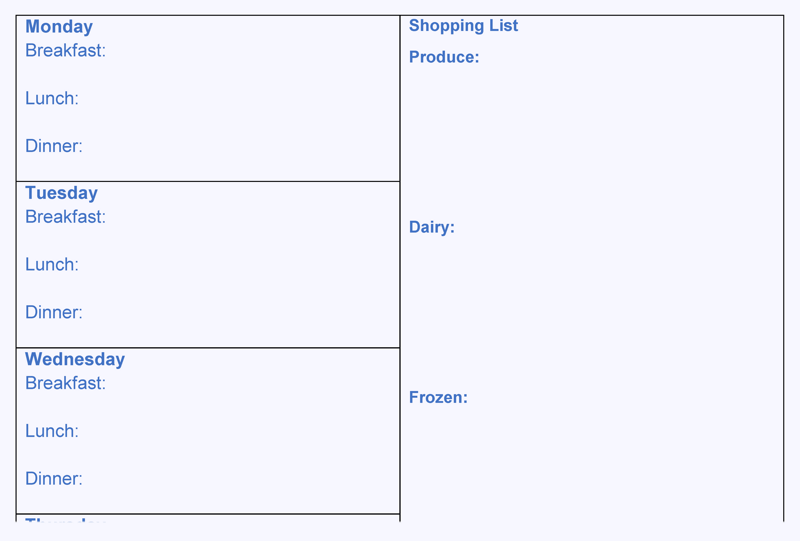
Some people find success using a sample meal planning template, like the one below. Helpful tools can be purchased online, found in apps, on government websites or created individually.
Instructor tip: Invite class participants to share a healthy dinner idea. Create a recipe share bulletin board. Promote a theme for a month, such as “pump up the protein,” “what’s for breakfast,” “100-calorie nutrient-dense snacks” and “10 ingredients or less healthy dinners”.
2. Record the food you eat daily.
Many people find that recording what they eat and drink every day can help them see where to make improvements. It provides a record of what they eat and supports making better informed food choices. Tracking food can also help a person see if they are eating for hunger, out of boredom, as an emotional response or for another reason. A notebook can be used as a daily journal. There are also many food tracking apps available.
3. Eat in a well-lit or sunny area, while serving food in a way that is pleasing to the eye.
Take the time to fix a plate and sit down to eat at the table, rather than just grabbing a snack and eating standing in the kitchen, in the car or sitting at the computer. The few minutes of conscious, or mindful, eating can make a big difference in enjoyment, satisfaction, fullness and making healthier choices.
Arrange food to be appealing. Rather than eating from a container, make a plate, set a napkin and fork, and get a big glass of water. This may seem like a small thing, but the “busy”-ness of the world can distract from taking a few minutes to truly enjoy eating. Turn off the TV and focus attention on the sights, smells and textures. Enjoy meal time.
4. Arrange kitchen areas so preparation is easy and use labor-saving devices.
- Crock pots are excellent tools for healthy soups and other meals. Taking a few moments in the morning can mean a healthy, ready-to-eat evening meal when one is tired and may not feel like cooking.
- A sturdy blender aids in making creamy soups and healthy smoothies.
- Food processors easily chop, slice and grate vegetables that can be added to dishes.
5. Eat with friends and relatives; share cooking responsibilities with neighbors.
Once a month or once a week, invite someone over to prepare and/or share a meal. Start a “supper club”. Consider offering to go to the home of a friend or neighbor, perhaps someone who can’t drive at night or has mobility challenges, to enjoy a meal together. The more you step out of your comfort zone, the more you help yourself and others.
6. Use community and other delivery services for help in shopping.
- Online grocery ordering or online grocery deliver services: Local grocery stores may offer an online food shopping service. Place the order from home using your computer. Pick up the complete order at the store or a drive-up area. Or have the order delivered to your home.
- Meal delivery plans: Subscription services offer a variety of meals for different tastes. Fresh ingredients chopped and prepared are delivered to the home allowing individuals to cook their own meals.
Instructor Tip:
SilverSneakers instructors can be a positive influence helping older adults apply some of the above suggestions. In addition to ideas that have been shared throughout this course, below are a few ideas on how this can be accomplished in a group fitness setting:
- Monthly recipe swaps
- Providing nutrition handouts from appropriate sources, such as the National Institute on Aging
- Cueing regularly for water breaks, discussing the importance of drinking water throughout the day and on days they are not exercising
- Plan nutrition-themed monthly or quarterly social events
- healthy potluck luncheon
- healthy small bites tasting event
- cooking demonstration: simple, healthy meal ideas
- cooking demonstration: cooking for one or two
- invite a registered dietitian to speak to the group and share tips on healthy eating
Share your successful ideas on our SilverSneakers Instructor Facebook page!