
There are many benefits that come from teaching to music in a group exercise class. Appropriately selected music paired with an instructor’s ability to effectively cue to the music has the power to motivate and inspire a participant’s adherence to exercise. Music brings a group together, empowers individuals to challenge themselves and enhances the enjoyment of physical activity.
Reducing feelings of fatigue and increasing motivation
A motivating song or playlist has the power to energize individuals to continue working with greater efficiency. Music can provide a distraction from possible negative feelings associated with discomfort from increased exertion. It can be a powerful tool to encourage participants to endure the challenges of progressive overload, improving their cardiorespiratory and muscular endurance.
Increasing mental arousal
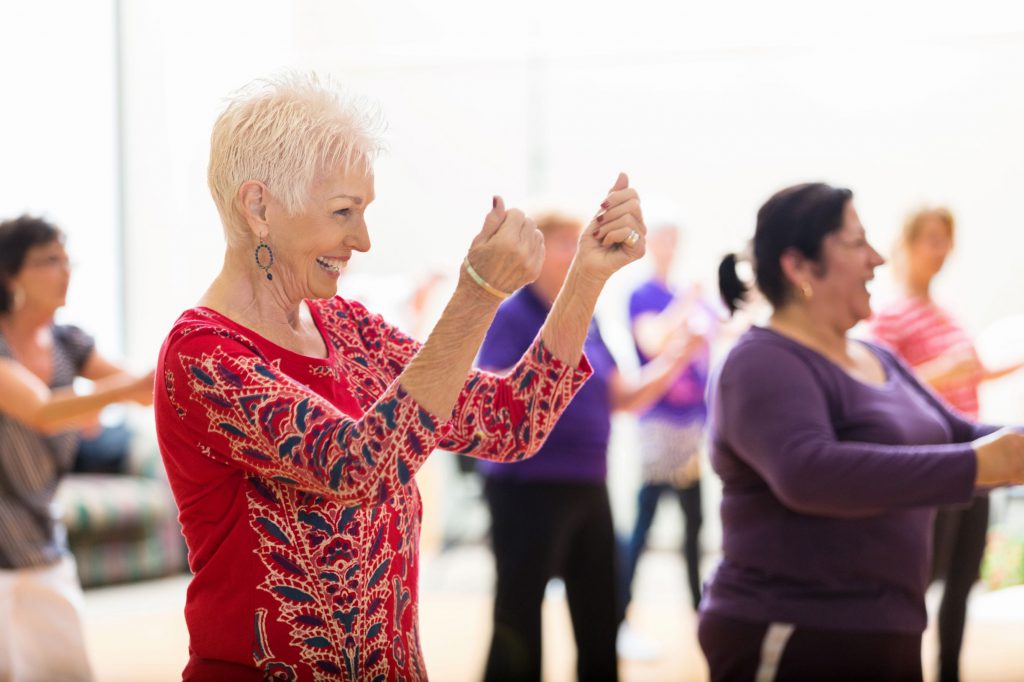
Exhilarating music that participants recognize can stimulate the mind and body for activity readiness and maintain engagement throughout the workout. A faster tempo in music that is appealing to the audience elicits positive changes in emotion. Effects on the autonomic nervous system include slight increases in heart rate and respiration demonstrating the positive effects of a happy or inspiring piece of music (Stevenson, 2016). Additionally, those who exercise to music they enjoy exhibit slight increases in grip strength that has been shown to produce longer muscular endurance times compared to not exercising with music (Karageorghis, 2017).
Selecting upbeat and fun or inspirational songs appropriate to the class type, segment and audience energizes participants for the workout and keeps them engaged. Because of the positive effect music has on the mind and body even before the workout begins, it is recommended to have motivational music playing as participants enter the room and set up for the workout. Take the time to prepare the music you want to use for each segment of your class. Select a great song or two for the warm-up that prepares participants for the work to come. Choose music appropriate to your class goals for strength or cardio work. The song used for the cool-down should ease individuals out of the work segment and transition them into the final stretch and relaxation.

Improving exercise performance
Music tempos appropriate to the exercise type (strength, cardio, circuit, dance, cycling, walking/jogging, aquatic, mind-body) have been shown to increase speed, power, endurance and heart rate compared to those exercising without music. A consistent rhythm combined with enjoyable melodies aid in keeping participants consistently moving, improving overall exercise performance.
Additionally, those who exercise to music they enjoy exhibit slight increases in grip strength that has been shown to produce longer muscular endurance times compared to not exercising with music (Karageorghis, 2017).
Improving motor coordination
People demonstrate a strong tendency to respond to the rhythmic qualities of music. It has been observed that rhythmic music produces a physical response to motor control (Karageorghis, 2017). Instructors who effectively teach to the musical beat and phrase can help participants improve motor and movement coordination, as well as dynamic balance.
Improving walking gait
In addition to improving coordination and dynamic balance, exercising to various musical rhythms has demonstrated improved walking gait, stride frequency and stride length in older adults. Exercising to a consistent music tempo has been shown to increase a participant’s movement speed (Exploring Music-Based Rehabilitation, 2015). In individuals who are physically challenged due to neuromuscular or orthopedic disorders, rhythmic music has demonstrated positive results on coordinated walking and proprioceptive control, improving walking gait regularity and rate of movement. “The use of music can be advocated to enhance a person’s gait and gross motor skills, leading to increased stability and mobility of clients” (Kravitz, 2007). Teaching exercise patterns at a consistent and safe speed for the activity can have positive effects on walking gait aiding in fall prevention.

Increasing relaxation
Music can help reduce stress and anxiety. While upbeat, positive music has demonstrated increases in heart rate and respiration, having positive effects on a cardio or strength training workout, the opposite effects have been observed with slower tempos and relaxing rhythms, producing slight decreases in heart rate and respiration (Stevenson, 2016).
“Well selected music enhances positive dimensions of mood like vigor and excitement while reducing tension and fatigue” (Psychophysical effects of Music in Exercise, 2017). Appropriate music used in the cool-down, final stretch and relaxation segments of class can have “a recuperative role and aids in recovery from injury or exercise training” (Terry and Karageorghis, 2011).
The benefits of exercising to music are well reported. Before putting together a list of favorite tunes, the next lesson will discuss the legal use of music in a group fitness setting.