A basic understanding of the process of digestion in a healthy adult provides understanding of changes that occur with age. Many nutritional issues in an older adult arise in the physiological changes of the gastrointestinal (GI) tract. The following diagram is a representation of the digestive tract and the organs involved in the digestion and absorption of foodstuffs.
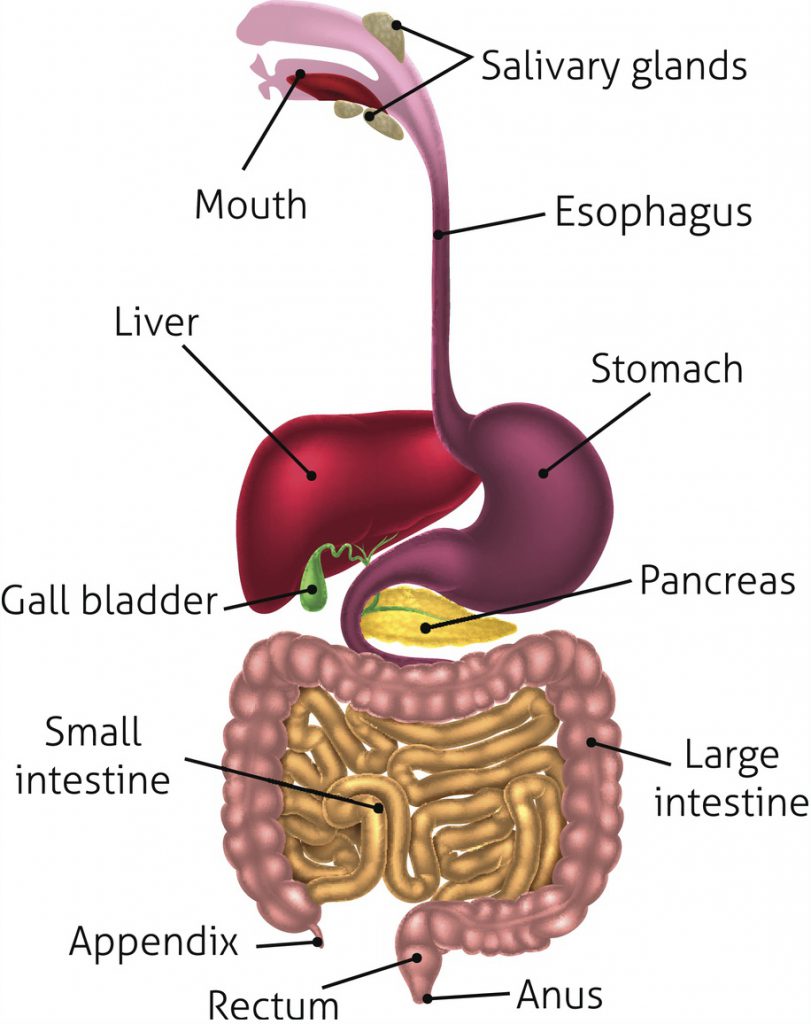
Before the body can turn food into energy, the food must be broken down into substances that can be absorbed and used by the body. Below are the ten basic steps of the digestion process.
-
- Mouth: The mouth is the beginning of the digestive tract. Chewing food begins the mechanical aspect of digestion. Food is broken down into smaller pieces that are more easily digested. Special components in saliva mix with food to begin the process of breaking it down into a form the body can utilize and absorb.
- Esophagus: From the mouth, the act of swallowing moves food into the esophagus. Repetitive muscular contractions, called peristalsis, move the food down the GI tract and into the stomach.
- Stomach: The human stomach is a muscular, elastic, hollow container that receives food from the esophagus. Cells in the stomach lining secrete a strong acid and powerful enzymes that continue breaking down food into a more useable form. When the contents of the stomach are sufficiently processed, the stomach empties into the small intestine.
- Small intestine: The small intestine is a roughly twenty-two-foot long muscular tube that breaks down food using enzymes released from the pancreas and bile from the liver. Many nutrients are absorbed into the bloodstream at this stage of the digestion process.
- Pancreas: The pancreas secretes digestive enzymes into the first segment of the small intestine that help to break down carbohydrates, proteins and fats. The pancreas is also responsible for making insulin, the hormone responsible for metabolizing sugar.
- Liver: While the liver performs many functions, its main role in digestion is to process nutrients absorbed from the small intestine. Bile from the liver secreted into the small intestine plays an important role in digesting fat. Additionally, the liver is responsible for taking the nutrients absorbed by the intestines and converting them into the various chemicals the body needs to function properly. The liver also detoxifies potentially harmful chemicals, including the breakdown and secretion of many drugs and medications.
- Gallbladder: The gallbladder stores and concentrates bile.
- Large intestine (colon): The colon is a 6-foot long muscular tube that connects the small intestine to the rectum. It is a highly specialized organ, responsible for processing waste. Materials not absorbed in the small intestine pass into the large intestine.
Waste left over from the digestive process passes through the colon where water is removed to form a stool to be passed through the rectum. Factors such as diet composition, activity level and medications affect transit time, the time from food ingestion to elimination. In a healthy adult, this is usually twenty-four to seventy-two hours.
The stool itself is mostly food debris and bacteria. These bacteria perform several useful functions, such as synthesizing various vitamins, processing waste products and food particles, and protecting against harmful bacteria.
Peristalsis, the involuntary constriction and relaxation of the intestinal muscles, pushes the content forward through the canals. - Rectum: The rectum is an 8-inch chamber that connects the large intestine to the anus. The rectum holds the stool, alerts the brain of the need for elimination, and disposes of its contents.
- Anus: The last part of the digestive tract, the anus is a 2-inch long canal. The anus consists of sphincter muscles that allow control of release.
Digestive problems can occur at any age. According to data from the Mayo Clinic, the most common digestive health problem experienced among those sixty and older is constipation. Symptoms include difficult or painful bowel movements, infrequent bowel movements, and a hard, dry stool. Some causes of constipation are listed below.
- Not enough fluids: Constipation is related to dehydration in the colon. Drinking lots of water will ensure that less water is withdrawn from the stool, keeping it soft and easy to pass.
- Lack of fiber: Fiber, also called roughage, is the portion of plant-derived food that cannot be completely broken down by digestive enzymes. Fiber adds bulk to stool, making it easier to pass.
- Changes in the digestive system: After about the age of sixty, the intestines begin to lose muscle strength, decreasing the rate of peristalsis, the muscular contractions and relaxations that move the food toward the site of elimination. This may cause food to move more slowly through the large intestine, causing more water to be absorbed from food waste, which causes constipation.
- Medications: Some medications, such as calcium channel blockers often used for high blood pressure, can cause constipation. Narcotics and other pain relievers can slow transit time and can cause constipation.
- Inactivity: Regular physical activity can help to increase the time it takes food to move through the large intestine, thus limiting the amount of water that is absorbed from the stool. Cardiorespiratory activity increases breathing and heart rate, which aids in stimulating peristalsis, muscular contractions of the intestines.
A nutrient dense diet loaded with vegetables, fruits, whole grains, lean proteins, healthy fats, adequate water and fluid intake, along with regular physical activity, can help maintain digestive health.