How to use mindfulness techniques in your class
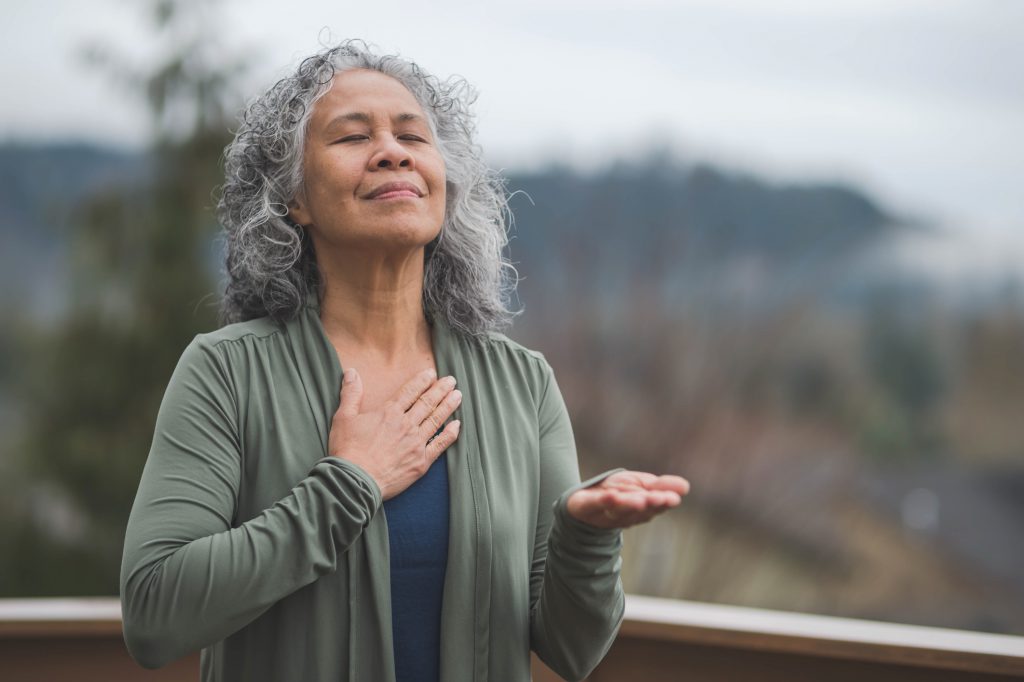
Take a breath
Have you ever noticed how you breathe when you feel calm and relaxed? What does your breathing feel like right before you fall asleep? How does it change when you are stressed or anxious? The way we breathe, both the depth and the rhythm of our breath, can be a window that allows us to see our emotional state.
Breathing is largely an unconscious, involuntary action, controlled by the autonomic nervous system. We take in oxygen, which nourishes our bodies at the cellular level, and then we exhale to rid the body of carbon dioxide, which is the byproduct of respiration. If our breath is interrupted for more than a few moments, the brain and body become starved of oxygen.
Even though breathing is an involuntary action, we do have a measure of conscious control and we can use this control to help manage our stress response. Mindful deep breathing stimulates the vagus nerve and triggers the parasympathetic nervous system — the rest-and-digest response — helping us relax and decreasing the harmful effects cortisol can have on our bodies. Recent scientific reviews show that mindfulness-based interventions, like breathing techniques, are effective in treating stress and emotional distress (Grossman, Niemann, Schmidt, & Walach, 2010).
Practicing mindful breathing techniques enhances cognitive function, including memory and concentration and improves our ability to regulate emotion. Other benefits of mindfulness include increased self-awareness, including the awareness of our own stress level, improved relaxation and better sleep.
There are many mindful breathing techniques you can practice in your SilverSneakers class that will bring the benefits of mindfulness to your participants. The practices you will see in the videos in the Instructor Resources section of this learning module are especially appropriate for the relaxation segment of any SilverSneakers class. Explore these techniques, building on your knowledge of mindfulness and being sensitive to the preferences of your participants. Remember, mindful breathing is not a religious practice — it is a tool we can use to bring a sense of peace and well-being to our SilverSneakers class members.
Guided imagery
Guided Imagery is a simple mindfulness technique that can assist with stress management, reducing tension in the body. It is not difficult to learn, and it does not take a big time commitment. Research has shown it can be an effective stress-management technique (Crowther, 1983). Spending only a few minutes a day practicing guided imagery can de-stress your mind and body.
If you have ever used your imagination to mentally “escape” or to help cope with a difficult situation, you were using imagery to relax. Guided imagery uses the imagination to help focus the brain. Mental images are used to potentially engage some or all of the senses — sight, smell, touch (feeling), hearing and even taste.
There are several ways to practice guided imagery, including being guided by an instructor, listening to audio or video recordings, or simply using your imagination. The guided imagery sessions provided in this course are short in duration and can be used during the relaxation segment of a SilverSneakers class. As an instructor, you may also build on these examples to form a longer guided imagery session for other Mind-Body classes, or for your own use for stress reduction and mental focus.
Progressive relaxation
Tension is who you think you should be. Relaxation is who you are.
Chinese Proverb
Muscle tension is one of the reactions that our bodies have to fear, anxiety and stress. This tensing response to stress and other negative emotions can lead to feeling tense in body and mind. This excess of tension can result in aches and pains, as well as leaving us feeling tired or exhausted. Progressive relaxation is particularly effective in helping us recognize muscular tension and then allowing us to release it. Fortunately, it is one of the easiest and most effective relaxation techniques to learn and teach to a class.
Through practice we can learn how to distinguish between a tense muscle and a muscle that is completely relaxed. The more we practice, the quicker and more effective the relaxation will be. The ability to target and isolate different muscles or muscle groups becomes easier with practice as well.
It is most effective to practice progressive relaxation often, whether you feel stress and anxiety or not. This allows you to be even more skilled at this mindfulness technique when stress and anxiety are at a peak in your life. Training your body to manage stress and to respond in a positive way is like any other training. Consistent practice is the key to maximum success.
Progressive relaxation can be practiced several different ways. The progressive relaxation video in the resources tab of this training is an example of relaxation that moves from the feet to the head. You may also practice contracting a muscle or a group of muscles first, before relaxing and releasing that same muscle or muscle group. Either technique is effective, but the contract/relax method is more time consuming and may be challenging to fit into a 5-minute relaxation period during your SilverSneakers class. Be sure to experiment to see what works best for you and your students.
Moving meditation
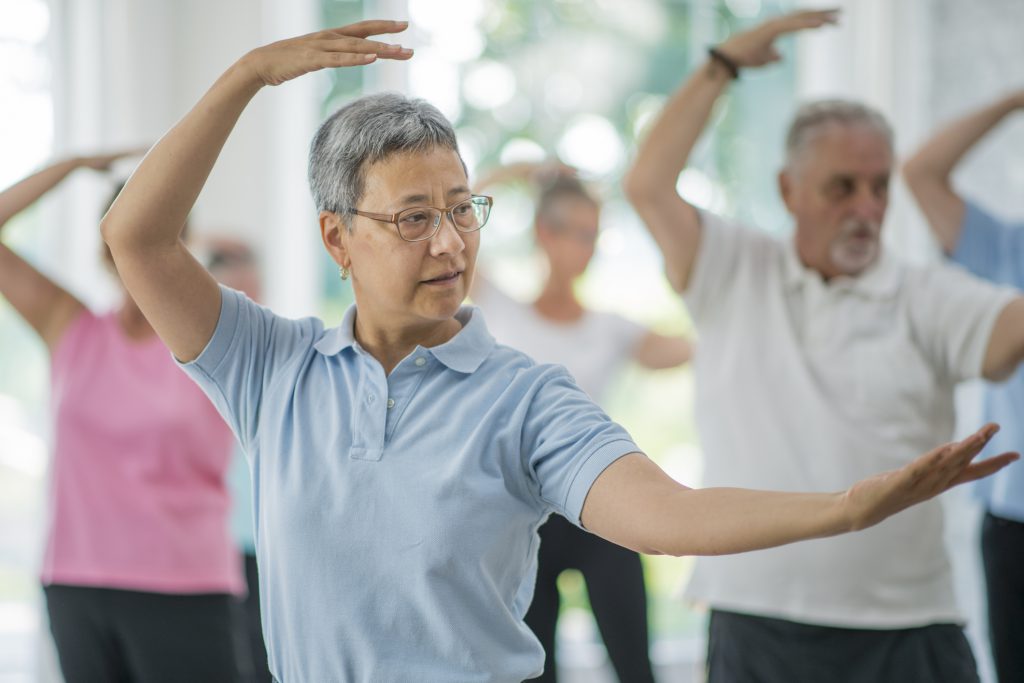
Taking a walk or going to a tai chi class may be a good way to get some exercise into the day, but practicing mindfulness during these more active movement sessions can boost well-being for SilverSneakers participants and help them better manage their stress. A group of researchers found that mindful movement creates stress relief benefits to participants above and beyond the benefits of exercise alone. These types of active mindfulness were found to be “well-accepted, highly-valued and maintained after the program ended” (Yang & Conroy, 2019).
Mindfulness, a practice that helps us pay more attention to sights, sounds and sensations, can be combined with movement in many different ways. The examples provided on the Instructor Resources page of this training are based in yoga, tai chi and qigong, but other thoughtful movement can have the same positive effects on class members. Practice mindful, moving meditation during the cool down phase of class or during final relaxation.