
Chronic stress can be defined as stress that lasts over an extended period of time, or stress that is severe enough to make us feel overwhelmed and out of control.
The stress response is critical for survival. We react to stressors physically, mentally and emotionally. Stress triggers a chemical cascade that prepares the body to face immediate physical threats and to cope with dangerous or difficult situations. We all feel stress at times, and the stress response is a healthy reaction to change or to life challenges, but chronic stress can negatively impact our health.
Stress can enhance performance
Stress helps us survive. It can heighten our senses and improve our performance with a given task or assignment.
Tocino-Smith, 2019
In the short term, stress can be advantageous to the body, causing us to perform better physically and mentally, and preparing us to react to a sudden threat or dangerous event. The primitive fight-or-flight stress response is an advantage that can save our lives. However, chronic, long-term stress can have a largely negative effect on health and well-being, creating conditions in the body that cause illness and making existing health conditions worsen.
The body’s response to stressors is essential for our survival. The heightened physical responses and mental focus we feel during quick bursts of stress can allow us to react quickly enough to avoid an auto accident or an oncoming cyclist while crossing the street.
When we are stressed, our body releases chemicals into the bloodstream, activating the sympathetic nervous system (SNS). When we encounter a stressful situation, the amygdala, an area of the brain that contributes to emotional processing, sends a distress signal to the hypothalamus. The hypothalamus, a pea-sized organ sitting near the center of the brain, reacts by sending a signal to the adrenal glands. These glands respond by secreting epinephrine, also called adrenaline, and norepinephrine, which are often the “first responders”, into the bloodstream. These hormones, along with the steroidal hormone cortisol, cause the heart rate and blood pressure to elevate. The increase in heart rate and blood pressure serve to bring extra blood supply to the large muscles of the arms and legs, allowing us to operate at a physically enhanced level. This is the fight-or-flight response. Blood clots more easily and white blood cells are ready to be mobilized in case of injury. Energy sources like sugar and fat are freed up in the body to give us a readily available source of quick energy. These responses prepare our body to respond to danger, whether we decide to stand and face it head on, or run away.
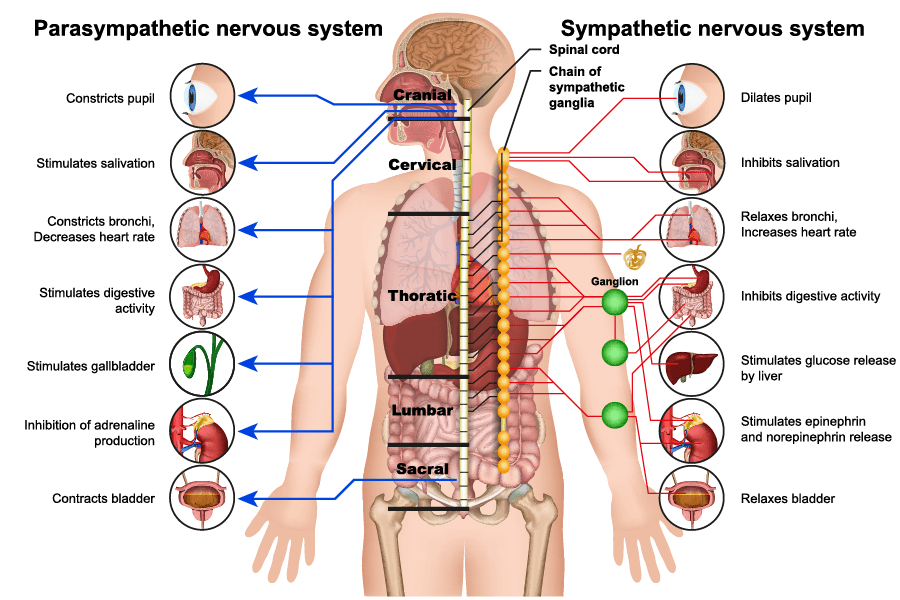
This life-saving physical response happens very quickly, but it takes longer to fade. Most of us have experienced the rush of a near miss or a scare. We have felt the quick onset of energy and the slower fade of this chemical release after the threat is over. An important area of the brain, the hippocampus, critical for the formation of long-term memory, learning and spatial navigation, is also involved in determining when to switch off the energy-burning cortisol secretion, shutting down adrenal activity.
Once the brain senses safety, it quickly switches on the parasympathetic nervous system (PNS), the “rest-and-digest” system, which begins to decrease blood pressure and heart rate, signaling a drop in stress hormone levels, which in turn drops blood sugar levels back to normal.
Increased stress results in increased productivity, but only up to a point. Once our systems top out at their maximum effectiveness, our physical function and mental faculties can begin to go rapidly downhill. This peak or point of maximum effectiveness is different for each of us, so it is of critical importance to heed the warning signs and symptoms of stress overload. These signals can be obvious, but often they are more subtle in nature. We can easily ignore the dangers of unmanaged stress until it is too late, taking a toll on our physical and emotional well-being.
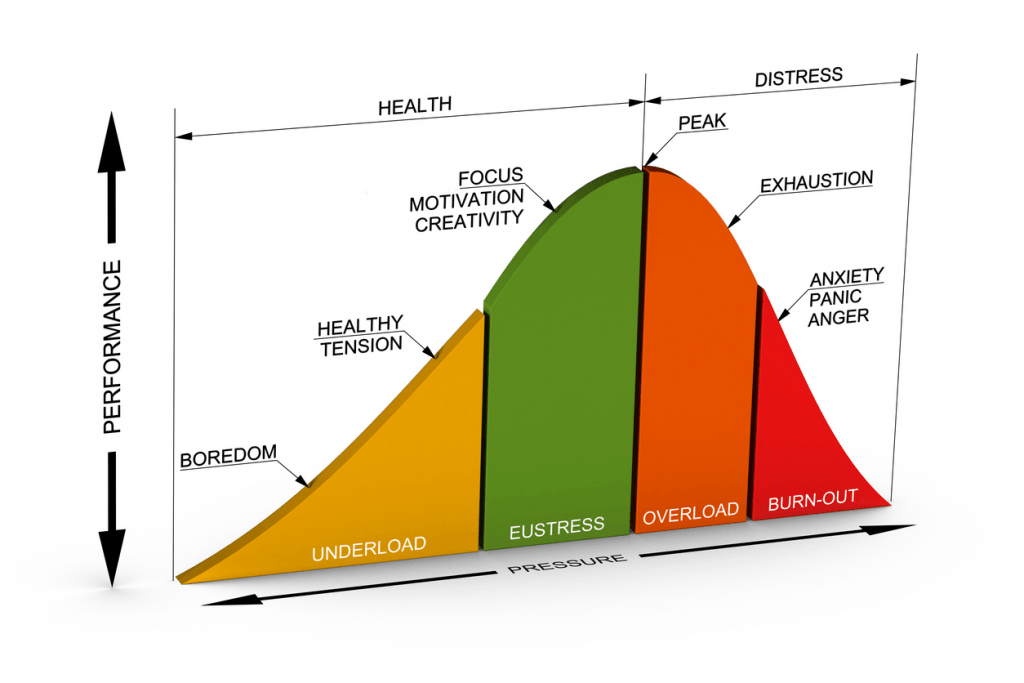
The demand that stress places on our bodies is not harmful if the process happens occasionally, but if the body is put through the stress response constantly, the body may experience lasting effects like elevated blood pressure, a weakened immune system, depression, insomnia, anxiety, digestive issues and an elevated risk for heart disease. This is why effective stress management is so important for optimal health.
Mindset makes a difference
Understanding the positive aspects of the stress experience can help us manage the stress response and assist us as we meet the challenges of life. On the other hand, the belief that all stress is inherently bad can be problematic and even harmful to our health. Research tells us that changing our minds about stress can make us healthier and happier (Crum, Akinola, Martin, & Fath, 2017).
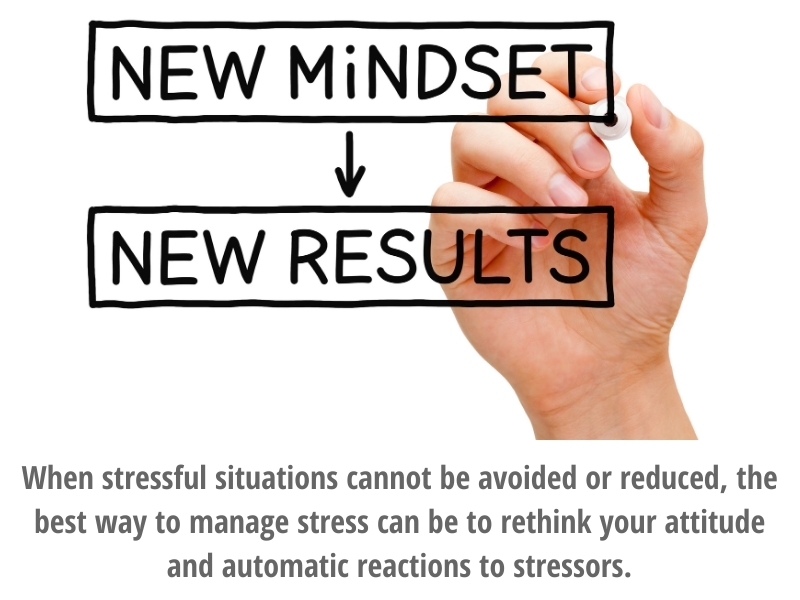
Our mindset is a critical element of our adaptability as we cope with life’s stressors. As we rethink and retool our automatic responses, we can become more successful in managing and processing stress. If we can change our negative perception of stress, we have the potential to be more in control as an active participant in managing stressful situations. On a larger scale, if we can challenge those individuals we teach and coach to change their perceptions about stress, we can have a broad effect on the health outcomes of SilverSneakers members.
In 1998, 30,000 adults in the US were asked how much stress they had experienced in the past year. They were also asked, "Do you believe stress is harmful to your health."
Eight years later, the researchers found that high levels of stress increased the risk of dying by 43 percent, but that risk applied only to the people who believed stress was harming their health. People who reported high levels of stress but who did not view their stress as harmful were not more likely to die. In fact, they had the lowest risk of anyone in the study, even lower than those who reported experiencing very little stress.
The researchers concluded that it wasn't stress alone that was killing people. It was the combination of stress and the belief that stress is harmful. The researchers estimated that over the eight years they conducted their study, 182,000 Americans may have died prematurely because they believed that stress was harming them.McGonigal, K., 2016
In general, our response to long-term stress is conditioned, so if we can train our bodies and minds to think and react differently, we can have a real positive effect on our health and well-being.
Stress scenario
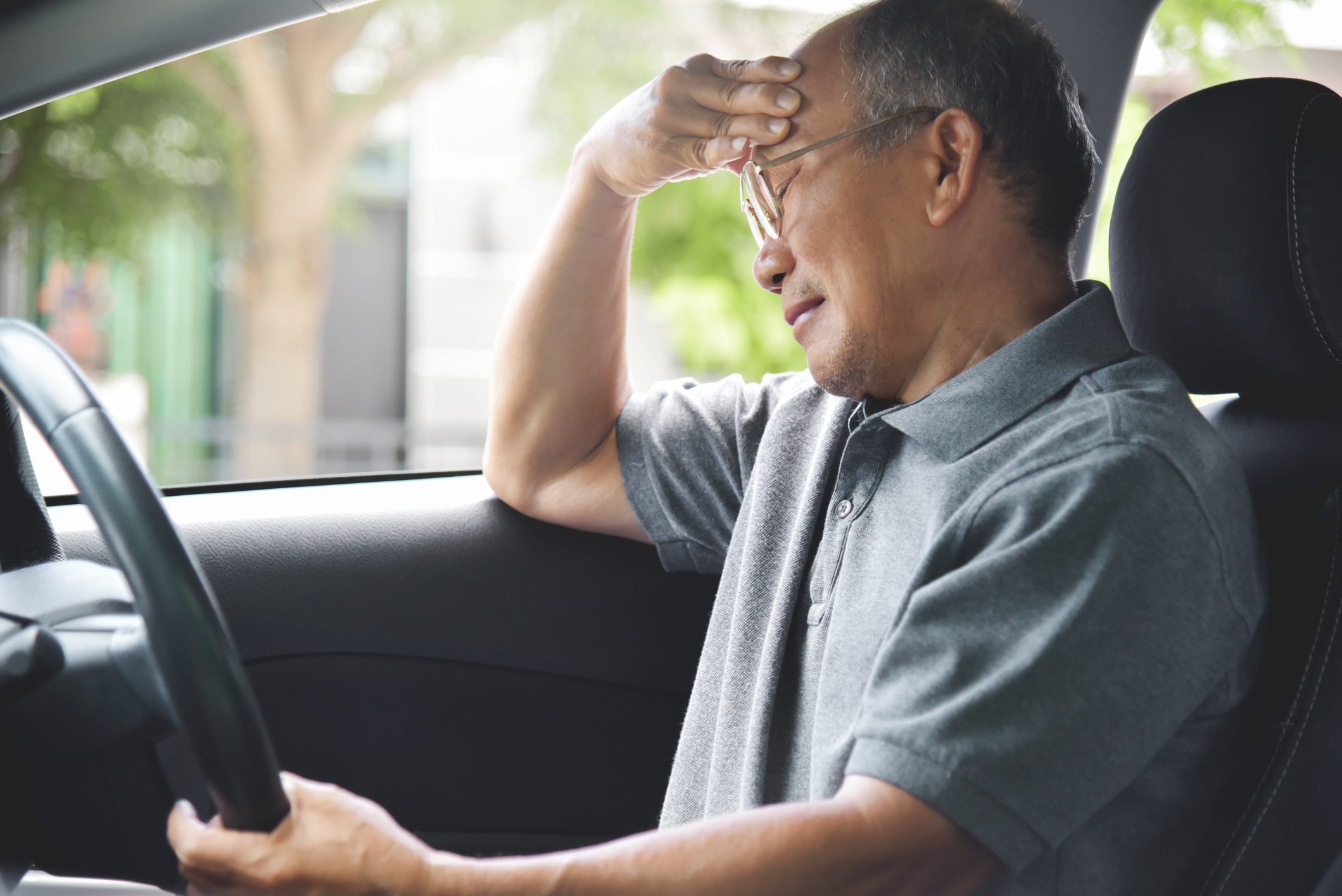
- Location: Freeway exit ramp
- Stressful scenario: Flat tire
- Key external stressors: Flat tire, heat, late for work
- Key internal stressors: Lack of knowledge on how to change a tire, ruined work clothes, worried what boss will say about late arrival
Back story: John was heading into work and was running a few minutes late for an important meeting. However, he was sure he could still make it on time. Suddenly, John heard a loud popping sound and his car became more difficult to steer. He pulled off to the side of the road to see what had happened.
John got out of his car and confirmed what he already feared. He had a flat tire! There was now no way he could make it to work on time. John was going to be late for his meeting with his boss and he was not very knowledgeable on how to change a tire. It felt like his entire day was ruined.
Resolution: John took a slow, deep breath and got to work. First, he called a tow truck company for assistance with the tire. While the driver was on his way, he called his boss and explained the situation. His boss was understanding and told John that he would reschedule the meeting for the next day.
Key mindset changes: John’s situation was a tough one and his initial reaction was to worry about all the things that were out of his control. He was able to better handle the situation when he changed his mindset, which began with a slow deep breath to help him relax. John then refocused, working to solve the challenges he was facing and deal with his stressors.