How you prepare for and lead your class are important aspects of teaching and will ultimately affect your participants’ overall experience. Below is a list of best practices and tips for instructors.
Stay Visible
Tivity Health recommends instructors teach on deck when there are more than seven participants in class to reduce safety and liability risks.
- You are more easily able to observe and respond to students who need assistance from this vantage point.
- You are more easily visible to participants who may have vision and hearing challenges.
If there is not a lifeguard on duty, instructors MUST teach on deck. Tivity Health recommends that instructors take a basic water safety course if lifeguards will not regularly be available.
Lead, rather than participate in the workout. Remember that you are creating the most effective group exercise experience for your participants.
Avoid High Impact Demonstrations
It is best to avoid high-impact demonstrations (e.g., tuck jumps).
- Use a chair or bench to demonstrate exercises that are high impact on land to reduce impact on your joints.
- Tivity Health recommends a slip-free, shock-absorbent mat for safe instruction from the deck.
Instructing aquatic exercise is rigorous work! Make sure you train for endurance, strength, flexibility and balance in your personal workouts to ensure safe performance on deck.
Mirroring
As a Splash instructor, be sure to utilize mirror image cueing. In mirror image cueing, the instructor effectively becomes a “mirror” for class participants. This means that the instructor performs movement in opposition to class members. When movement is cued to be performed by students on the right side, the instructor is performing the same movement on his or her left side. While this practice may be challenging at first, it is the most intuitive and safe way to teach a SilverSneakers Splash class.
Fitness Wear
Dress appropriately. Your participants are looking up to you – literally. Instructors should wear capris, shorts or unitards.
When teaching on deck, consider athletic shoes over aquatic shoes. A good sneaker will provide better support, grip and shock absorption.
Electric Equipment Safety
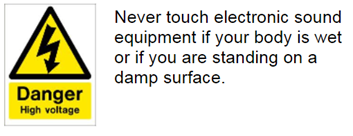
Never touch electronic sound equipment if your body is wet or if you are standing on a damp surface. Use sound equipment rated for use in pool area.
Music
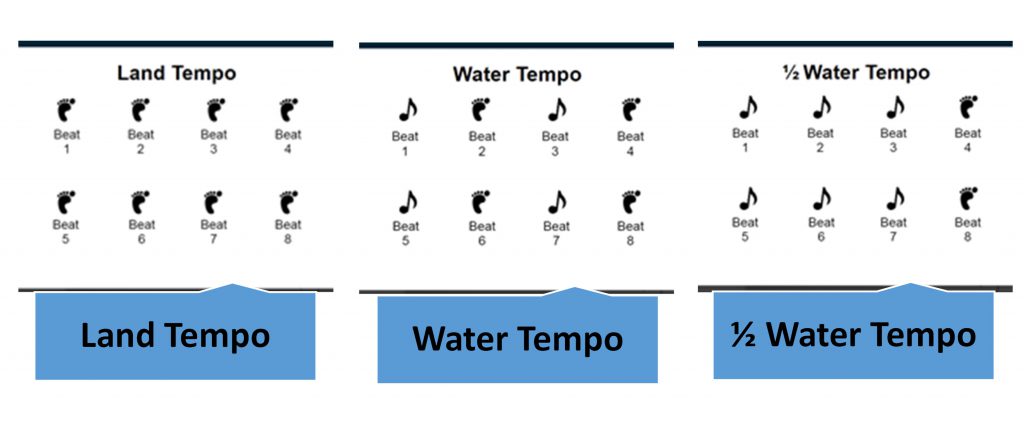
Using music in SilverSneakers Splash classes is optional but recommended. Instrumental music is ideal in environments with poor acoustics and ambient noise. Music speed should be between 124 – 128 beats per minute.
Due to the muscular force required to move through water, movement speed in water is ½ of land-based speed. In the tempos listed below, perform exercise on every other “step” or “foot”.