
Aquatic exercise is an effective and enjoyable way to stay fit and healthy, but it is important to take the proper precautions to stay safe.
Pool Safety
Follow these guidelines to create a safe pool environment for your SilverSneakers Splash classes:
Discuss the pool’s layout, depth, slope and the location of the lifeguard with participants.
Monitor air quality and room temperature in an indoor environment. The Aquatics Exercise Association recommends an air temperature between 75 – 85 F and humidity ranging between 50 - 60% for a safe and comfortable indoor pool environment.
To determine space requirements and class participant capacity for a shallow water class, measure the square footage of the useable area (based on the depth and bottom slope for shallow water) and divide by 32.
Inspect wet areas on the pool deck and in locker rooms. Report safety issues to the facility or aquatic manager.
Do not allow participants to exercise on the pool’s slope. There is an increased risk of knee hyperextension after multiple heel strikes. Mark the slope with a cone, noodle or rope to make it easily visible.
Regularly inspect the condition of the pool, railings, ladders and shower areas. Also, be sure to remove unnecessary items from the pool deck to reduce a tripping hazard.
Know the facility’s class cancellation policy for both indoor and outdoor pools and be prepared to cancel class during electrical storms, especially when teaching in an outdoor environment.
Tivity Health recommends the instructor leads the class from the pool deck when there are more than seven participants or when there is no lifeguard on duty. This way, instructors can better observe class for safety and respond quickly if an emergency were to occur.
Splash classes may be held either at an indoor or outdoor pool, provided that the pool is appropriate for group exercise instruction. Indoor pools provide maximum protection from the sun. Pools should be easily and safely accessible.
Emergency Planning
It is important to know the location of pool lifts, ramps, access ladders and which is the shallow and deep end of the pool. Individuals must be able to enter and exit the pool without assistance from the instructor.
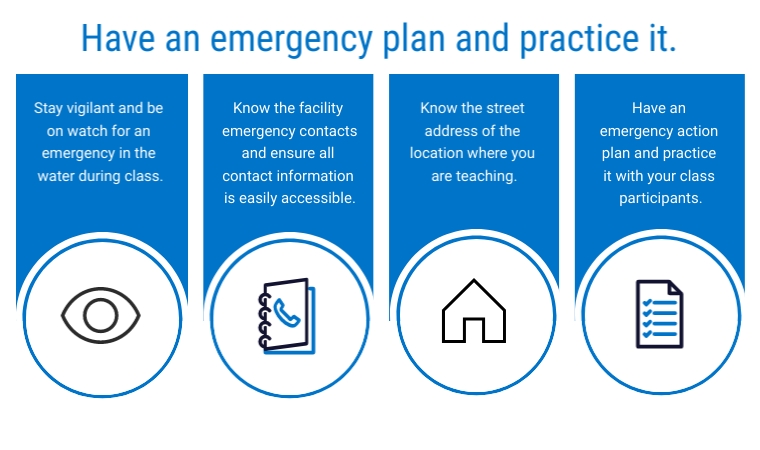
Knowing and consistently monitoring your pool environment, along with creating and implementing an emergency plan, will keep your students safe, lowering risk of injury.