
Safety is essential in every SilverSneakers group exercise class you lead. As an instructor, it is imperative to frequently review your facility’s emergency action plan, maintain a current CPR certification as well as participate in continuing education to keep your skills sharp. Individuals with chronic conditions can exercise safely when knowledgeable leadership and instruction are provided.
Take time to review all the chronic conditions, in addition to the exercise guidelines and tips in Unit 2. Additional tips pertaining to emergencies involving individuals with chronic conditions are provided here.
Group Exercise Instructor Scope of Practice
- As a fitness professional, be sure to stay within the defined scope of practice for a group exercise instructor. Do not prescribe medical treatment. Advise members to follow all physician directives for any chronic condition that requires ongoing care and support from a healthcare professional. Additionally, encourage participants to consult their physician for any problem lasting longer than two or three days.
- Be aware that providing safe and effective instruction may be more challenging due to inherent risks associated with the effects and/or side effects of some drugs. Participants should follow all physician’s directives regarding prescriptions.
Emergency Procedures
- Be aware of common warning signs for pain, swelling, muscle weakness, discoloration, disorientation, slurred speech, dizziness, numbness and profuse sweating.
- Ensure you are aware of where your facility’s AED, first aid kit, CPR masks, ice packs and intercom system (if applicable) are located. Always have your phone nearby in case of an emergency.
- Know your facility’s emergency action plan and how to implement it if needed. In other words, if an individual needs emergency help, know the chain of events and how to get assistance during the incident.
- Take time to review your emergency plan with your SilverSneakers class members. Understanding the details of an emergency action plan can prevent a great degree of chaos if you ever need to instigate such a plan of action. Practice an injury/crisis scenario with your participants. Assign responsibilities for notifying staff, calling 911, obtaining the AED or first aid kit.
- Any injury, however slight, needs attention and written documentation.
Additional Safety Considerations
- Class environment – Be certain the space utilized for class is well-lit, free of trip hazards and is kept at a comfortable temperature for exercise. Be aware of the trip hazard involved with moving on carpet if your class is held in a carpeted room. Hard, non-carpeted flooring like wood or vinyl is best for SilverSneakers group exercise classes.
- Equipment – In classes where resistance tools are used, remember the tools are always optional for participants. Students may choose not to use a tool because of injury, disability or personal preference. All equipment and water bottles should be stored underneath the chair, out of harm’s way, to reduce trip hazards. However, in SilverSneakers Circuit classes, all equipment should rest on the seat of the chair.
- Provide support – Help those who need you the most. Consider placing more frail or less familiar participants in the front row. Partner them with a class member to help them feel included.
- Support devices – Participants must possess the functional ability to perform exercises in a group setting. Those with support devices may need to make adaptations to sitting position, standing anchor positions, as well as movement execution principles. Never put a participant needing extra support at risk for a fall. If a member has a supportive device, follow these general recommendations:
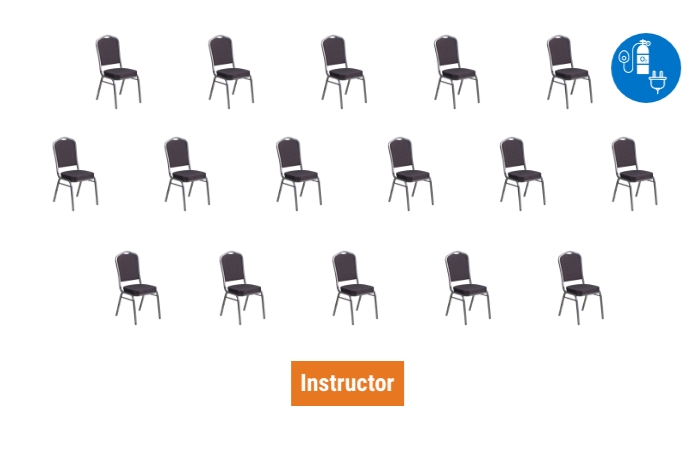
- Portable oxygen concentrator – Portable oxygen tanks are lightweight and can make attending an exercise class possible. However, there are still some limitations on how much a member can move around and sometimes even portable oxygen tanks can be too heavy for members to lug around during fast-paced activities. A Classic class allows members to stay seated while keeping the portable oxygen concentrator on the floor beside the chair. Members may have a battery backup but it’s always a good idea to have the member near an electrical outlet.
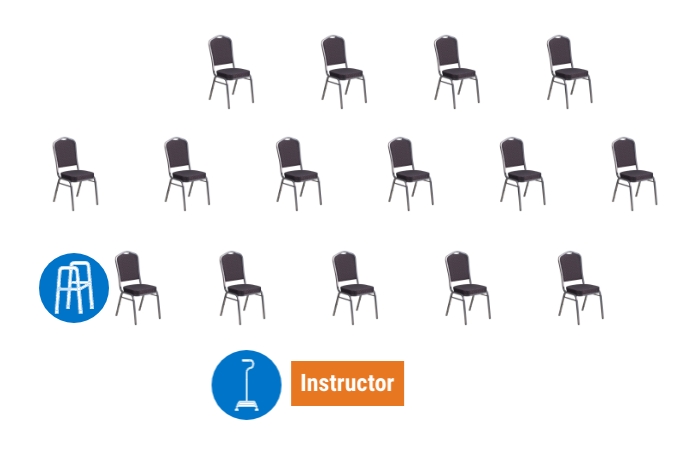
- Walkers, rollator or cane – Recommend that participants place their walker next to the chair. Guide members with walkers to sit on an end if possible, so the walker does not become a tripping hazard for another member. If a participant has a cane, ask “if the cane can be placed at the front of class,” and when class is finished be sure to return the cane for the member.
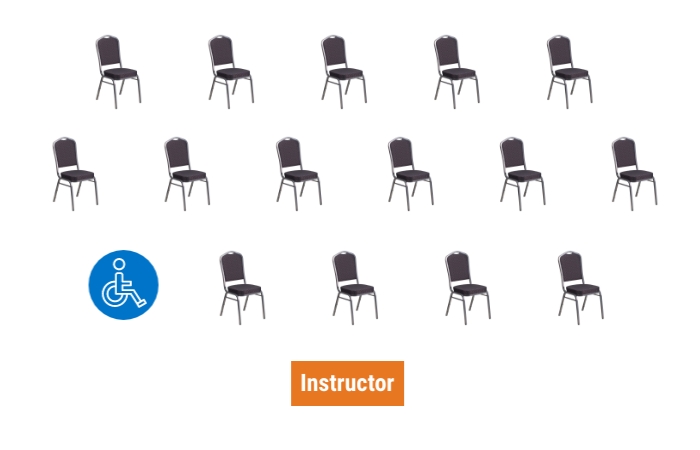
- Wheelchairs – Ensure wheels are locked and place another chair next to the member with their equipment on top for easy access. Ensure that the supportive device does not become a tripping hazard.
- Provide a staff person for every 30 participants – If you have more than 30 participants regularly, recruit an assistant to help you lead class. The “assistant” does not need to be an instructor.
- An additional class should be added if class participation continuously meets or exceeds room capacity for a continuous period of one month or 12 classes.
Individuals with chronic conditions can present some extra challenges when teaching. Awareness and knowledge of these chronic conditions will help you lead an effective exercise class that will provide great health benefits to the participants. Take care in your choice of the verbal cues you provide, physical cues that participants may offer and remembering that many participants may have one or more of these chronic conditions.