
SilverSneakers classes are designed for individuals with chronic conditions. The class format and design are structured to provide a safe environment for exercise, while targeting physiological systems that tend to deteriorate with age.
As explained in previous Signature class trainings, risk is often elevated when teaching older adults due to common chronic conditions, musculoskeletal limitations and communication challenges. Remember, we want our participants to be challenged enough to make progress, but we need to execute each movement in class without unnecessary risk of harm to class participants.
Risk vs. benefit refers to an exercise selection analysis. When applying risk versus benefit to SilverSneakers classes, exercises should be utilized only when the benefits of a specific exercise outweigh the potential risk. The safety and efficacy of a movement can differ from class to class and from individual to individual, depending on the fitness level and physical limitations of class members and the ability of an instructor to teach and cue an exercise effectively.
Risk vs. Benefit Exercise Selection Principles:
- What is the potential risk of the exercise?
- What is the benefit of the exercise?
- Can the exercise be modified?
- If the risk outweighs the benefit, avoid the exercise.
Additionally, it is imperative that instructors use clear and concise verbal and visual cuing to create a safe exercise environment. This is especially true when leading individuals with chronic conditions in a group exercise environment.
Deliver Clear and Concise Cues
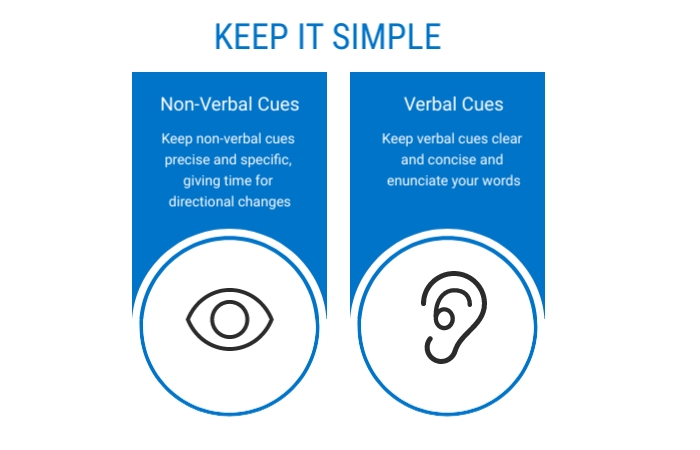
Work to improve your verbal and non-verbal communication skills. Because of the age-related deterioration that can occur to the visual, auditory and nervous system of older adults, it is of critical importance to deliver clear and concise cues. Speak succinctly and cue with precise and specific directives without constant filler cues or conversational speech. Enunciate and present movements in a clear visual manner.
Cueing for Safety
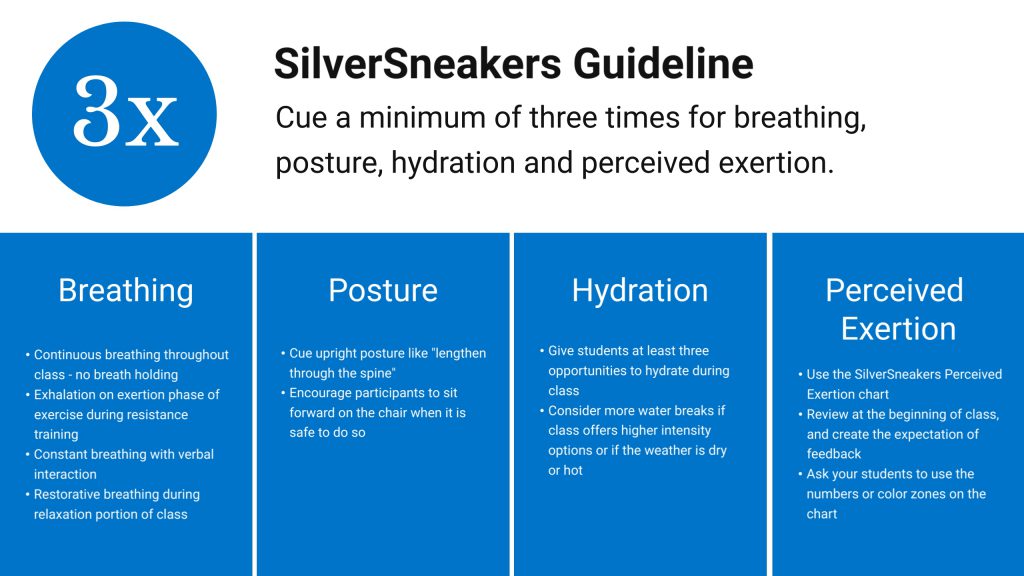
Cueing a minimum of three times for breathing, posture, hydration and perceived exertion provides valuable reminders for participants to enhance safety while exercising.
As an instructor, by applying safe leadership, you can have a positive impact on participant’s health. Many individuals with chronic conditions experience pain, which can lead to depression and a lack of motivation to move and exercise regularly.
Engaging positively with participants, encouraging goal setting for attending classes regularly and moving daily are ways you can assist an individual with one or more chronic condition, maintain independence and improve his or her quality of life.