
Hip osteoarthritis (OA) is a disease that damages the articular cartilage that covers the acetabulum (bony socket of the pelvis) and femoral head (ball end of thigh bone). OA causes the cartilage to break down, causing pain, swelling, and problems moving the joint. As the condition worsens, bones may break down and can cause growths called spurs to develop on the edges of the joint. Bits of bones or cartilage can break off and float inside the joint space, which causes more pain and damage. The body produces an inflammatory response causing enzymes to develop that can further damage the cartilage. Pain develops when the articular cartilage no longer protects the bone surfaces, causing bone-on-bone contact, and the bone and other tissues become damaged. Over time, the joint may lose its normal shape. The deterioration of the hip joint from osteoarthritis causes loss of strength and function resulting in a reduction in the quality of life for the individual living with arthritis.
During the progression of hip osteoarthritis, individuals may endure many years of pain, stiffness, and mobility fluctuations. While it is beyond the professional scope of the group fitness instructor to diagnose the signs and symptoms of hip osteoarthritis, having a better understanding of what class participants may be experiencing can help you to have more empathy as you plan and teach your group exercise class choreography.
Here are common signs and symptoms of hip osteoarthritis:
- Severe pain in the front of the hip (groin area), pain in the back of the hip (buttock), or on the side of the hip.
- Feeling stiffness first thing in the morning, or after long periods of sitting or standing.
- Pain with weight-bearing activities such as walking or climbing stairs.
- Pain and stiffness in the joint causing simple activities of daily life (ADLs) to be difficult (such as putting on socks and shoes, and getting out of a chair or off the toilet).
- Inability to sleep at night due to pain in the joint.
- Disabling loss of range of motion greatly reducing mobility and affecting gait, posture, and function.
Historically, osteoarthritis was viewed as an inevitable consequence of aging. Patients were told to rest their joints and avoid exercise. With advances in osteoarthritis research we now know that moderate, regular exercise is key in managing pain and stiffness.
The cause of osteoarthritis is not fully known. Injuries to a joint from sports, accidents, or even daily living can lead to joint degeneration. Certain genetic mutations also predispose some individuals to develop osteoarthritis. Repetitive high impact sports, such as running, can cause osteoarthritis in some individuals. Additional risk factors are obesity, smoking, and poor nutrition.
Interestingly, the National Institutes of Health Framingham Study demonstrated that “Although people who are overweight are at an increased risk of developing osteoarthritis…overweight people who walked or jogged regularly were no more or less likely to have osteoarthritic joint damage than their overweight, sedentary peers” (NIH, 2010). Instead of rest, moderate exercise is suggested as a way to reduce pain, improve flexibility, and increase both strength and endurance.
Treatments in managing hip osteoarthritis range from more conservative approaches to more invasive procedures. Conservative treatments include activity modification, exercise, and stretching. Invasive treatments include total hip replacement surgery. These different treatments can help to manage pain and improve mobility. Many people successfully manage hip osteoarthritic pain for years using more conservative approaches.
Participant Experience
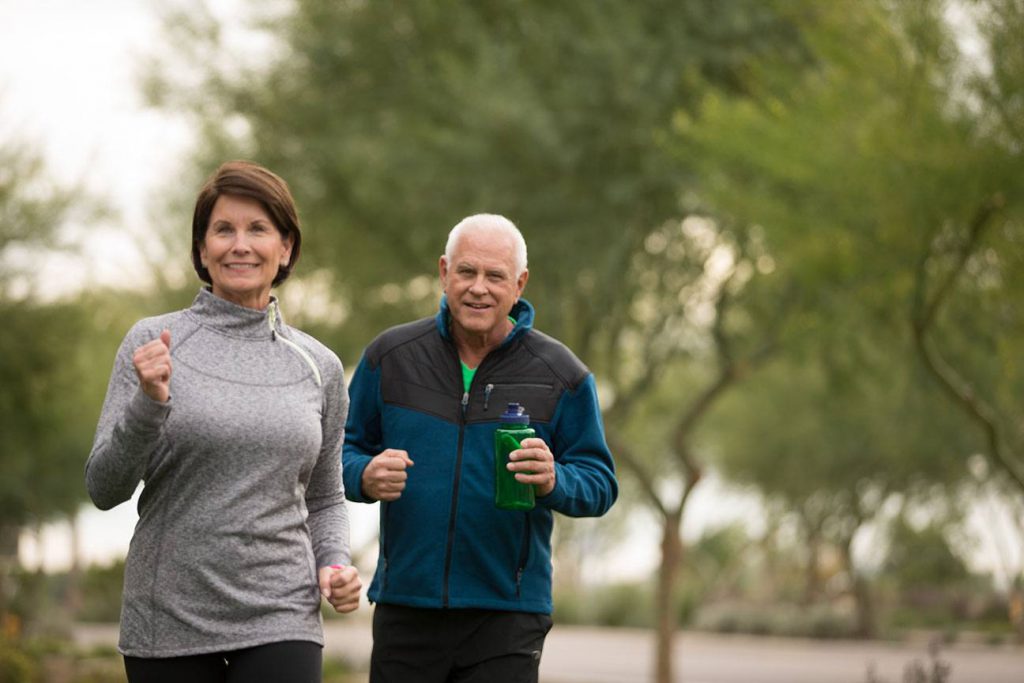
Here is what one class participant shared about her experience with the onset of hip osteoarthritis:
“I have enjoyed an active lifestyle, including jogging, for many years. The onset of hip osteoarthritis was rather sudden for me. After one run in the fall I experienced a dull pain in my left hip towards the end of a longer run. I didn’t think much of it. I rested a few days, then went out for another run, only to experience the same pain, but with greater intensity. I tried changing my shoes, terrain, and distance, but the pain continued and progressed. In the hours following my run I would be extremely stiff and sore and with a noticeable limp.
For me the pain only occurred during running. I could walk, hike, and participate in SilverSneakers and other group fitness classes with no problems.
I took the winter off, hoping that by the spring I would see improvement and be able to continue running. My first run after a five-month hiatus was an interval walk-run. I experienced the most pain and stiffness in my left hip since the pain began, lasting 48 hours. I was diagnosed with osteoarthritis of the hip.
Adjusting my perspective has helped me to manage my hip osteoarthritis. Instead of focusing on what I can’t do, I focus on what I can do. I do more walking and hiking. I take time to include more stretching and flexibility. I focus on strengthening the muscles around my hip. My goal is to manage my hip osteoarthritis for as long as possible. My SilverSneakers classes have been a valuable tool in helping me achieve my health and fitness goals.”
Because participants with hip osteoarthritis are likely to experience pain, they will likely experience limitations in range of motion, decreased flexibility, and muscle imbalances that may lead to decreased strength and balance challenges. This may increase their risk for a fall. While it is important to strengthen the muscles of the hip joint, we must also recognize that movement in one joint affects movement in another joint. A balanced exercise program will provide exercise for flexibility, strength, and functional mobility in the low back, abdominal region, and legs down through the ankle and foot. Total-body workouts, like SilverSneakers classes, are ideal in helping class participants manage chronic conditions, especially hip osteoarthritis.
Instructor Tips for Managing Exercise Discomfort
It is normal for some discomfort to occur during exercise, but exercise should not hurt. Participants who express pain during an exercise should be encouraged to reduce their range of motion, use a shorter lever length, decrease resistance, not use external resistance, or “skip a rep” to reduce pain. If pain persists longer than two hours following exercise this can indicate that the exercise was “too much”. Recommend participants to talk to their doctor.
The muscles surrounding the osteoarthritic hip joint sense pain and contract to anchor or brace to protect the joint. This contraction shortens the muscles and limits the range of movement. In addition to pain in the affected area, the participant may also have short, tight muscles in the surrounding areas, such as low back and knees. Gentle flexibility exercises that work to restore joint range of motion will be important.
Instructor tip: Cue, “Chest lifted, shoulders back and down and belly button drawn in. Inhale when preparing for the exercise or stretch, exhale into the exercise or stretch. Notice how the muscles feel while relaxing the joint.”
Instructor tip: While holding stretches for 30-60 seconds promotes flexibility, participants might find it more comfortable to stretch for a shorter duration multiple times. Cue to inhale to prepare for the stretch, exhale into the stretch. Breathe normally and hold the position for 8 to 10 seconds. Inhale to prepare for the release and exhale to release the stretch. Repeat this 2 to 3x for each muscle group being stretched.
Pain in the affected joint may cause the person to minimize movement. Other muscles may be overcompensating to help manage the pain. Therefore, it is common to see muscular atrophy in the affected joint and imbalances in the opposite joint. Contract-release exercises in the hip joint and surrounding musculature can help with some strength training while limiting the range of motion in the painful hip.
Instructor tip: Seated or standing, cue to squeeze the gluteal muscles for 5 seconds and release for 5.
Instructor tip: From a seated position, place the ball on the outside of the thigh, holding with your hand; press the thigh into the ball while providing a gentle opposing force with the hand.
Participant Experience
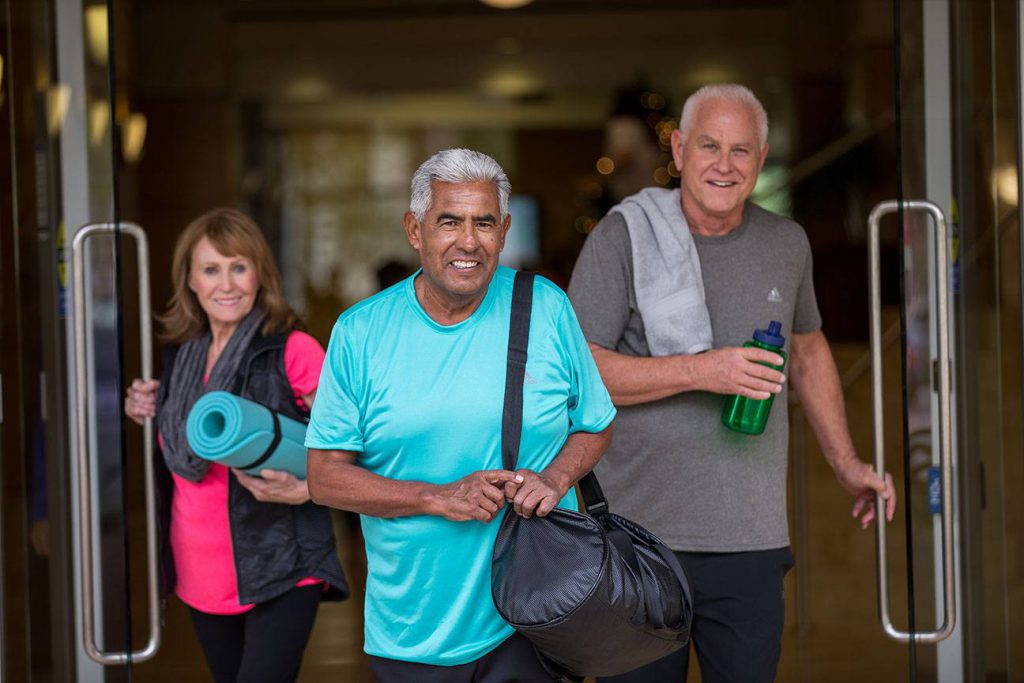
One member of Global Fitness in Leominster, Massachusetts, said:
“I have always been active. I enjoy going to the gym, playing golf, Latin dancing and traveling. I developed osteoarthritis in both hips, the left side being the worst. Because of my active lifestyle, I was able to manage my osteoarthritis quite well with a few activity modifications. When playing golf became a challenge and I had a hard time bending over to get my ball out of the hole, I decided it was time to have my hips replaced.
The left side was replaced in May 2017 and the right side was done six months later in November 2017. Prior to my surgery I focused on upper body strength exercises to help me using the walker and crutches. This was not suggested, but I knew it would speed up my recovery. My house has lots of stairs and this was critical for me.
Following my hip replacement surgery, I had the normal precautions for posterior hip replacement: 90-degree rule, no crossing legs. The only activities I engaged in were with the in-house personal trainers for four weeks after surgery. I would do approximately eight exercises every day, twice a day, plus as much walking as tolerated on a flat surface. I did not really engage in other activities. When you have the first hip done, you do not know what to expect and you lean on the side of precaution.
After the in-house therapy, I continued physical therapy for about two months, twice a week. I was determined to retain the quality of life that I had prior to my surgery. Also, it is critical to stress the importance of self-discipline. At times I did not feel like doing my program at home but when I did, I was shortening my recovery and I felt great.
I am now back to enjoying all of my favorite activities inside and outside of the gym.”