Lesson 1.5: Tempo and Training Rhythms Used in Group Exercise

Tempo is the speed or pace of the music. Music designed for the group exercise setting is often designed and identified with having a Beat Per Minute (BPM) Tempo is an important musical component as it can promote or hinder safe movement patterns. Tempo should allow proper time and pacing for a full range of motion of each exercise. When music is too fast, movements become forced and injuries can occur. If music is too slow it can create awkwardness and frustration, distracting a participant’s focus and overall enjoyment.

SilverSneakers signature classes provide recommended safe music tempos or BPMs for each class format.

Signature class

Recommended BPM

SilverSneakers Classic

124-128 BPM

SilverSneakers Circuit

124-128 BPM

SilverSneakers Splash

124-128 BPM (adjust for water tempo)

SilverSneakers Yoga

No identifiable beat (ambient music recommended)

SilverSneakers EnerChi

No identifiable beat (ambient music recommended)

SilverSneakers Stability

Music optional

BOOM MUSCLE

124-130 BPM

BOOM MOVE

126-140 BPM

BOOM MIND

No identifiable beat or 65-85 BPM

Exercise can be taught to the standard tempo of the music moving with each beat. Speed can also be manipulated to work half time – moving on every other beat – or double time – moving twice for every beat – to accommodate various fitness movements and goals.

Slower rhythmic variations such as half time can be used to introduce a new exercise or teach a more complex movement pattern. Double time may be used to challenge workout intensity or for reaction training. Other rhythmic variations may be used to train the concentric – shortening phase – or eccentric – lengthening phase – of a muscle group.

Speed and rhythm

The following section demonstrates basic rhythm and speed variations using group fitness music. The first section shows examples of tempo variations used in land cardio and dance style class. The second section shows examples of tempos variations used in aquatic and strength style classes.

Video demonstration of cardio rhythmic variations:

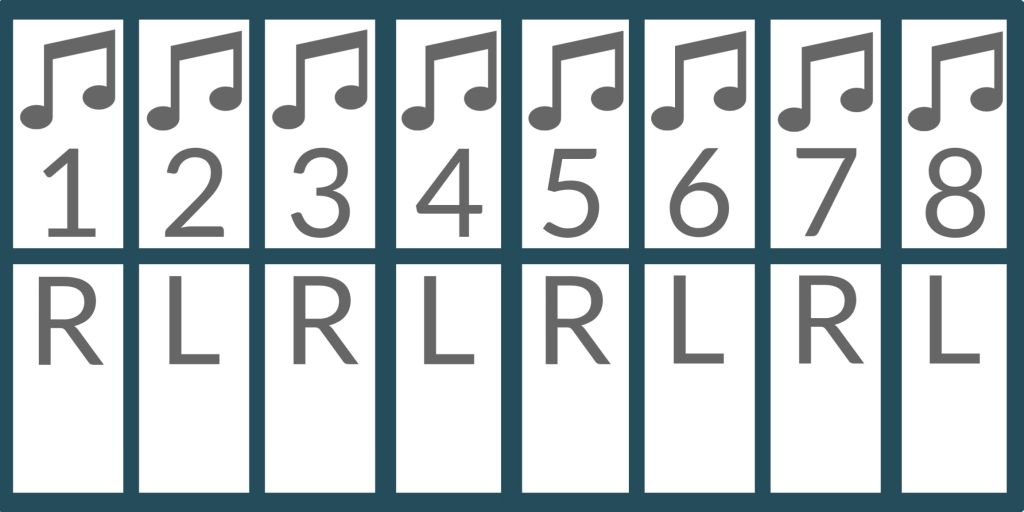
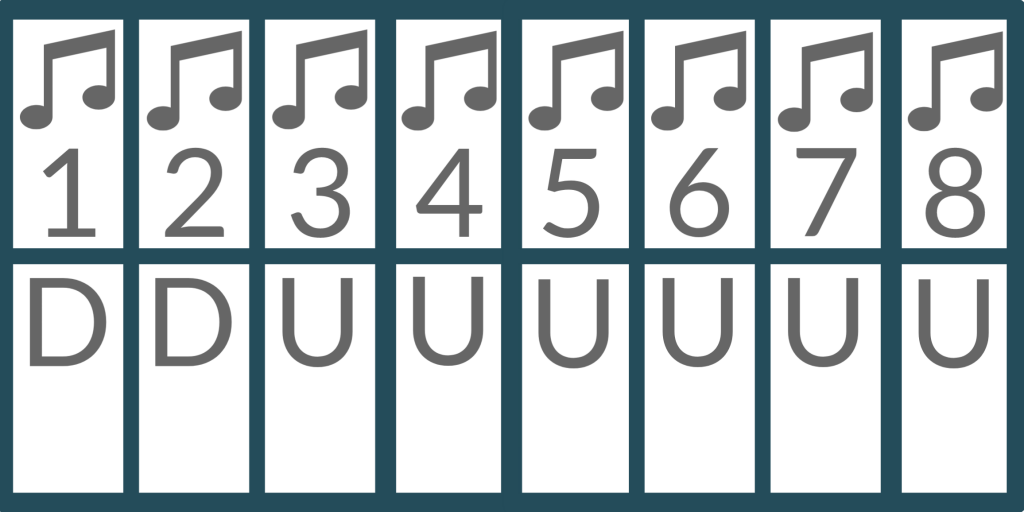
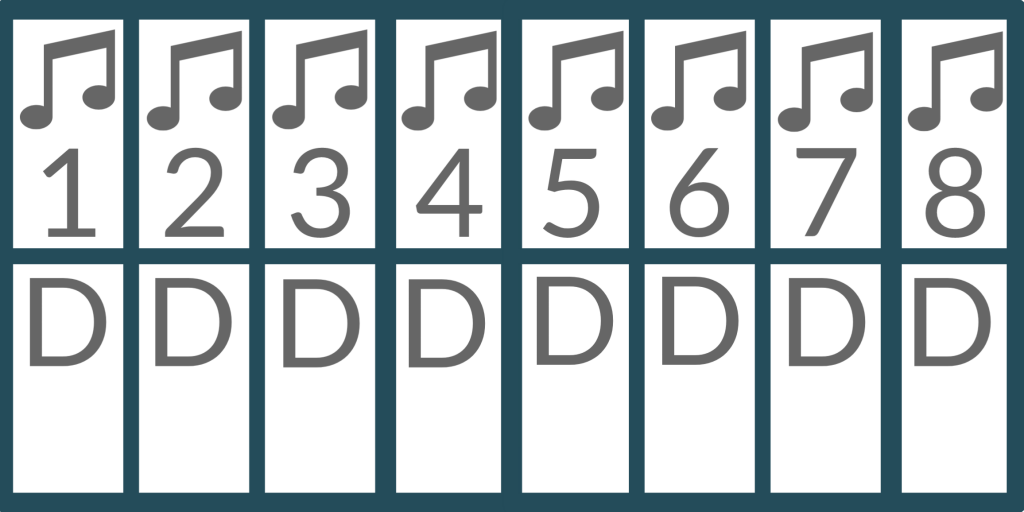
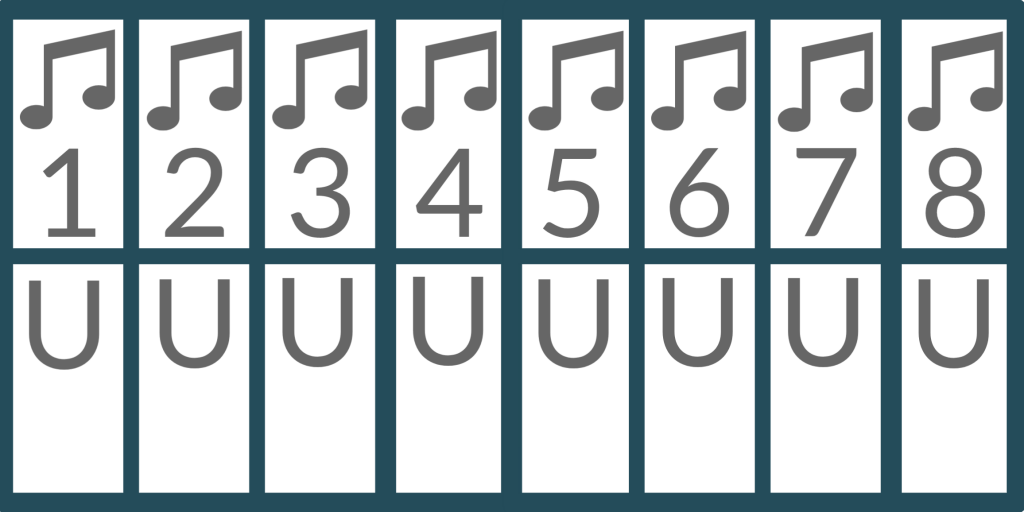
Key: The letters represent the step or movement that occurs on each beat of the music.

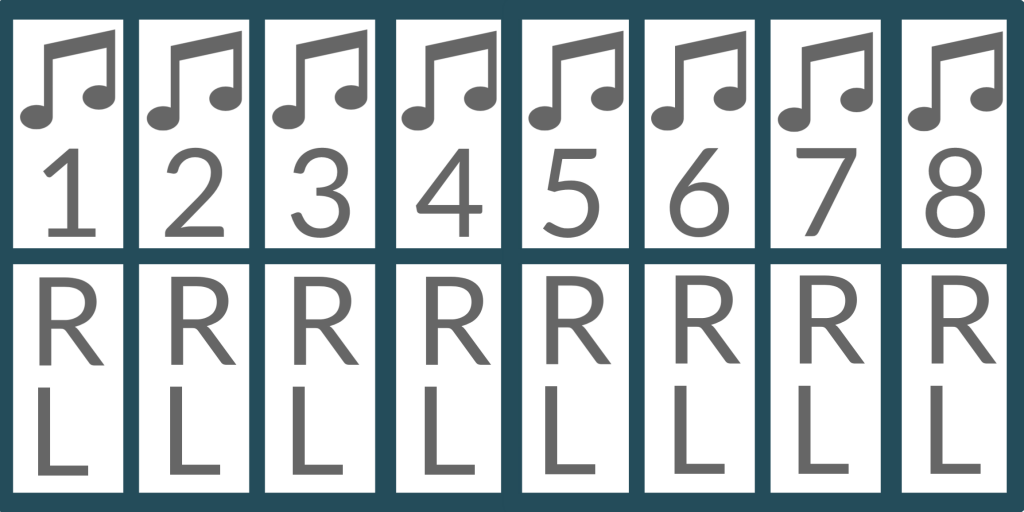
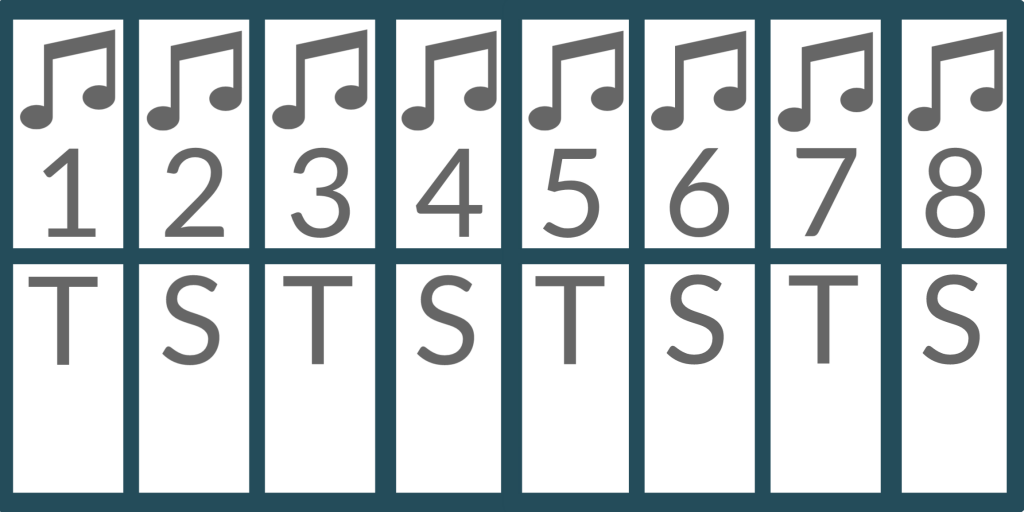
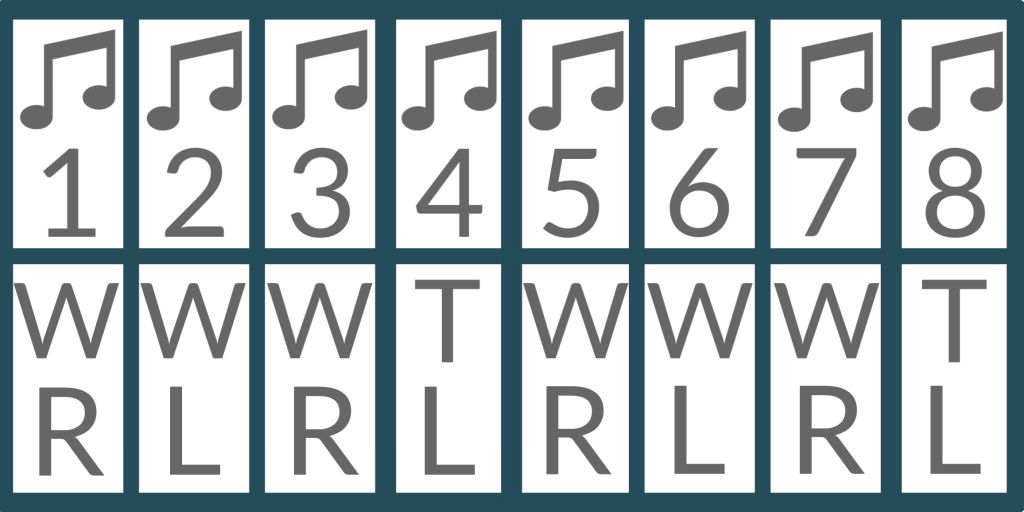
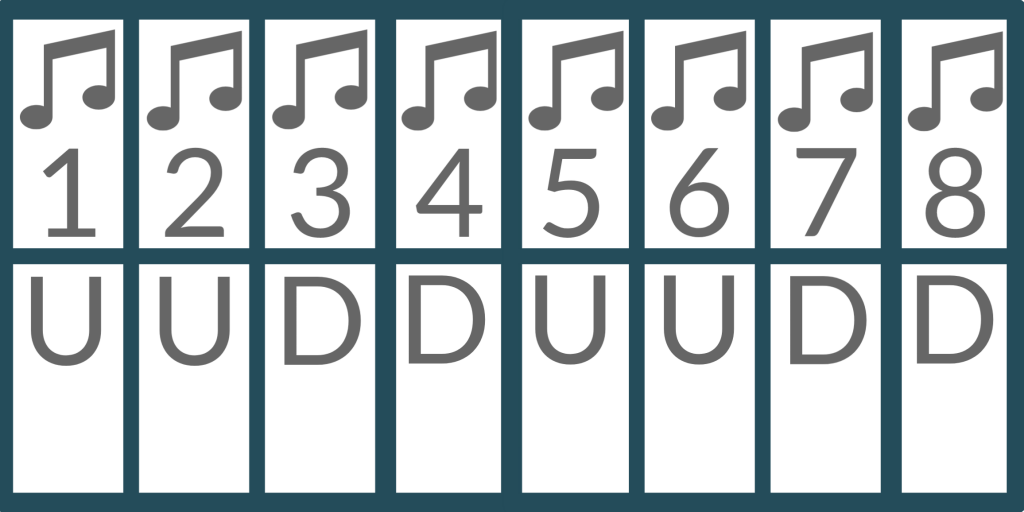
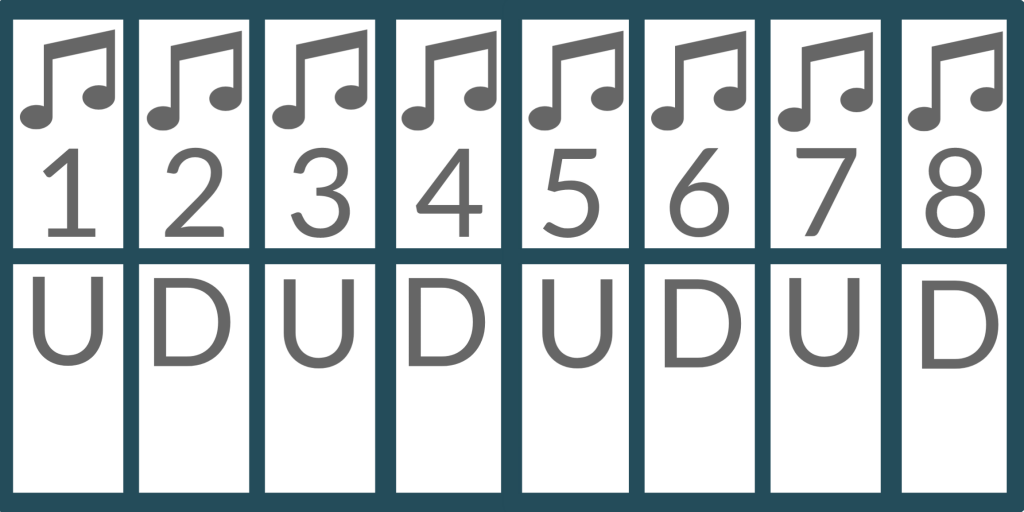
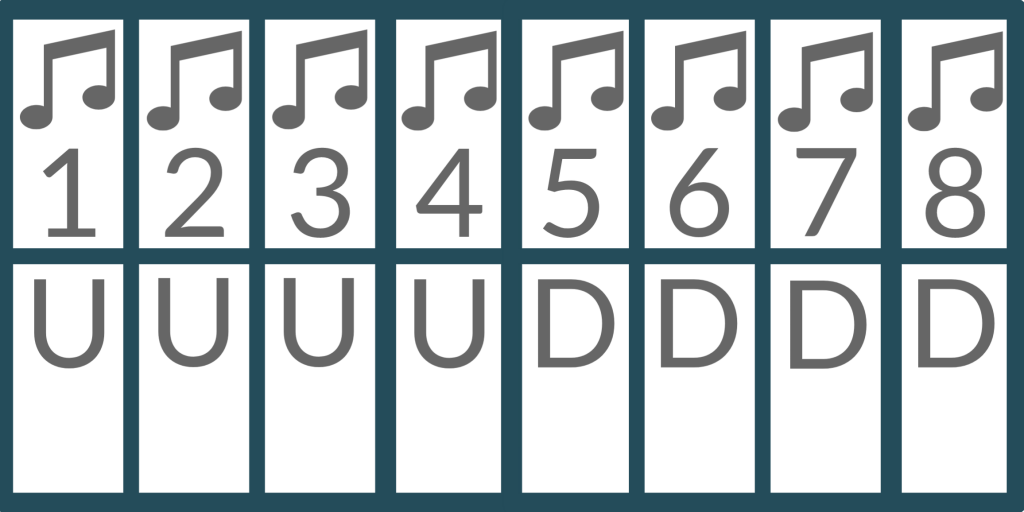
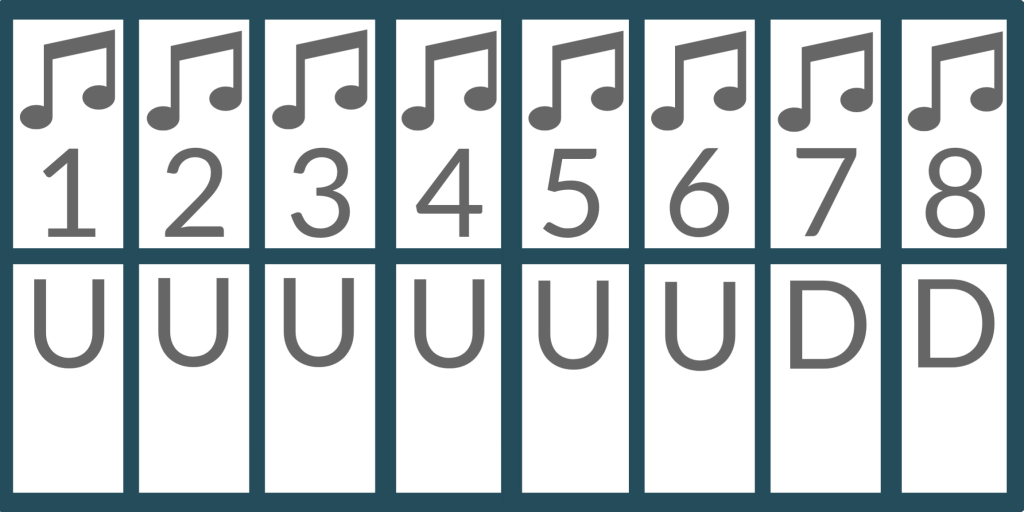
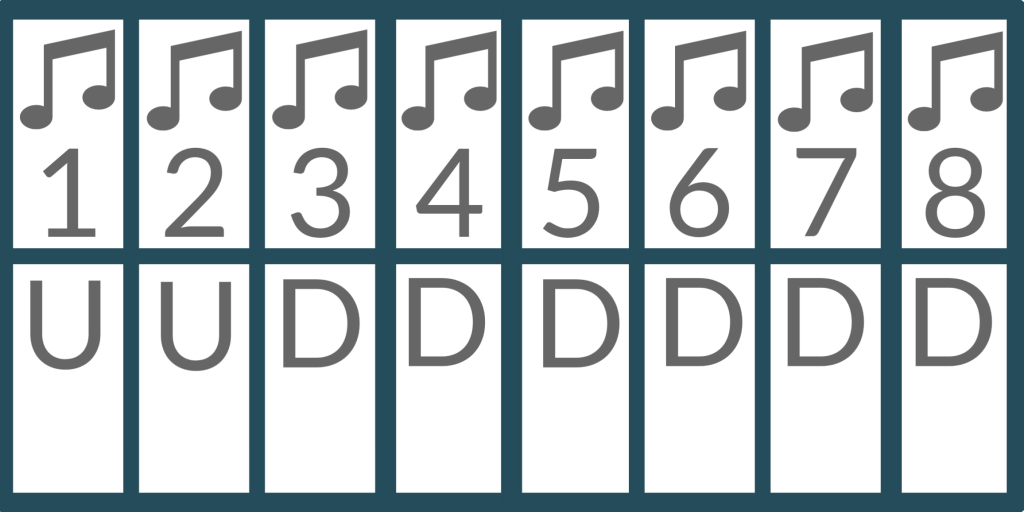
The following boxes provide a visual representation of the movements practiced in the video. The beats of music are numbered 1-8. The key notes the movement that was performed on the specific beat of music for each rhythmic variation. 

W: walk

R: right

L: left

D: down

U: up

T: tap

S: step

F: forward

B: backward

K: knee

The following information is a visual graphic of the movement on each beat of the music.

Basic time 1:1 – Walk in place

Double time – Quick feet

Half time 2:2 – Alternating tap in place

3:1 – Walk 3 + tap

1:3 – Tap + walk 3

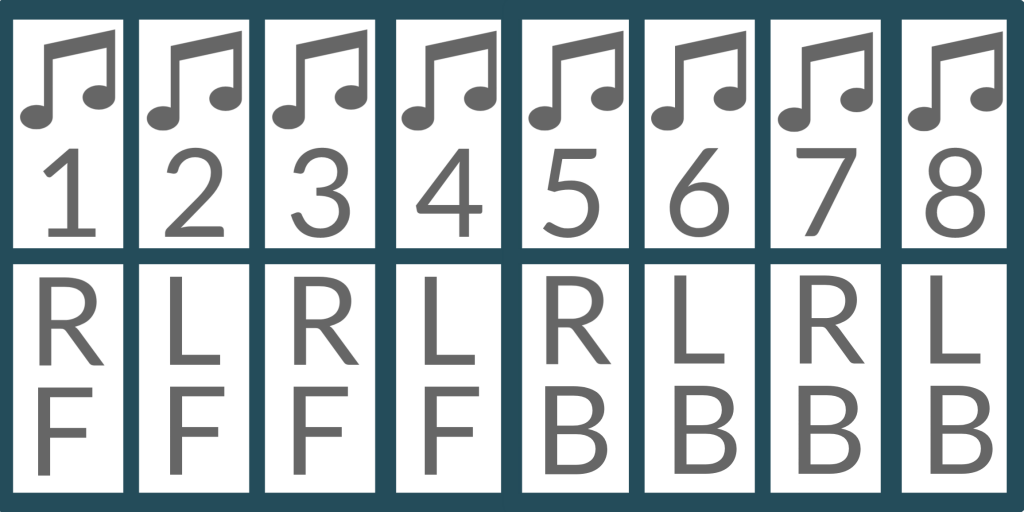
4:4 – Travel forward 4 counts + travel backwards 4 counts

The following video shows a movement combination demonstrating the previous speed variations.

Instructor Practice:

Now you try it! Practice the combination demonstrating rhythmic variations. If appropriate, teach this combination as part of your warm-up for your next class.

Video choreography:

8ct walk in place – tempo

8ct walk wide – tempo

8ct walk in place – tempo

8ct 2x out-out-in-in – tempo


8ct walk in place

24ct 3x 4ct forward/4ct backward


16ct 4ct walk forward + out-out-in-in + 4ct walk back + demo syncopation – quick out – quick in (reaction)

16ct 4ct walk forward + quick out – quick in + 4ct walk back + quick out – quick in


8ct slow alternating heel rise “slow-mo” jog (half time)

8ct stampede (double time)

8ct slow-mo jog (half time)

8ct stampede

Put it together: 4x

16ct 4ct walk forward + quick out – quick in + 4ct walk back + quick out – quick in

8ct slow alternating heel rise “slow-motion” jog (half time)

8ct stampede

Strength Rhythm Variations

Video demonstration of strength rhythmic variations using a squat:

Key: The letters represent the step or movement that occurs on each beat of the music.

W: walk

R: right

L: left

D: down

U: up

T: tap

S: step

F: forward

B: backward

K: knee

Basic time – Squat

Double time or “pulse” – Squat

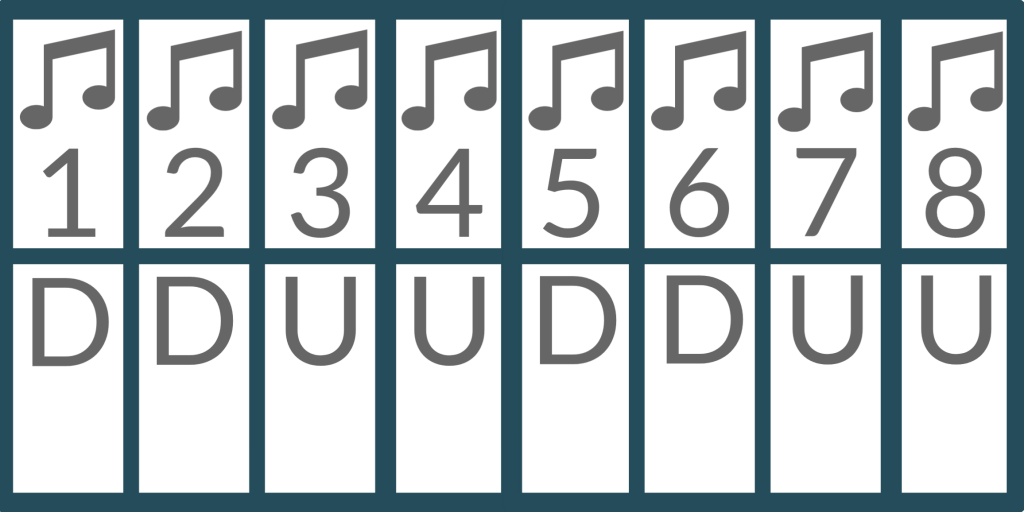
Half time – Squat

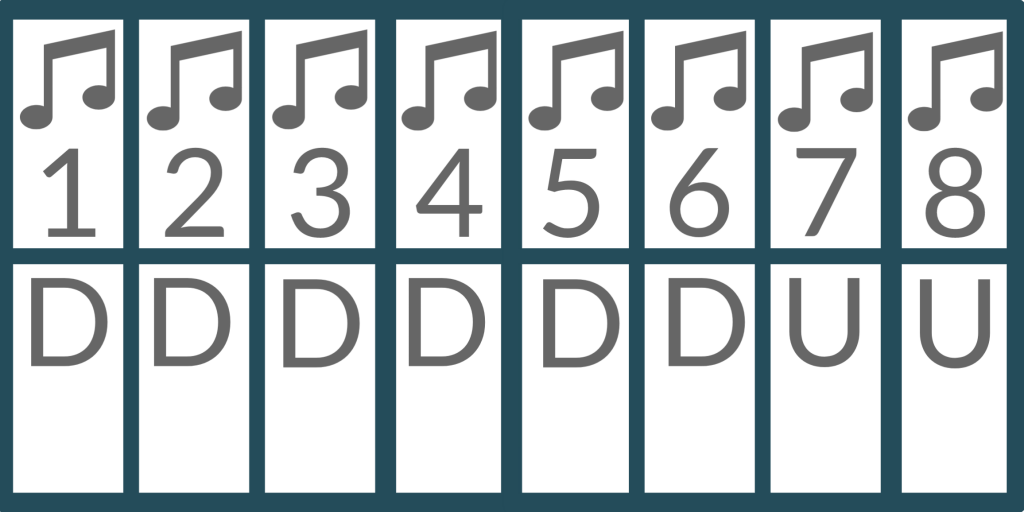
3:1 – Squat

1:3 – Squat

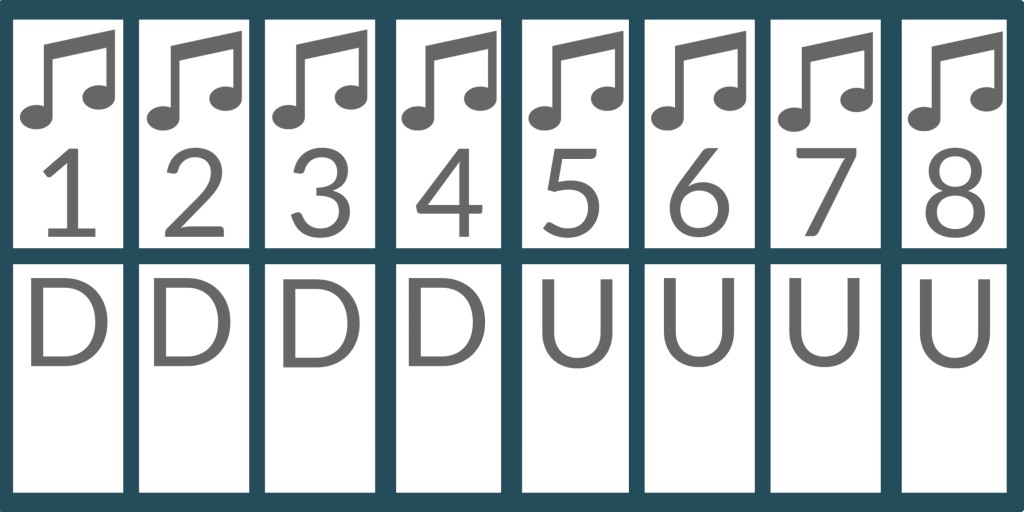
Super slow 4:4 – Squat

Video demonstration of strength rhythmic variations using a biceps curl:

The following boxes provide a visual representation of the movements practiced in the video. The beats of music are numbered 1-8. The key notes the movement that was performed on the specific beat of music for each rhythmic variation. 

Key: The letters represent the step or movement that occurs on each beat of the music.

W: walk

R: right

L: left

D: down

U: up

T: tap

S: step

F: forward

B: backward

K: knee

Basic time – Biceps curl

Double time or “pulse” – Biceps Curl

Half time – Biceps curl

3:1 – Biceps curl

1:3 – Biceps curl

Super slow 4:4 – Biceps curl

The following video shows an exercise combination demonstrating the previous speed variations.

Instructor Practice:

Now you try it! Practice the combination demonstrating rhythmic variations. If appropriate, teach this block as a strength combination in your next strength-based class.

Video choreography:

16ct (2x) biceps curl

16ct 2x 2ct bottom, 2ct middle, 2ct top, 2ct hold top

        2ct top, 2ct middle, 2ct bottom, 2ct hold bottom


32ct (4x) upright row

32ct 2x 8ct singles R/L 1x double R

        2x 8ct singles LR 1x double L


16ct (2x) side arm lift

16ct 2x pulse 3x (6cts) top, 2cts down


16ct (4x) straight arm push back

48ct 3x 2ct bk R, 2ct bk L, 4ct both down

        2ct bk L, 2ct bk R, 4ct both down


32ct 4x 2-2 squat 

32ct 4x 3-1 squat

32ct 4x 1-3 squat

Walk and shake out your legs


32ct 3x 4ct drop down quick-hold + 4ct push up quick-hold

8ct   1x 4ct drop down quick-hold – up 4cts


32ct 4x pulse down 3-up 1


64ct 4x: 4ct squat out R-in + 4ct squat out L-in + 8ct 2x squat out R-in

              4ct squat out L-in + 4ct squat out R-in + 8ct 2x squat out L-in