
In this lesson you will learn how to motivate your class and manage a variety of situations.
- Focus on specific opportunities you can provide within the class to help members experience success.
- Think about how members benefit from the social connections that are created and cultivated within the class.
- Complete the 3 questions on this lesson in the unit study guide.
Motivational leadership for exercise adherence includes teaching with authenticity, presenting information positively and working diligently to build relationships with participants. Instructors are encouraged to use positive language while coaching participants to meet their exercise goal.
Regular exercise has been shown to decrease the risk for cardiovascular disease, type 2 diabetes, and some types of cancers. Additionally, regular exercise can help people maintain healthy body weight, bone density, muscular strength, and mental health (U.S. Department of Health and Human Services, 2015). It can even reduce a person’s chance of dying early from common causes of death such as heart disease (U.S. Department of Health and Human Services, 2015). However, according to the President’s Council on Fitness, less than 20 percent of adults achieve the recommended amount of exercise (2017).
Motivation
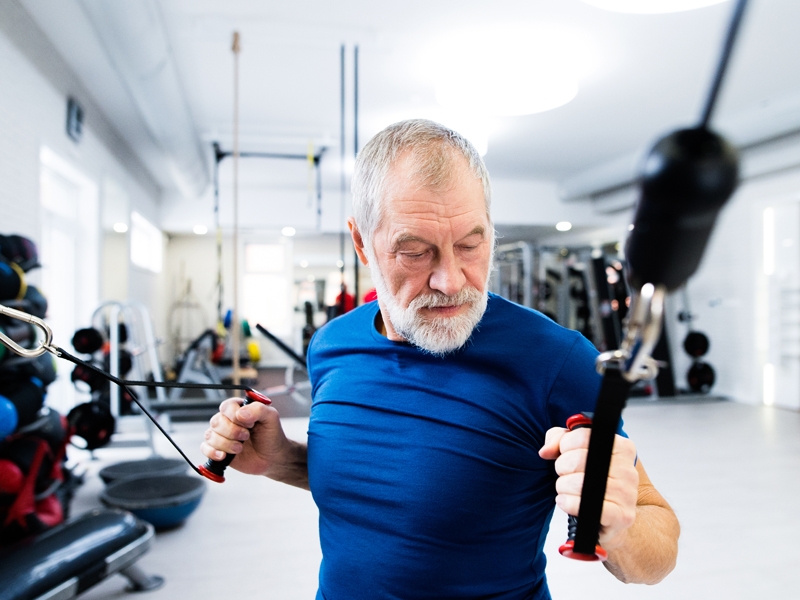
Motivating factors, factors that inspire us to act, are different for everybody. They also motivate us in different ways. Motivating factors affect an individual’s decision to start an exercise program as well as to continue, or adhere to, an exercise program. These factors can also change over time.
For example, Mr. Smith decided to start an exercise program to improve the way he looked before a family vacation. He then continued to exercise after the vacation because he made new friends at the gym, and he enjoyed spending time with them. Over time he adjusted his exercise routine to factor in new motivators including preparing for a competition and recovering after an injury.
Although complex, motivation and behavior change has been studied extensively. Over time, many different theories have been developed and studied in their relationship to exercise and health promotion. Today, no one theory dominates the research. Our suggestions reflect that and draw upon different theories to motivate your class participants. Here are some simple motivational techniques that you can apply to your instructional technique.
Create Opportunities for Success

People want to be successful. When participants believe they can successfully perform a given task, also known as self-efficacy, they will put more effort into a task, and they are more likely to persist through challenges (Bandura, 1997). Provide class members with the opportunity to experience success and increase self-efficacy by:
- Setting goals.
- Providing modifications, progressions, and regressions as noted in the SilverSneakers Way Coaching Model.
- Providing positive reinforcement and sandwiching corrective feedback with positive statements.
- Including time in class to practice new skills.
- Introducing relatable role models.
- Planning for challenges such as holiday schedule changes.
Make it Convenient and Have Fun
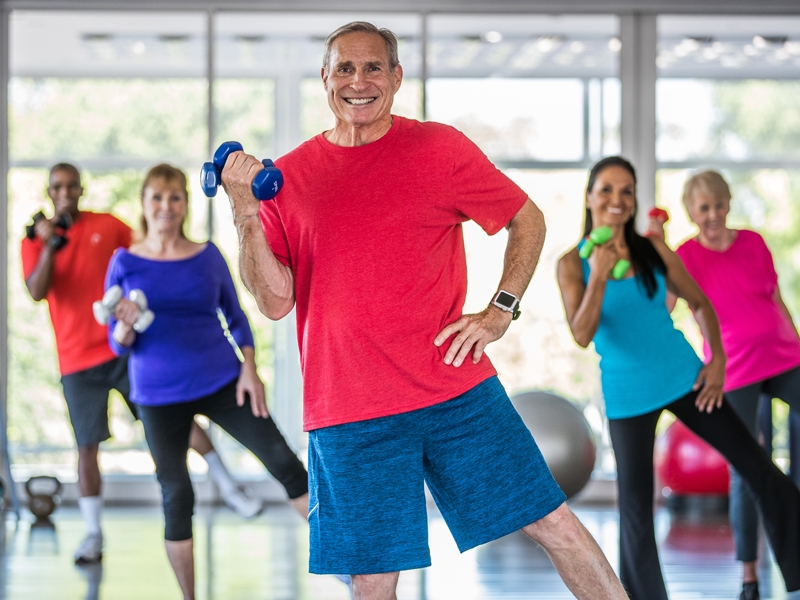
People are more likely to perform activities they view as convenient and rewarding (American Council on Exercise, 2014). Create an accessible and fun environment by:
- Facilitating a supportive and cooperative class environment. Examples include celebrating participants’ successes and creating a class chant or mantra.
- Including music and exercises class participants enjoy.
- Providing an opportunity to socialize and get to know each other before, during, or after class.
- Offering classes at convenient times and in convenient locations. Take factors such as street traffic, facility traffic, classroom location, and daylight hours into account.
- Helping participants navigate transportation options such as carpools, bus schedules, and older adult community transportation alternatives.
- Offering affordable programming.
Facilitate Relationships

Many older adults experience changes in their social network and daily responsibilities that can negatively affect motivation. These include life events such as retirement, illness, injury, loss of loved ones, and transitioning into the caretaker role. As a fitness instructor, you can facilitate new and supportive social connections that provide motivation. Try these activities for building class connections:
- Introduce new participants to other participants and identify things they have in common.
- Introduce participants to facility staff.
- Come to class early so that you can welcome everyone to class.
- Offer pre- and post-class gatherings and social events.
- Assign class helpers or ambassadors.
- Learn new exercises together.
- Include partner exercises when appropriate.
- Celebrate holidays and birthdays together.
- Celebrate a class member of the month.
- Act as a class to give back to a community organization.
- Support activities such as creating a class phonebook or cookbook.
- Create support outside your location by offering a friends and family day so loved ones can learn more about what your class participants are doing.
Class Implementation
In summary, you have a unique opportunity to support behavior change and motivate class participants. There are several tactics you can include in your classes. In general, you will be successful if you take a sincere interest in your participants, provide appropriate class choreography, and support a positive and social atmosphere.
Tips
- Participating locations and FLEX instructor partners are required to abide by the guidelines and standards agreed upon and set forth for implementation of the SilverSneakers group exercise program.
- Classes range from 30 to 60 minutes.
- Classes must be taught in an area appropriate for group exercise instruction; e.g., an area that is a safe and positive environment.
- The recommended classroom set-up allows for instructor demonstration and interaction. A honey-comb pattern with chairs staggered and facing forward is preferred. A circle set-up may cause neck strain and demonstration difficulty.
- Floor work options and the use of a steel-gauge chair varies by format.
- Participants are encouraged to bring water to class, dress in comfortable clothing, and wear shoes with good lateral support and shock absorption qualities.
- Locations and SilverSneakers FLEX partners are required to maintain and replace and/or purchase new equipment as needed.
- In partnering fitness locations, additional classes must be added if class participation continuously meets or exceeds room capacity for a continuous period of one month or 12 classes. We recommend 16 square feet of space per person.
- Participating locations must provide extra assistance for:
- Classes that are held in large gymnasiums or aerobic rooms able to accommodate more than 30 adults.
- Classes maintaining an attendance of 30 or more participants for a continuous period of one month, or 12 classes.
- From our experience, more basic and less challenging choreography is presented when teaching older adults in a large group setting because of the elevated risk. Assistance from another instructor or a staff member during the class enhances the vibrancy and progressive improvement of all participants, safely and effectively! These assistants are not required to be CPR certified or to complete instructor training courses. The second instructor or staff member must assist the instructor before, during and after class to maintain a safe and effective workout environment.
- A fitness schedule is the “heart and soul” of group exercise programming and how your location communicates to new participants what they will be doing following enrollment. All printed material must follow logo usage guidelines for the SilverSneakers fitness program. Your location or network contact has additional marketing resources available for program promotion. Core classes such as Classic, Circuit, Yoga, and Stability are listed with the SilverSneakers name. BOOM MOVE, MUSCLE, and MIND can be listed with the associated SilverSneakers BOOM trademark name, or without the SilverSneakers reference.
Classes other than our signature formats should not be listed with the SilverSneakers trademark logo.
Class Format
Schedule Name
Optional Name
Classic
SilverSneakers Classic
Circuit
SilverSneakers Circuit
Yoga
SilverSneakers Yoga
Stability
SilverSneakers Stability
Splash
SilverSneakers Splash
MOVE
SilverSneakers BOOM MOVE
BOOM MOVE
MUSCLE
SilverSneakers BOOM MUSCLE
BOOM MUSCLE
MIND
SilverSneakers BOOM MIND
BOOM MIND
Risk Management
Managing safety and risk in the group exercise environment is a primary responsibility of the group exercise instructor. You are encouraged to create and practice an emergency action plan, maintain current CPR certification and engage in continuing education opportunities.
Group Exercise Health and Safety Guidelines
- Be aware of common warning signs: pain, swelling, muscle weakness, discoloration, disorientation, slurred speech, dizziness, numbness and profuse sweating.
- Be aware that providing safe and effective instruction may be more challenging due to inherent risks associated with the effects and/or side effects of some drugs. Participants should follow all physician’s directives regarding prescriptions.
- Understand scope of practice. Do not prescribe medical treatment. Encourage participants to consult a physician for any problem lasting longer than two or three days.
- Encourage your participants to wear proper exercise clothing and footwear.
- Cue a minimum of three times for breathing, posture, hydration and perceived exertion.
- Avoid positioning participants in a circle.
Emergency Procedures
- Any injury, however slight, needs attention and written documentation.
- To date, treadmill injuries are the most commonly reported incidents in participating locations. Participants should follow all guidelines presented during your location’s safety orientation.
- Review and practice your location’s emergency plan. Know the exact location of the AED, first aid kit, ice, CPR masks, fire extinguishers, intercom systems, and telephones. Maintain current CPR certification.
- Practice an injury/crisis scenario with your participants. Assign responsibilities for notifying staff, calling 911, obtaining the AED or first aid kit, etc.
- Exercise flooring should be safe and appropriate for movement. Flooring should absorb shock. Carpet and concrete floors are not recommended. Carpeting reduces stress but hinders movement. Choreography must be adapted to limit locomotion and quick directional changes.
- Exercise appropriate footwear is recommended. Shoes need cushioning, support, and flexibility. Footwear should provide traction to avoid slipping. Proper fit is important.
- Support devices: Participants must possess the functional ability to perform exercises in a group setting. Those with support devices may need to make adaptations to sitting position, standing anchor positions, as well as movement execution principles. Never put a participant needing extra support at risk for a fall.
Music Licensing
Music is a great way to enhance motivation. Due to music licensing requirements, you or your facility may need to purchase licensing rights from copyright companies. Know what limitations and requirements apply to the locations where you teach. Using pre-formatted group exercise music is highly recommended in class formats which require a musical phrase to keep the group moving together.
Each signature class has specific music recommendations and guidelines. Your class format training will provide more guidance around music tempo and feel. We’ve partnered with Yes! Fitness Music to provide this music and created a free album just for you that is available through the Yes!GO Music app. In addition, as a SilverSneakers instructor you can receive a discount on all Yes! Fitness music.
- Access your free playlist here: www.getyesgo.com/silvermix
- Redeem your discount on all other great music available from Yes! Fitness Music here: www.getyesgo.com/silver
Scope of Practice
Instructors are encouraged to take responsibility for programming safe and effective exercises in each class they teach. Instructors must refer participants to licensed and credentialed professionals in the areas of injury prescription, medical consultation, nutrition consultation and mental health support.
Follow all recommendations for complying with the federal government’s 2004 Privacy Act:
- When a participant begins to discuss personal health issues, escort the student to a private setting if possible, away from the hearing range of others.
- If you learn that a participant is planning to be absent from class due to a health-related issue (e.g., illness, surgery, hospitalization):
- Ask the participant what, if anything, you can share with others if you are asked about the participant’s absence.
- If a participant’s absence from class is obvious to others, acknowledge the absence without providing any personal details.
- When talking about the benefits of exercise or coaching for exercise modifications for persons with certain conditions, speak generally without referring to any specific class member.
Congratulations!
You’ve completed Unit 4. Now you’re ready to check your understanding of the content by completing the Unit 4 Review Quiz.
Good luck!