
In this lesson you will learn how the heart and lungs work together.
- Focus on how you will provide cues for even and continuous breathing throughout the workout and tips to avoid breath holding. For example, counting or talking out loud during challenging strength work.
- Think about how members benefit from an appropriate cool down after the work segment of the class.
- Answer the 21 questions on this lesson in the unit study guide.
The cardiorespiratory system, otherwise known as the circulatory system, is responsible for circulating oxygen throughout the body while removing waste. To better understand this life-maintaining process, we’ll examine the cardiovascular system and the respiratory system, and the potential effects of exercise on circulation.
Aerobic activity is defined as activity that utilizes large muscle groups and is rhythmic in nature. This type of activity places a demand on the heart, lungs and body’s systems to make improvements in efficiency and performance. Aerobic training occurs in the presence of oxygen, or during sub-maximal workloads. Exercises such as walking, running, dancing, and cycling are examples of aerobic activity or exercise that trains the cardiorespiratory system.
There are many benefits to cardiorespiratory training.
- In response to an aerobic training program, V02 max will increase.
- The heart, like many muscles in the body, gets stronger in response to training. This increases the force of contraction of the heart, resulting in increased stroke volume and cardiac output. With training, more blood and oxygen can be delivered to working cells and tissue.
- Muscles also adapt so they can better extract and utilize the oxygen. This is accomplished by an increase in the number of capillaries, mitochondria, and aerobic enzymes.
- Resting heart rate decreases due to an increase in stroke volume.
- Regular aerobic exercise may result in a decrease in blood pressure in those with moderate hypertension.
Consider some of the real-world benefits that our members might see from cardiorespiratory training.
As you are getting to know members ask them to think about their goals and how you can help achieve them?
The Cardiovascular System
The cardiovascular system is composed of the heart, blood, and blood vessels. The main function is to transport nutrients, including oxygen, to the cells throughout the body. It also transports waste products like carbon dioxide. The circulatory system’s function is critically important; if blood flow is cut off to any part of the body, that part will die quickly.
The heart is the system’s pump. Its main function is to circulate blood throughout the body. The beating of the heart forces blood to flow to muscles and organs in a continuous route. The heartbeat is an involuntary or automatic function.
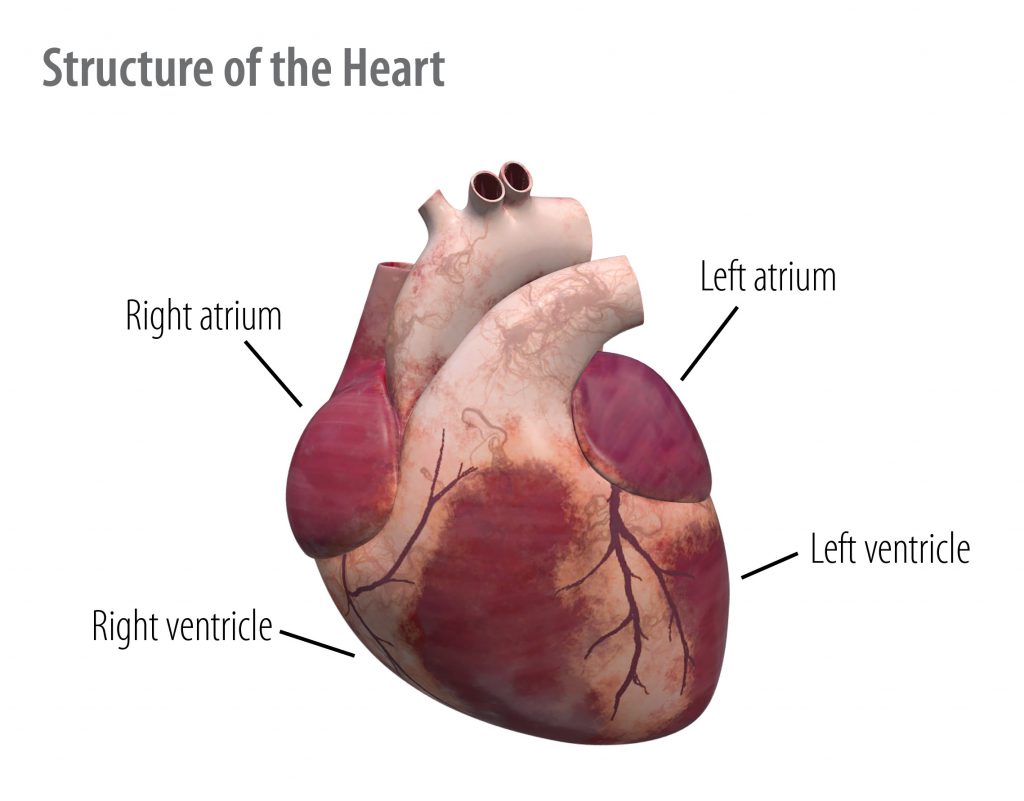
- Muscular organ
- Composed of four chambers; left and right ventricles, left and right atria.
- The right side is responsible for pulmonary circulation: circulating the blood that is high in carbon dioxide to the lungs for gas exchange.
- The left side is responsible for systemic circulation: circulating the blood that is high in oxygen to the body tissue.
Blood is the system’s transportation medium. The blood’s main function is to transport nutrients and oxygen throughout the body. The blood is composed of:
- Red blood cells – Carry oxygen.
- White blood cells – Aid in defense and immune function.
- Platelets – Aid in coagulation and clot formation.
Blood vessels are the system’s distribution channel. The different types of blood vessels are:
- Arteries – Carry oxygenated blood to the cells.
- Capillaries – Thin walled vessels that are embedded in the muscles and tissue.
- Veins – Carry deoxygenated blood to heart and lungs.
The Respiratory System
The cardiovascular system works closely with the respiratory system. When we breathe, air enters the lungs through the nasal cavity or mouth, then travels to the pharynx, larynx, and trachea. From there, the pathway separates into the left and right bronchi and bronchioles. If you picture an upside-down tree, the trachea forms the roots.
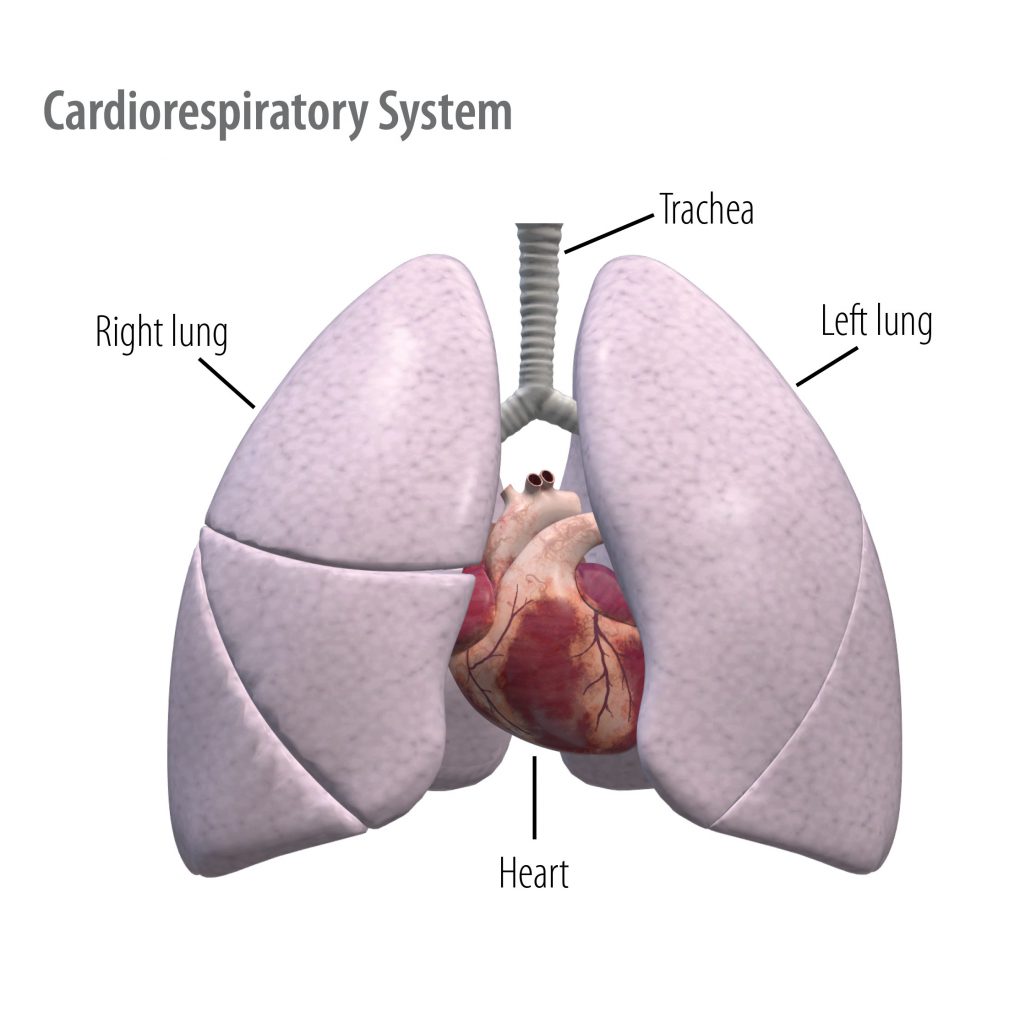
Since lungs have no muscles of their own, they rely on movement of muscles through the torso and abdomen to inflate and deflate. The diaphragm is the primary muscle of respiration, assisted by the inner and external intercostals, or muscles connecting the ribs.
Instructor tip: With exercise, coach for even and continuous breathing throughout the workout. Asking participants to talk out loud during challenging strength work is a way to increase engagement and ensure exhalation.
Path of Circulation
To understand how oxygen is delivered to working cells and tissues, we’ll examine the path of circulation. The deoxygenated blood that is high in carbon dioxide is carried via the veins to the right side of the heart. It flows into the right atrium to the right ventricle and is circulated to the lungs. The right side is associated with pulmonary circulation. Gas exchange occurs in the lungs. The carbon dioxide is unloaded and oxygen diffuses into the blood. Blood flows back to the left atrium, left ventricle, then out to the body via the arteries. The left side is associated with systemic circulation. Since blood has further to go as it travels to the body, the left side of the heart is larger.
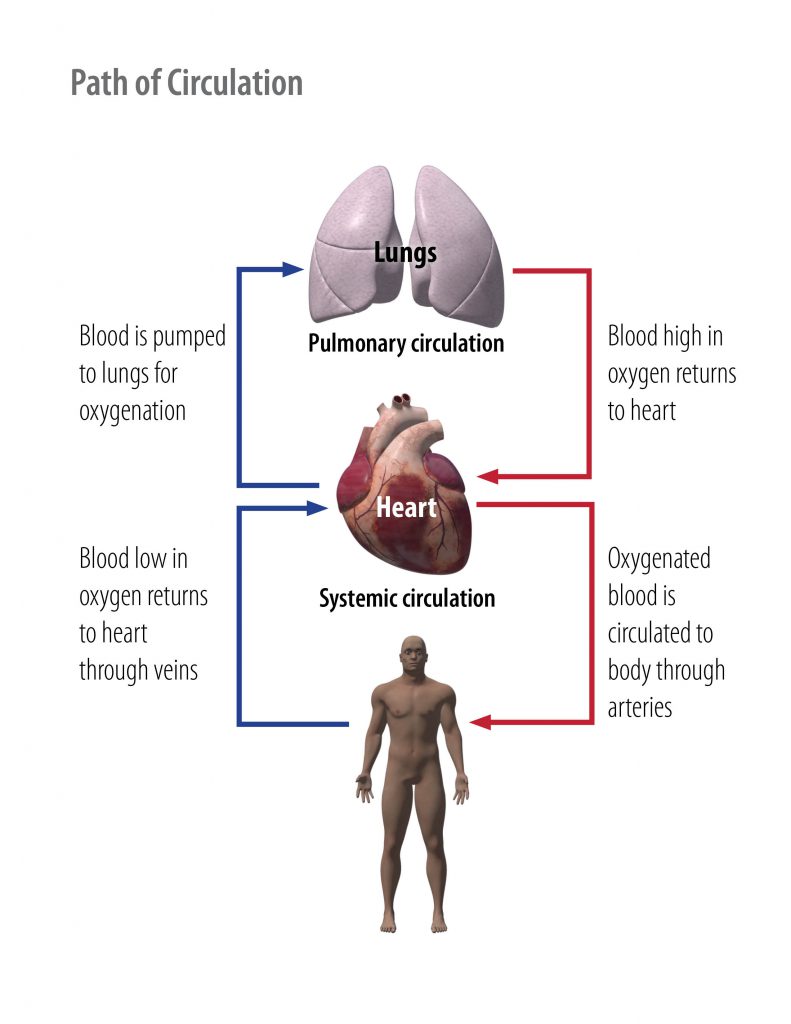
The efficiency of the heart is measured by functional capacity. Functional capacity is the volume of blood pumped by the heart per minute and is referred to as Cardiac Output (Q). The higher the cardio output, the better the functional capacity. Many factors influence how fast one’s heart beats, including heredity, age, physical condition, and activity level.
- Resting Heart Rate is the number of heartbeats per minute when the body is at complete rest.
- Maximal Heart Rate is as fast as your heart can beat and effectively deliver blood.
- Steady State Heart Rate is the point at which the energy needs of the body during exercise are being met aerobically. During a constant, sub-maximal work the heart rate will plateau. This takes 2-3 minutes. To reach steady state, a warm-up is performed prior to aerobic training sessions.
The Cardiorespiratory System and Exercise
Blood Pressure is the pressure exerted on arterial walls. At rest, blood is circulated throughout the body under force through arteries. When blood returns to the heart, it does so through veins. Circulation of blood to working cells and tissues occurs under higher pressure than when blood returns to the heart and lungs for re-oxygenation. Systolic blood pressure is the pressure exerted when the heart muscle contracts, where diastolic pressure is a measure of the residual pressure left over when the heart muscle relaxes.
Hypertension, or high blood pressure, can increase the risk of kidney disease, cause strokes, heart disease, and injury to blood vessels. Hypertension usually has no outward symptoms; therefore, detecting the problem is difficult unless blood pressure is checked regularly.
Instructor safety skill:
Regulating breathing, exercise intensity and exercise selection will help your participants manage their blood pressure response.
Venous Return: Venous Return is the term used to identify the blood’s return to the heart under low pressure in the veins. The blood’s return to the heart is assisted by the pumping action of working muscles and a system of one-way valves. Blood pressure in the veins is very low compared to the pressure in the arteries. Veins have a series of one-way valves arranged like a ladder. The squeezing action of the contracting muscles against the veins facilitates the return of blood back to the heart, referred to as “venous return.” Since veins carry blood back to the heart under low pressure, if there is no muscle action or an individual stops movement, blood will pool, or gather, in extremities, causing insufficient supply of blood to return to the heart.
Instructor safety skill:
Each signature class includes a cool-down component. To avoid blood pooling, please provide an adequate cool-down during each class format to facilitate the redirection of blood flow and a slow decrease in heart rate.
Valsalva Maneuver: If the breath is held during exercise, intrathoracic (chest) pressure increases. This increase in pressure partially closes the large veins in the chest cavity, impeding blood flow back to the heart. If blood flow back to the heart is decreased, there is less blood to pump out. Consequently, less blood and oxygen is circulated to the brain and dizziness and fainting can occur. Therefore, it is generally recommended that people exhale when they are performing the concentric phase of a lift and inhale during the eccentric phase.
Instructor safety skill:
To help regulate blood pressure, instructors should cue for breathing a minimum of three times during each class.
Instructor safety skill:
Always avoid breath holding and cue for consistent breath throughout your class.
Exercise Response: During cardiovascular exercise, systolic blood pressure increases in direct proportion to increased exercise intensity. Diastolic blood pressure changes little, if any, during endurance exercise, regardless of intensity. During resistance exercise, both systolic and diastolic blood pressure increase. It is important that instructors work to mitigate an adverse blood pressure response by limiting inversions, coaching for adequate breathing, and carefully selecting resistance exercises.
Instructor safety skill:
During more challenging movement patterns, when performing overhead movements, or the arms are brought overhead with resistance, instructors are encouraged to coach participants for audible exhales. Speaking and singing out loud may encourage a strong exhale with an open airway.
Instructor safety skill:
To mitigate the blood pressure response during resistance training, avoid isometric exercises, where the body is held in a static position. Instead, cue for an “isometric pulse,” where the exercise is dynamic but uses a small range of motion.
Monitoring Intensity
Measuring perceived exertion provides a benchmark for safety and intensity. Know your participants are working hard enough to receive benefits without taking unnecessary risks.
Instructor safety skill:
You are required to monitor exercise intensity in each SilverSneakers class a minimum of three times.
Perceived exertion helps gauge intensity without the need to measure heart rate. Since age, fitness level, duration of exercise, medications, time of day and time of last meal can influence heart rate, getting an accurate reading to reflect exercise intensity can be difficult.
For our signature class formats such as Classic, Circuit, Stability, Splash, MOVE, and MUSCLE, you’ll be measuring intensity using the SilverSneakers Perceived Exertion (PE) Chart. This chart is a tool to rate exercise intensity on a scale of 1 to 10. Participants can measure intensity by describing “how they feel” as each number on the chart corresponds to a description. You can safely monitor workout intensity and adjust accordingly. This chart was adapted from the traditional Borg scale and developed with SilverSneakers class participants. Be sure to display the Perceived Exertion Chart in a prominent location during every signature SilverSneakers class.
While Perceived Exertion may be monitored at any time during the class, we recommend a minimum of three PE heart rate intensity checks before, during, and after class. This allows for a broader assessment of perceived intensity changes among the varied skill levels present in the group setting.
The following chart provides intensity recommendations for the SilverSneakers class setting:
Class Segment
PE
Description
Warm-Up
1-3
From rest, gradually increase heart rate, breathing rate, and joint range of motion
Working heart rate during resistance or aerobic exercise
4-8
Monitor intensity often to ensure benefit while avoiding risk of injury
Post Cool-Down
2-3
Ensure an adequate cool-down before the stretch and relaxation segment
Caution intensity
9-10
If participants are at risk for overexertion, reduce intensity and monitor for safety
Be familiar with ways to increase and decrease exercise intensity.
Increasing Intensity
If class participants do not perceive challenge or see improvements, exercise adherence may decrease. If intensity needs to increase, provide movement innovations such as increasing range of motion, adding movement complexity and changing the volume of work.
Decreasing Intensity
Those who are sedentary or less fit may quickly lose interest in classes that are too physically demanding. To decrease intensity, consider providing simple movement adaptations, apply tempo changes, or reduce the range of motion.
Providing movement variation will help each member select an individual level of intensity while harnessing the benefits of exercise in a group setting.
Monitoring intensity in mind-body classes
For SilverSneakers mind-body classes such as Yoga and BOOM MIND, you’ll use an adjusted perceived exertion chart that follows a 1-3 intensity scale. Since heart rate elevation is less likely in these formats, Intensity can be monitored based on exercise difficulty, muscular strength and endurance, and overall comfort with movements.