In this lesson you will learn about chronological versus biological age.
- Focus on how understanding these ages will allow you to better address the wide variety of skill level within your class.
- Think about how members’ biological age can be improved when they receive individualized programming in their fitness routine.
- Answer the 2 questions on this lesson in the unit study guide.
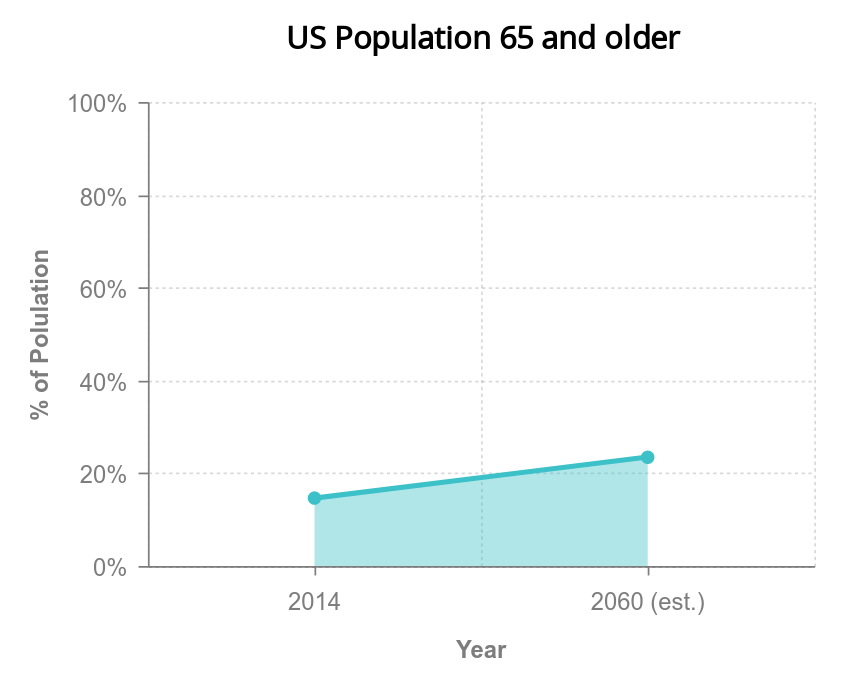
As Americans live longer, growth in the number of older adults is unprecedented. In 2014, 14.5% (46.3 million) of the US population was aged 65 or older and is projected to reach 23.5% (98 million) by 2060 (Colby & Ortman, 2014). The baby boomers, born between 1946 and 1964, are largely responsible for this increase in the older population, as they began turning 65 in 2011 (Ortman, Velkoff, Howard & Hogan, May 2014).
As a SilverSneakers instructor, you’ll be leading classes geared toward older adults. You may know individuals who are physically young but older in age, as well as those who are young in age, but physically older. To better understand our diverse membership, we’ll explore what being an ‘older adult’ means.
Defining ‘older adult’ requires looking at two different age classifications: chronological age and biological age. While chronological age refers to the number of years that a person has lived, biological age considers a person’s health status. Biological age may, or may not, be the same as a person’s chronological age.
How can you meet the various needs of all the members?
At SilverSneakers, we start first with chronological age and define an older adult as those who are eligible for our program benefits, or generally, those who are 65 and older. But, keep in mind, each members’ biological age may be different. The physiological signs of aging may be more, or less present, amongst participants in the SilverSneakers fitness program. Our programs must meet the needs of a wide variety of members although they are the same ‘age’.