In this lesson you will learn about incorporating functional fitness and fall prevention into SilverSneakers Classic.
- Focus on how to design your classes with functional fitness and stability in mind.
- Think about how using these elements in your class benefit members of varying ages and fitness levels.
SilverSneakers Classic programming exercise strategies are based on creating exercises and functional movement patterns in class that will help older adults gain and maintain critical skills and mobilities in their every day lives. This emphasis on function will facilitate real-life movement patterns and result in a decrease in the risk of falls, increased strength, improved balance and cognitive function, giving participants a stronger, healthier body.
Movement Principles
- Functional Fitness for Older Adults
- Five Functional Movement Patterns
- Activities for Daily Living (ADLs)
- Exercise and Fall Prevention
- Exercise for Cognitive improvements
- Push
- Pull
- Bend and lift (squat)
- Single leg movement
- Rotate
Train for how the body was designed to move
Human movement does not occur as a series of isolated joint articulations. Our bodies are designed to be in constant motion with joints and muscles working together in coordination to keep us upright, walking and functioning at peak form. For example, the gait cycle is a series of coordinated movements. Our bodies need to demonstrate proficiency in each of the five basic functional movement patterns in order to maintain a smooth and balanced walking gait.
Because of this collaboration of joints and muscles, think about training movements instead of simply training isolated muscles.
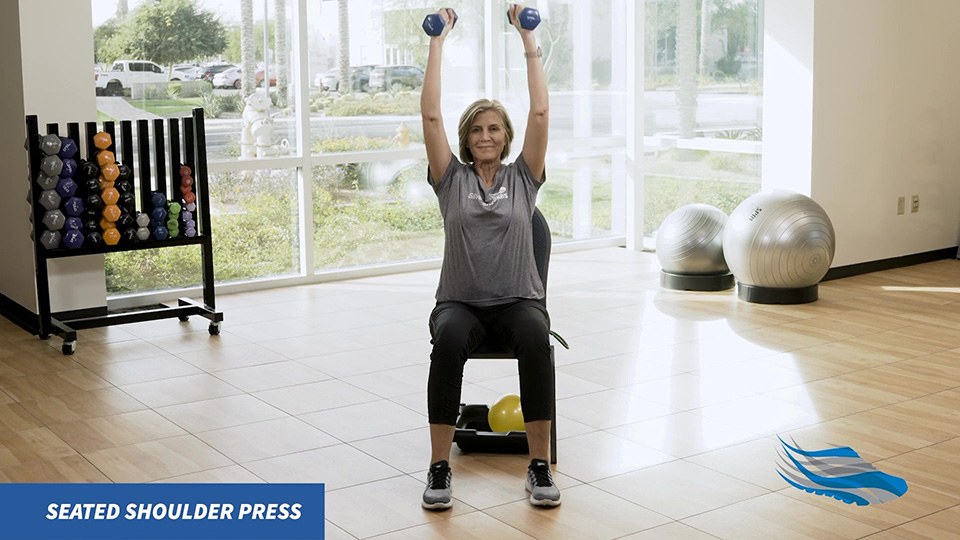
Push
A pushing exercise requires the body to push an external weight away from the body. Upper body pushes tend to emphasize chest, shoulders and triceps, while lower body pushes effect quadriceps and calves. We perform push movements every day when we put groceries away on a high shelf, push ourselves up from a chair or close the car door.
Pull
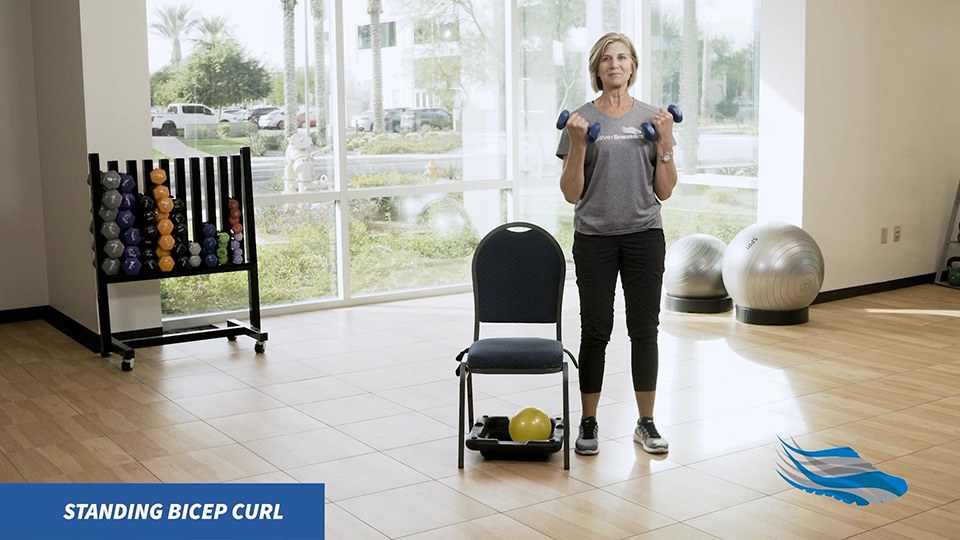
A pulling movement is the opposite of a pushing movement. When pulling, resistance is applied as you pull toward the body, or when pulling the body toward an object. Starting a pull-cord on a lawn mower or outboard motor, lifting an object up from a table or the seat of a chair and pulling on a pair of pants are examples of pull movements we use in our daily lives. Upper body pulls generally challenge muscles in the back of the body like back, muscles, biceps, shoulders, gluteals, hamstrings and shin muscles.
Because our daily lifestyle often sees us spending extended periods of time in front of a computer or TV screen, which encourages imbalances like forward head and an exaggerated thoracic kyphosis or rounded shoulders (upper crossed syndrome), it’s a good rule of thumb to perform twice as many pull movements as push movements. It’s also beneficial to spend more time stretching the stronger and tighter muscles in the front of the body, our pushing muscles (chest, shoulders, quadriceps, hip flexor complex, etc.), than we do on the weaker, looser pulling muscles (back, rear deltoids, gluteals, etc.).
Bend and lift (squat)
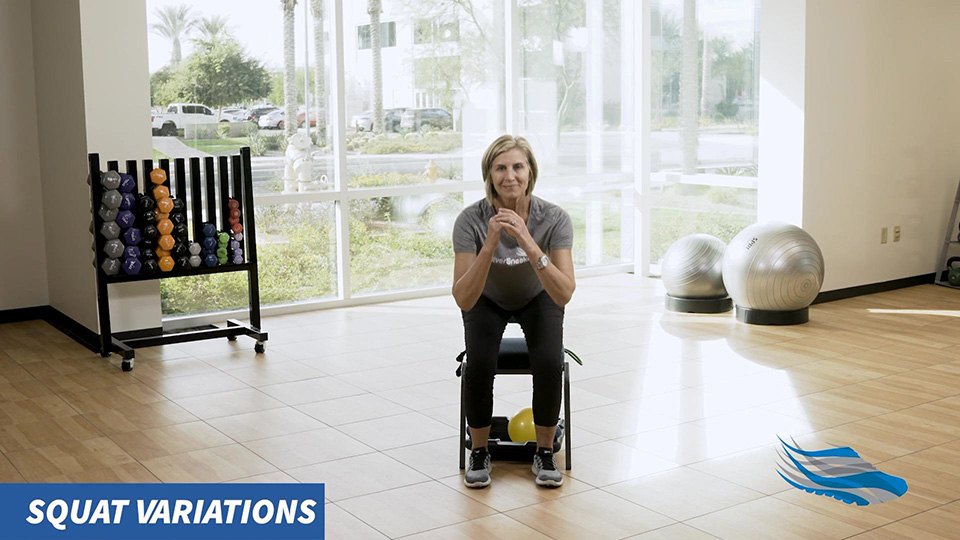
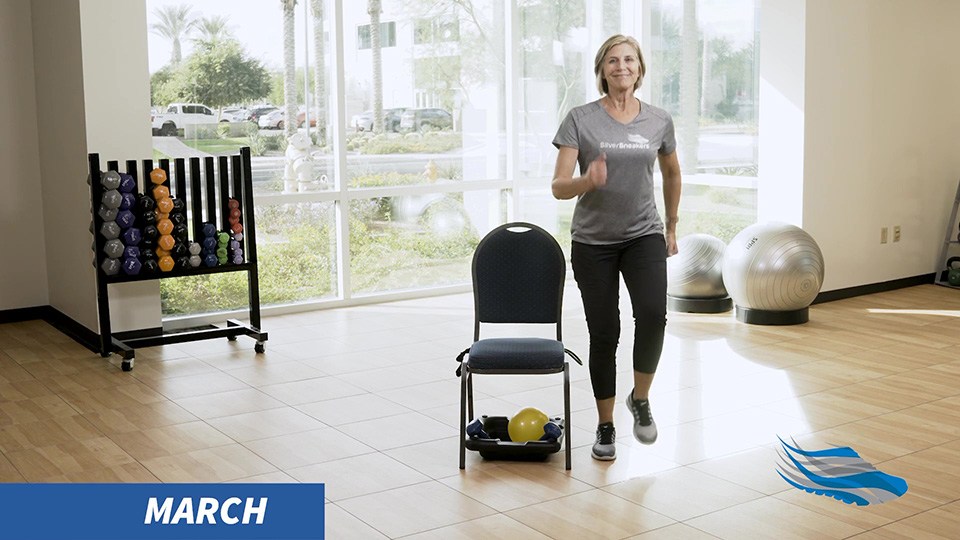
The squat, or bend and lift, is a key movement pattern for older adults. The ability to perform daily tasks such as standing up from a seated position is important in maintaining independence, and the ability to perform daily tasks like getting in and out of a car, standing up and sitting down in a chair is critical for maintaining functional ability.
Single-leg movement
In everyday life, single-leg movements are performed when walking and climbing or descending stairs. Like the bend-and-lift (squat) movement, single-leg movements require combined strength and flexibility, as well as coordination and stability throughout the lower kinetic chain, with the added element of balance. Many daily activities require us to shift weight constantly to one leg, so it is important to incorporate this single-leg movement patterns into each Classic class to enhance functional strength and to improve balance and stability.
Rotate
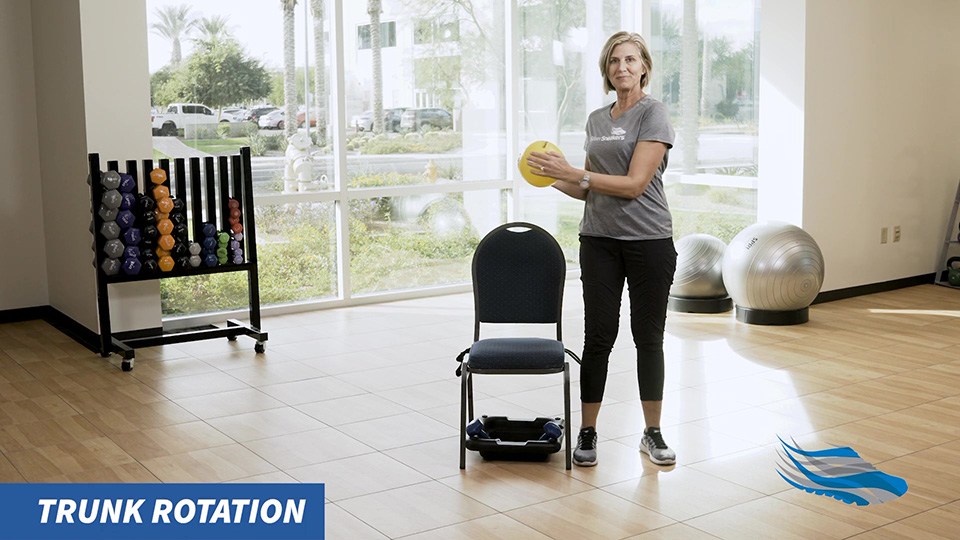
Rotation is an essential functional movement pattern that is sometimes overlooked. Twisting movements are important for core strength and optimal posture. Other functional movement patterns take place in the sagittal plane (forward/back) or the frontal plane (side), but rotation, or twisting motion, takes place in the transverse plane. Many human movements include an element of rotation, like throwing a ball, lifting and twisting with a laundry basket, reaching toward a seatbelt or even walking. Examples of rotational movement patterns are wood chops, seated twists or arm reaches across the midline of the body in which the trunk rotates.
Instructor tip: Rotation may be limited in those with osteopenia or osteoporosis. Always counsel those with such conditions to follow their physician’s directives.
Instructor tip: It’s important to note that human movement does not always fall neatly into one box. For example, a twisting lunge is both a rotational movement and a single leg movement, and while a squat is considered a bend and lift, it can also be considered a lower body push.
Train for fall prevention and cognitive improvements. Incorporate drills for all five skill-related components: balance, power, speed, agility and coordination.
Fall Prevention
Falls happen, no matter what your age, but the higher the age of an individual, the more susceptible they are to experiencing a fall. In fact, the Centers for Disease Control and Prevention has stated that falling is the leading cause of injury and death among adults age 65 and older. (Burns, E., & Kakara, R., 2018).
All of us have tripped and stumbled at some point in our lives, but as we grow older, many factors come into play that create an elevation of the risks associated with falling. The reasons for falls are varied and complex, but by understanding some of these risks, we can begin to provide solutions and mitigate risk factors for SilverSneakers class members.
- Muscular strength and bone density can begin to decrease with age. Alarmingly, this process begins around the age of 30.
- With age and inactivity, cognitive abilities can decline, which results in a lack of integration and efficiency of the unconscious processes the brain goes through to assist with balance. This lack of efficiency can be extremely fatiguing to an older adult, requiring greater mental focus to stay upright. If cognition is in fact deteriorating, the ability of the brain to multitask is compromised, making it more difficult to walk and talk, or drive and talk.
- The quality of information taken in by our senses deteriorates as vision and hearing diminishes. Deterioration of eyesight increases susceptibility to glare and poor depth perception. These factors can lead individuals to misjudge distances and misinterpret the lay of the land.
- Chronic conditions and prescription medications can cause lapses in balance and create elevated fall risk.
Most falls are caused by the interaction of multiple risk factors and not by any one specific thing. The more risk factors a person develops, the greater his or her chance of experiencing a fall.
Physical and psychological results of falling
Many falls do not cause serious injuries, or in fact, any injury at all, but one out of five falls cause a serious injury such as a head wound, a cut or a broken bone. These injuries can make it hard for an individual to go through their usual routines, perform their daily activities or live on their own. Those who are not injured sometimes develop a fear of falling. This fear can cause a person to modify or decrease their everyday activities. When older adults become less active, they can become weaker physically. Those who experience the increased risk of falls can begin to become isolated socially, afraid to navigate the outside world.
Exercise is effective in preventing falls
Exercise is an effective fall prevention intervention. A 2016 comprehensive British Journal of Sports Medicine meta-analysis found that exercise alone reduces the risk of falls in older adults by an average of 21 percent (Sherrington, et al., 2017). As a matter of fact, working out for more than three hours per week was linked to a 39 percent reduction in falls! This means that everything we teach and practice throughout our Classic class can have a direct result in minimizing age-related deterioration of the systems of the body and decreasing the incidence of falls in our older adult population.
Program all five skill-related fitness components into your Classic class: Agility, balance, coordination, power and speed (tempo and rhythm variation). See unit 5 for more in-depth guidance on incorporating these important components into your Classic classes.
Exercise and Cognition
Movement is the key to a healthy, active mind. In fact, as we move and exercise our body, we challenge and improve the function of our brain as well. Recent research shows that exercise can increase the size of the hippocampus, an area of the brain that converts short-term memories into longer-term forms and is also responsible for the memory of the location of objects or people (Gomez-Pinilla & Hillman, 2013).
In addition to priming our state of mind, exercise influences learning directly, at the cellular level, improving the brain’s potential to log in and process new information.
Spark: the revolutionary new science of exercise and the brain, Ratey, John J., 2008
Exercise improves brain function because the mental and physical diseases we face as we age are tied together through the cardiovascular and metabolic systems. As we reduce our risk for cardiovascular disease and diabetes through movement and exercise, we can also reduce the risk of age-related neurodegenerative disorders.
For example:
- Lifting weights to prevent the loss of bone density, osteopenia or osteoporosis, releases growth factors that increase the function of brain cells.
- Cardiovascular exercise, like walking or running, can strengthen the heart and assist in lowering blood pressure, but it also helps keep the capillaries in the brain from collapsing or corroding. Strengthening the vascular system can decrease the risk of stroke.
- Exercise can help balance insulin levels in the body and brain, which can decrease metabolic stress on neurons in the brain.
Mindset and Mood
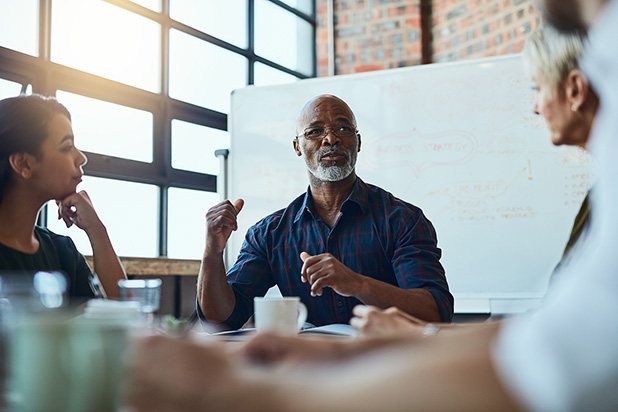
Exercise improves attention and alertness.
The ability to learn
Exercise encourages nerve cells to bind, facilitating the uptake of new information.

The brain’s ability to retain memories
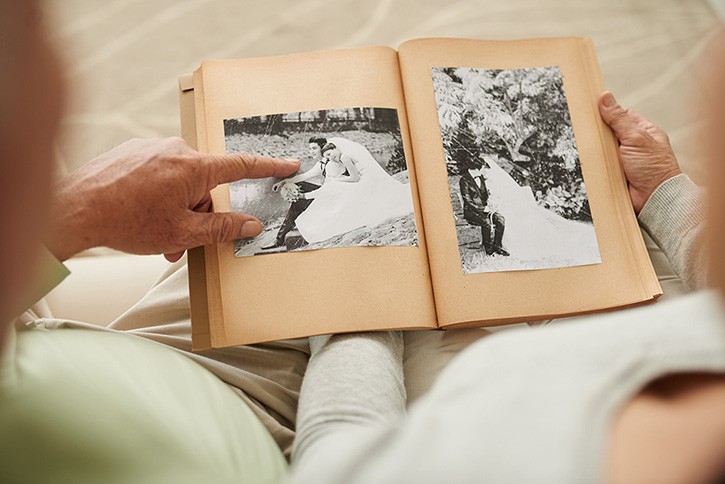
Exercise stimulates the development of new nerve cells in the hippocampus.
To get the most benefit for the brain during a Classic class experience, be sure to add coordination challenges to your class design. Also, learning new movements and choreography causes the brain to work harder and form new connections. Adding brain games, such as memory games, math games and word games, can add both new challenges and fun to your class.