
Elastic Tubing with Handles
Because elastic tubing is not a gravity-resisted tool, we can create movement opportunities that are difficult to implement with gravity-resisted tools (i.e. weights). Elastic tubing with handles is an excellent tool, both for creating focused (isolated) and compound (multi-muscle and joint) exercise options. Exercises that utilize multiple muscle groups result in improved coordination and increases in overall strength and muscular endurance. Use of the elastic tubing with handles can help instructors create workout plans for SilverSneakers Classic classes that are functional and well-balanced.
Variable resistance options offer participants the opportunity to individualize their workout by increasing or decreasing the intensity level of the strength segment without increasing the risk.
Color-coded elastic tubing with handles increases in resistance from yellow to blue.
Yellow tubing provides the least resistance. (*Approximately 3 to 5 pounds.)
Green tubing is appropriate for beginners and moderately fit members. (*Approximately 6 pounds.)
Red tubing is appropriate for stronger members. (*Approximately 10 pounds.)
Blue tubing is appropriate for highly fit members. (*Approximately 15 pounds.)
*At 1-1/2 times its length.
Selecting the proper elastic tubing with handles: Try holding the elastic tubing with both hands at shoulder-width distance, with the tube at shoulder height. If the tubing can be stretched 2½ times beyond its original length for multiple repetitions, it is too light, and a heavier resistance is recommended.
Risk vs. benefit guidelines for elastic tubing with handles:
- Avoid adjusting the length of the elastic tubing by wrapping it around the wrist or hand. If the tubing is too long, cue participants to “grasp along the tube with a neutral (flat) wrist.”
- When performing movement with the tubing under one or both feet, cue participants to place the elastic tubing under their feet with their toes down to keep the tubing from rolling out and causing injury. Additionally, the tubing must stay anchored on the ground under at least one foot at all times.
- When utilizing tubing for single leg work in a standing or seated position, make sure to anchor the tubing under one foot. For example, a seated side step may be performed with the tubing anchored under the foot of the stabilizing leg. In other words, when the right foot steps to the side, the tubing is anchored securely under the left foot. This guideline applies to standing movement as well.
- Tubing should not be wrapped around the foot.
- The use of elastic bands or tubing without handles is not recommended as it is difficult to grip for those with conditions like osteoarthritis or rheumatoid arthritis.
- When securing the tubing through the hole at the top of the back of the chair for core work, cue participants to sit back in the chair to avoid having the rear chair legs lift off the floor.
- The elastic tubing with handles should not be wrapped around any body part, including hands, arms and legs. Wrapping and then pulling on the tubing can create skin tears and bruising for older adults.
- Maintain neutral wrist position during all exercises.
- Consistently check for wear and tear on the tubing as it can become damaged and break.
- Be sure to secure the handles of the tubing during class so they do not create a trip hazard for participants.
Hand-held Weights
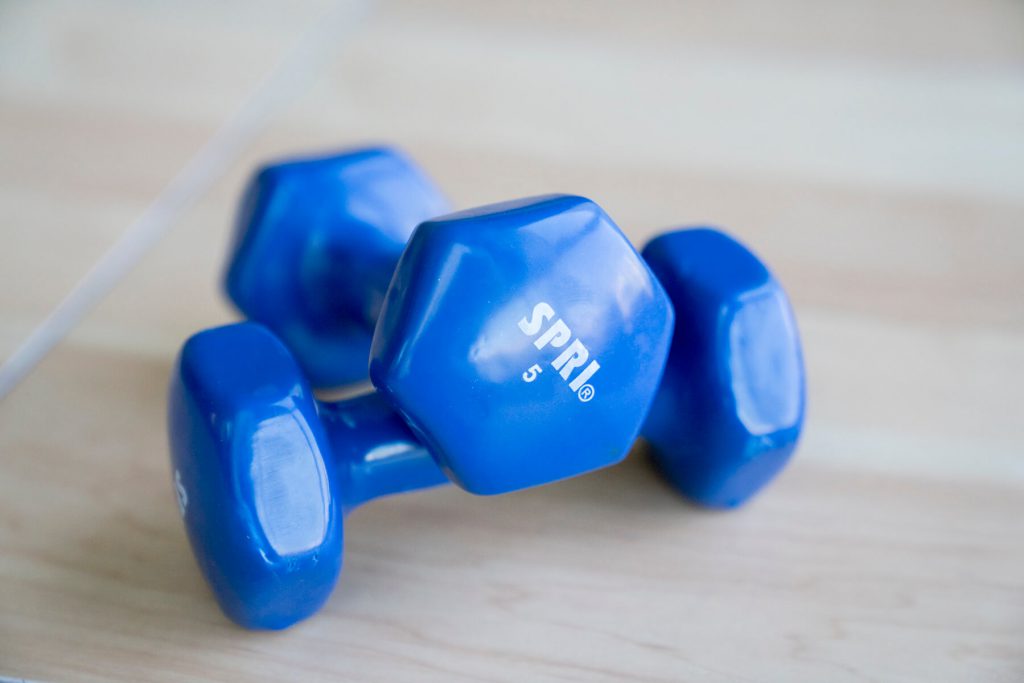
Hand-held weights, also called dumbbells, are a versatile tool for developing overall muscular strength and endurance. Participants should begin working with a weight that is appropriate for their fitness level and move to heavier weights as they build higher levels of muscular strength and endurance.
Hand-held weights are gravity resisted, and the combination of weight selection, lever use and speed variations can increase or decrease the effectiveness for muscle-specific strength improvements.
When selecting the proper hand-held weights, take the following guidelines into consideration:
- Is there appropriate muscle contraction throughout a full range of movement without a wrist break? – too heavy
- Do the arms simply fall or swing, without control, when returning to the start position? – too heavy
- Is the exercise being performed without any discernible muscle contraction? – too light
Risk vs. benefit guidelines:
- Participants may use a different sized weight in each hand if desired. This practice may be appropriate for individuals managing pain, a chronic condition, or recovering from an injury.
- Maintain neutral wrist while performing movements with resistance.
- The use of wrist or ankle weights is not recommended as their prolonged use during exercise can cause stress to the shoulder, hips and knees, making class participants susceptible to overuse injuries of these joints.
SilverSneakers Ball
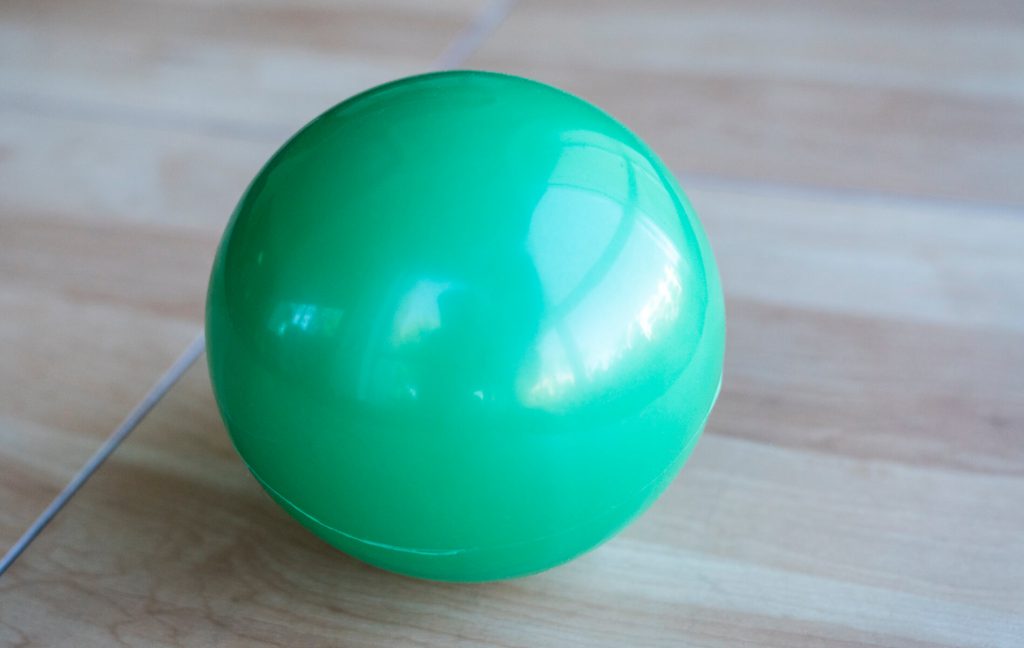
A six- to nine-inch SilverSneakers ball that is semi-soft is used in Classic to increase strength, dexterity and range of motion. The ball is the perfect tool for use in hand-eye coordination activities. Not only does the ball create a fun environment, its versatility is a key component when programming exercise options and modifications for class participants.
Selecting the proper SilverSneakers ball:
- The SilverSneakers ball can be inflated from six to nine inches in diameter. This variability offers greater or lesser surface area and resistance for small or large hands and differences in grip strengths.
Risk vs. benefit guidelines for ball exercises:
- Maintain a neutral wrist in order to avoid forced hyperextension of the wrist.
- Cue for the ball to be placed “between the legs” rather than “between the knees” while performing inner thigh press.
- Avoid walking in any direction with the ball placed between the legs. Walking with the ball between the thighs reinforces a “shuffling” walking gait and presents an elevated fall hazard.
- It is not recommended for individuals to perform movement or exercise of any kind while seated on a large fitness stability ball.
- Avoid any movement or exercise that causes more than 30 degrees of cervical extension beyond anatomical position. This type of movement is considered high-risk, as repetitive practice can create elevated risk of neck injury. Avoid dropping the head back excessively in cobra pose or throwing the ball too high during a ball toss.
Encourage participants to use good judgement and work within their skill levels especially when using resistance tools. All resistance tool options should challenge each participant without compromising form, exercise technique or safety.
Practical Applications – Using resistance tools for maximum benefit
When programming exercise options for SilverSneakers Classic, it is beneficial to consider several factors in order to get the most benefit for each movement.