
Every SilverSneakers Circuit class incorporates movement using four basic tools:
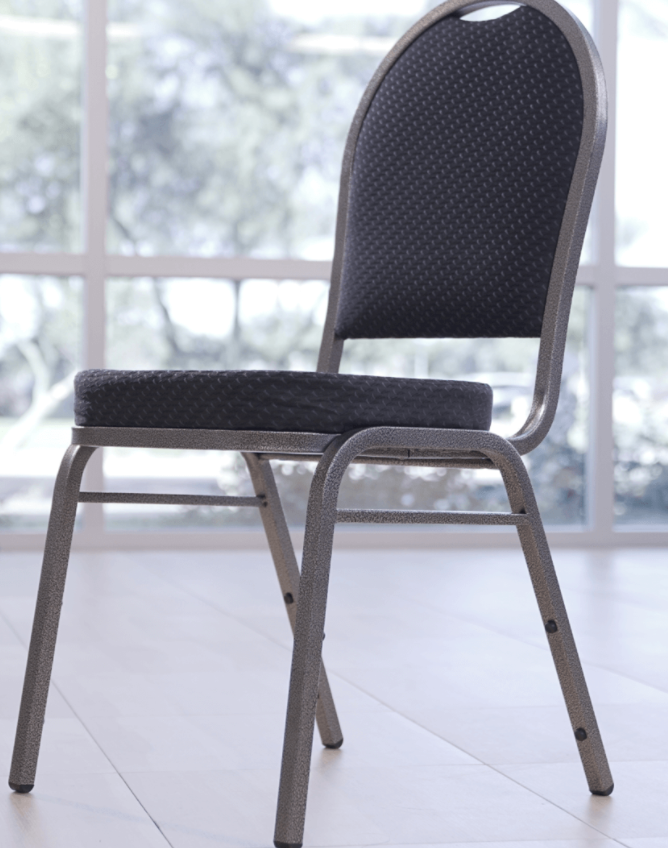
- A SilverSneakers chair
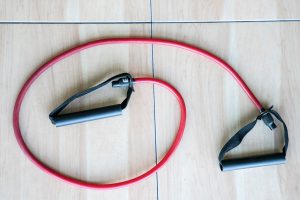
- Elastic tubing with handles
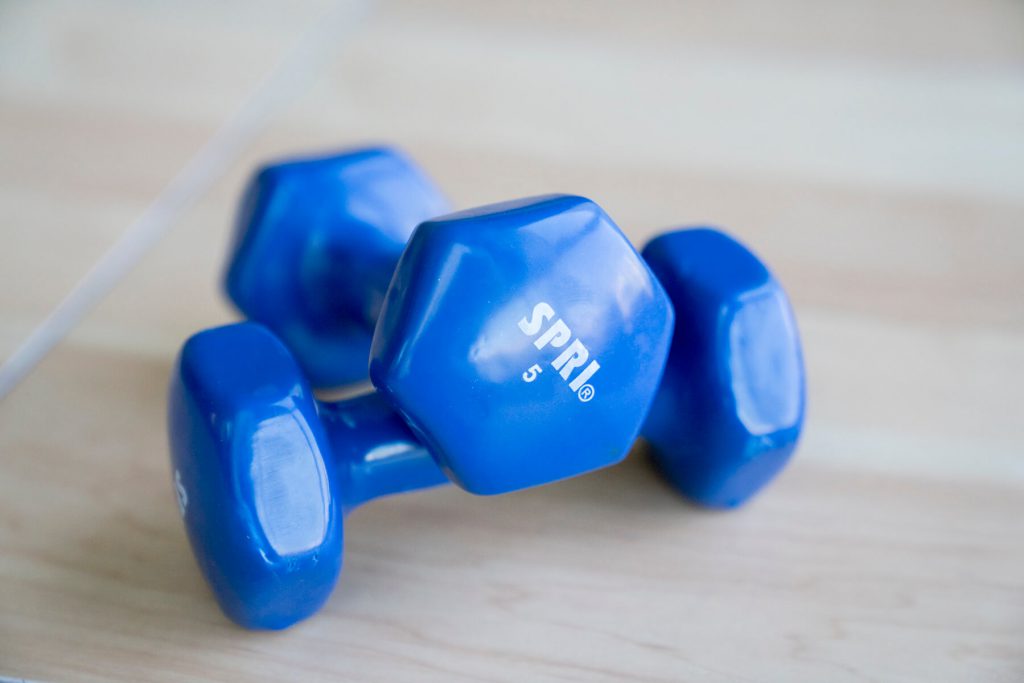
- Hand-held weights
- A six- to nine-inch SilverSneakers ball
Chair
The recommended SilverSneakers chairs are straight-backed, armless, steel-gauge chairs with non-contoured seats. Every participant in the class should have a chair.
Circuit is a standing class with the SilverSneakers chair used for the following:
- Resistance tools and water are placed on the chair to be within easy reach from a standing position
- Standing support from behind or to the side of the chair
- Seated support for the Cool-Down (if participants need additional stability)
- Seated support for Final Stretch and Relaxation segments
Elastic Tubing with Handles:
Here’s a helpful way to select the proper elastic tubing with handles. When holding the elastic tubing with both hands at shoulder-width distance with the tube at shoulder height, if the tubing can be stretched 2½ times beyond its original length multiple times, it is too light, and a heavier resistance should be recommended.
When using the tubing, take the following guidelines into consideration:
- Encourage participants to use red and blue elastic tubing with handles for increased challenge.
- The elastic tubing with handles should not be wrapped around any body part, including hands, arms and legs. Wrapping and then pulling on the tubing can create skin tears and bruising for older adults.
- Maintain neutral wrist position during all exercises.
- Consistently check for wear and tear on the tubing as it can become damaged and break.
- When anchoring tubing under the foot, the foot must be firmly planted on the floor.
- Be sure to secure the handles of the tubing during class so they do not create a tripping hazard for participants.
Color
Weight
Suggested Audience & Tips
Yellow
3-5 lbs
Least resistance, appropriate for beginners or those with injury
Green
6 lbs
Appropriate for beginners and moderately fit members
Red
10 lbs
Appropriate for stronger members
Blue
15 lbs
Appropriate for highly fit members
Hand-Held Weights:
Hand-held weights ranging from one to eight pounds are appropriate for resistance work. Most participants begin with lower weights and progress to heavier weights. Encourage participants to use three-to-eight-pound hand-held weights to help increase their muscular endurance.
When selecting the proper hand-held weights, take the following guidelines into consideration:
- Is there appropriate muscle contraction throughout a full range of movement without a wrist break? (Too heavy)
- Do the arms simply fall or swing, without control, when returning to the start position? (Too heavy)
- Is the exercise being performed without any discernible muscle contraction? (Too light)
SilverSneakers Ball:
A six-to-nine-inch SilverSneakers ball that is semi-soft is used to increase the strength and range of motion of the smaller muscles of the body. This diverse tool is used for fun, hand-eye coordination activities, as an anchor for multi-muscle coordination. The ability to use this tool for both the upper and lower body to increase muscular endurance increases its versatility.
When using the ball, take the following guidelines into consideration:
- Maintain a neutral wrist to avoid forced hyperextension of the wrist.
- Cue for the ball to be placed “between the legs” rather than “between the knees” while performing inner thigh press.
- Avoid walking in any direction with the ball placed between the legs. Walking with the ball between the thighs will reinforce a “shuffling” walking gait and present an elevated fall hazard.
- It is not recommended for individuals to perform movement or exercise of any kind while seated on a large fitness stability ball.
- Avoid any movement or exercise that causes more than 30 degrees of cervical extension beyond anatomical position. This type of movement is considered high-risk, as repetitive practice can create elevated risk of neck injury. For example, avoid dropping the head back excessively when throwing the ball overhead during a ball toss. Encourage participants to “track the ball with their eyes” vs. lifting their head to see the ball.