
Water is the most biologically important molecule in the body, as important as oxygen. It is involved in virtually every function of the body. Listed below are several important functions that involve water:
- Regulating body temperature
- Protecting vital organs
- Digesting food
- Absorbing nutrients
- The means for all biochemical reactions
- Primary constituent of most cells and blood
- Lubricant that enables all movement
- Providing shock absorption with walking and other movement
Dehydration
Dehydration in older adults has been linked with an increase in risk of falling, confusion, kidney stones, urinary tract infections, and constipation, as well as an increased risk for bladder and colon cancer. Dehydration also affects mental and emotional health, such as depression, irritability or having low energy. Physical, mental and emotional well-being all depend on staying well hydrated.
With age, some people can lose their sense of thirst. Certain medications may require an increase in fluid intake, while some diuretics or laxatives may increase water loss. Maintaining normal hydration may become a challenge. Individuals who have been advised to limit how much they drink, or who are prescribed a new medication, should talk to their doctor about adequate hydration.
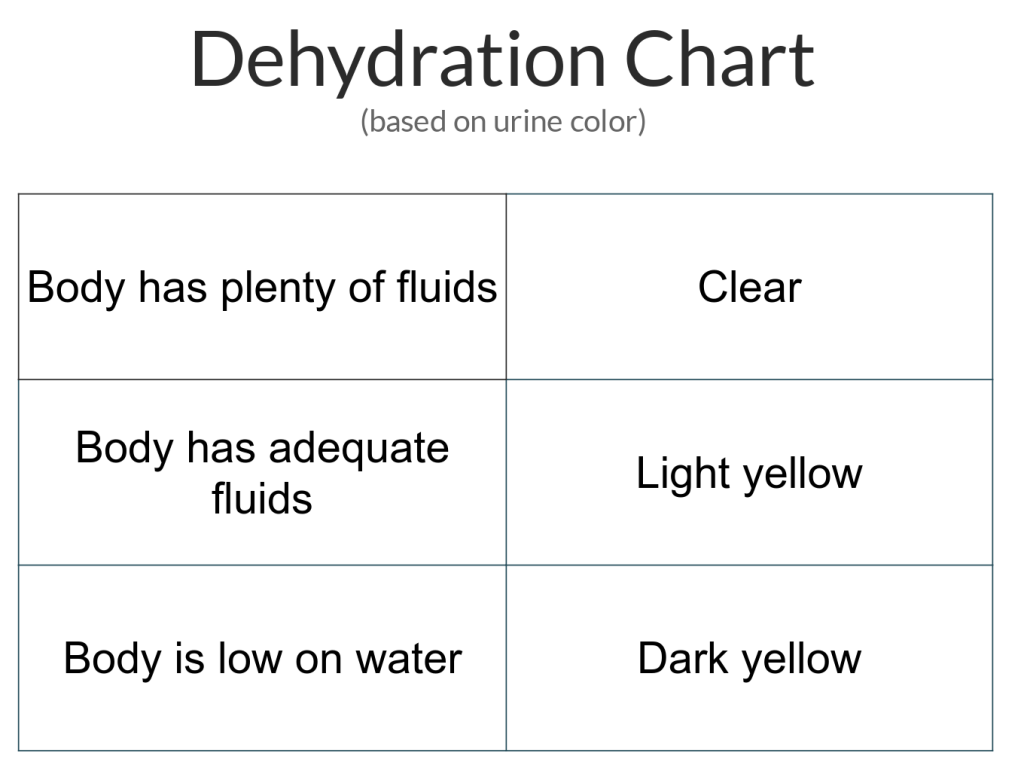
If the sensation of thirst is presenting a problem staying properly hydrated, it may be possible to estimate hydration needs by looking at the color of the urine expelled. The chart below illustrates a range of urine colors. A properly hydrated body expels very light yellow colored urine, while darker colors may indicate degrees of dehydration.
Some foods may cause a change in urine color or odor, such as beets, asparagus, or foods that may contain dyes. Medications may also affect urine color and odor. All questions and concerns should be directed to a medical professional.
Some signs of dehydration
- Dizziness, especially upon standing
- Unusual weakness or fatigue
- Apathy or irritability
- Dry armpits
- Sunken eyes
- Dark yellow or brownish urine of smaller volume than normal
- Dry mouth
- Greater thirst than usual (or sometimes absence of thirst)
- Rapid weight loss from one day to the next
The human body constantly loses water and electrolytes throughout the day. In addition to the obvious losses that occur when we sweat, the kidneys are continually producing urine that slowly accumulates in the bladder. Water molecules steadily seep through the skin, a process different from sweating. Bowel movements contain water. Additionally, water is lost with each exhalation.
It is important to stay hydrated during exercise because of the increased loss of water through sweat and heavy breathing. SilverSneakers instructors can help their class participants with improving hydration by cueing for a water break during class. Instructors who teach the SilverSneakers signature class formats are required to cue three water breaks during class.
Instructor tip: Those who teach SilverSneakers BOOM™ or approved SilverSneakers FLEX® class formats are encouraged to cue for water breaks frequently during class.
Instructors should be a positive example by bringing water with them to class and taking regular sips of water throughout the workout. It is also beneficial to remind participants to drink regularly throughout the rest of their day and on days they are not exercising.
The National Institute on Aging provides the following tips to stay hydrated throughout the day:
- Be more aware of adding liquids throughout the day
- Drink a full glass of water first thing in the morning
- Take sips of water, milk or juice between bites during a meal
- Have a cup of low-fat soup as an afternoon snack
- Drink a full glass of water if you need to take a pill
- Have a glass of water before you exercise or go outside to garden or walk, especially on a hot day
- Drink fat-free or low-fat milk, or other drinks without added sugars
- Those who drink alcohol should do so sensibly and in moderation (up to one drink for women and up to two drinks for men, per day)