
Hearing the word “fat” often conjures up many negative thoughts. While most people would probably like to do with a little less fat on their bodies, it’s important to understand the vital role of fat and essential fats in healthy aging.
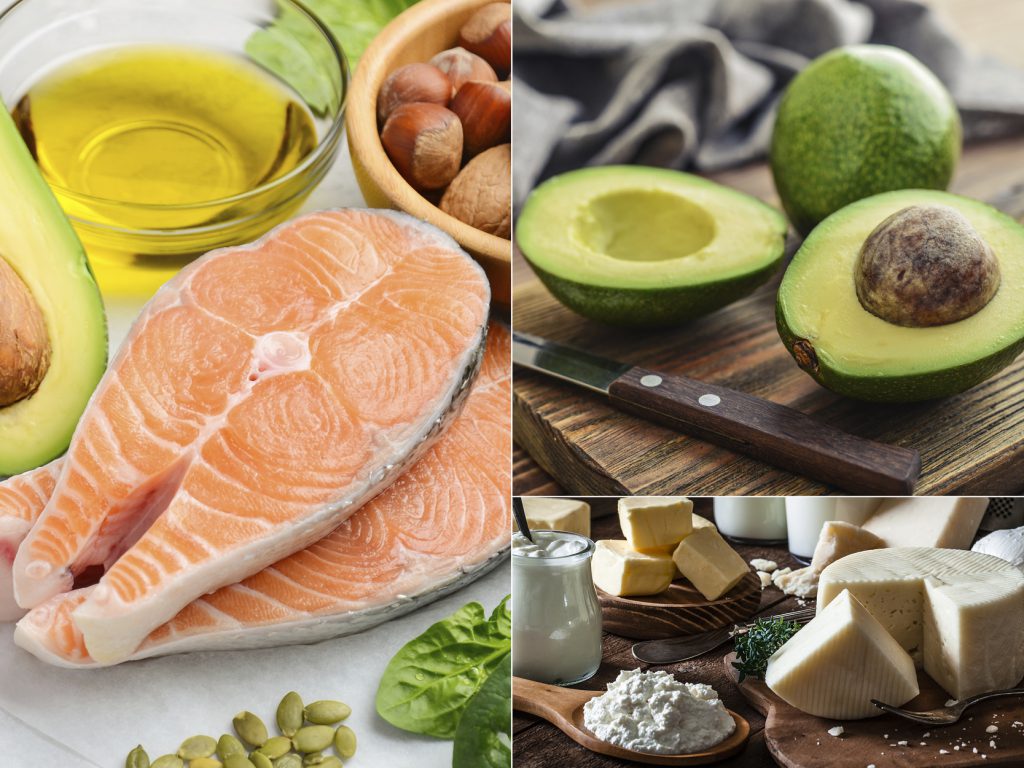
Fat serves many critical functions in the body:
- Insulation and protecting internal organs with a layer of padding: Think of how important it is to wrap a delicate vase before shipping or transporting. Our vital organs need protection from the rigors of daily activity.
- Cell structure: Fat provides structural support for cell membranes, helping to keep some substances out and allowing others to enter the cells.
- Brain function and nerve transmission: The human brain is 50-60 percent fat. The adult brain needs fat to maintain the membrane and myelin sheaths surrounding these cells. The myelin sheath is a fatty insulating layer that speeds transmission of nerve impulses along neurons. Neurons are specialized cells that transmit nerve impulses.
- Vitamin absorption: Consuming healthy fats with fresh vegetables helps the body absorb valuable nutrients found in vegetables, such as vitamins A, D, E and K, which are classified as fat-soluble vitamins. Fat is required in the diet for these nutrients to be absorbed by the body. A deeper discussion on the benefits of vitamins and minerals will be discussed in Lesson 2.6.
- Other important roles of fat for optimal aging include blood clotting, muscle movement, immune processes and hormone production.
Types of fats
Fats can be classified in many ways. Simply classifying a fat as “good” or “bad” doesn’t tell the whole story. Some fats are healthier options than others. Where the fat comes from, the food source, plays an important role in its health benefits.
Fats added to packaged foods to promote a longer shelf life, such as trans fats or “partially hydrogenated vegetable oils”, should be limited. While the fat in avocados, nuts, and even full fat dairy products can have a healthy role in optimal aging, the key is moderation. Individuals with health or weight loss concerns should always be directed to consult their physician for specific diet recommendations.
Certain fats cannot be produced by the body and must be obtained from the food we eat. These essential fatty acids are omega-3 and omega-6. Most fat-containing foods contain a mixture of saturated and unsaturated fats. Very few are 100% of one type of fat.
Saturated fats: Generally solid at room temperature
- Animal fats such as red meat
- Full fat dairy products
- Tropical vegetable oils such as palm kernel and coconut
Unsaturated fats: Often liquid at room temperature
- Monounsaturated fats (also called omega-9 fats): Olives, olive oil, avocados, nuts such as almonds, peanuts, pecans and macadamia nuts, canola oil and sesame oil
- Polyunsaturated fats (also called omega-6 fats): Poultry, eggs (with the yolk), some nuts, flaxseed and flaxseed oil, hempseed and hempseed oil, grapeseed, pumpkin and sunflower seeds, pine nuts and pistachios
- Polyunsaturated fats (also called omega-3 fats): Cold water fish such as salmon, sardines and anchovies; avocados, certain dark green leafy vegetables such as kale and spinach
Trans fats: Listed as “partially hydrogenated” oil on food ingredient lists. A manufacturing process that makes unsaturated fat solid at room temperature, with a goal of prolonging shelf life.
- Some commercially produced baked goods such as cakes, pies, and cookies; margarine; some pre-packaged foods such as cookies and crackers; fried fast foods; some pre-packaged frozen meals
- Meat, fish, eggs, dairy fat