
Foods containing carbohydrates are part of a healthy diet. Important nutrients from carbohydrates found in whole grains, vegetables, fruits, beans and legumes, and some dairy foods help the body function well. Carbohydrates, or carbs, are the body’s preferred source of energy. The key to a healthy relationship with carbohydrates is choosing quality carbs and being aware of portion sizes.
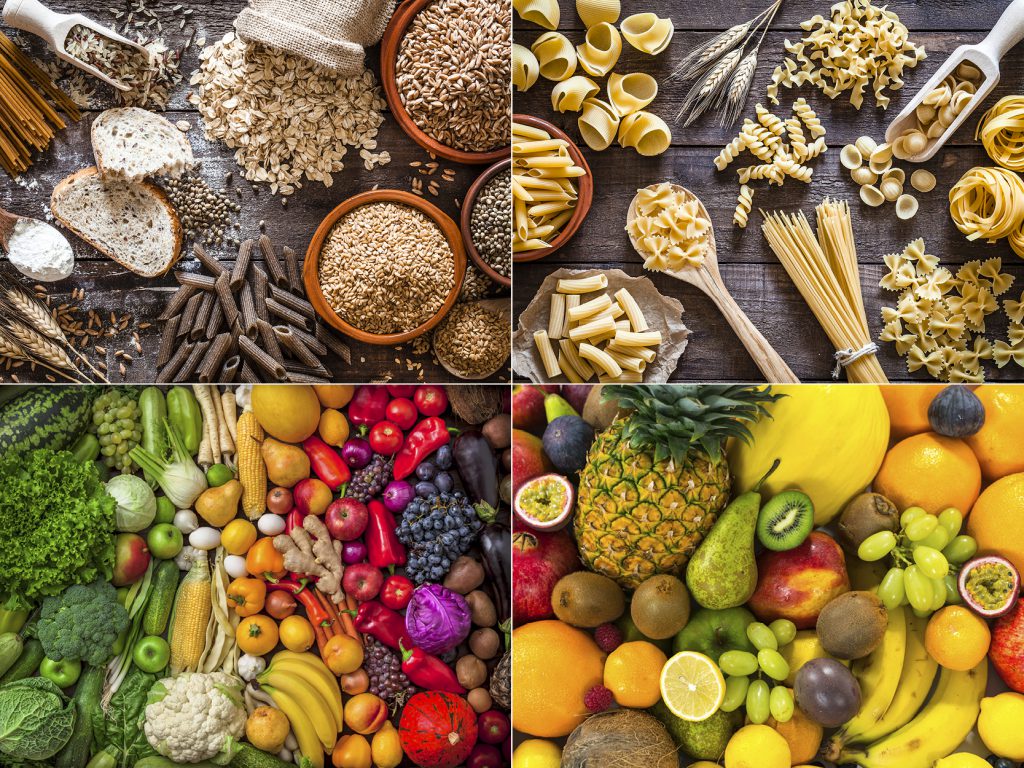
The body converts sugar compounds and starches from carbs, into simple sugars, glucose being the predominant sugar and the basic building block of most carbohydrates. Glucose is the primary source of energy for the brain, nervous system and red blood cells. The liver and muscles store carbs in the form of glycogen, which is a main source of fuel for working muscles in the early stages of exercise.
Carbohydrates have been highly scrutinized, with many fad diets promoting low or no carbohydrates for rapid weight loss. This has caused many people to view carbohydrates as “bad” for a healthy diet. Not all carbs are created equally. Sugary, refined carbs such as candy, pastries, cakes and cookies, and highly-processed and refined carbs are the type that should be reduced for a healthier diet. The carbs found in vegetables, fruits, whole grains and dairy products provide important vitamins and minerals, phytonutrients (a nutrient in plant foods that has disease-preventative and disease-fighting properties), and fiber, all important components of a healthy diet and optimal aging.
There are three main types of carbs: sugars, starches and fiber. Carbohydrates are generally classified as simple or complex based on their chemical makeup and how the body uses them. Both classifications contain healthy carbohydrates.
Simple carbohydrates are broken down quickly by the body to be used as energy. Simple carbs are found naturally in foods such as fruits, some vegetables, milk and milk products. Fruits and vegetables are necessary for good health. The vitamins, minerals and other nutrients contained in these foods complement the natural sugars. The fiber in fruits and vegetables changes the way the body processes those sugars and slows down their digestion. Simple carbs such as candy, sugars added during food processing and refining, table sugar, syrups, and sugary soft drinks provide little to no quality nutrients and are the type of carbohydrate that is recommended to be consumed sparsely.
Complex carbohydrates are made up of sugar molecules that are strung together in long, complex chains, which usually take more time for the body to break down and use. Examples include whole grain breads and cereals, brown and wild rice, quinoa, starchy vegetables, and legumes. Complex carbs can provide a more consistent amount of energy.
Both simple and complex carbohydrates can be healthy sources of energy for optimal aging. The keys to success include choosing nutrient dense carbohydrates and being aware of portion sizes.
Added sugars and sweeteners
While it is important for everyone to consume less added sugar, it is important to understand that this doesn’t necessarily include the naturally occurring sugar found in fruits and dairy products. These natural sugars also come packaged with important vitamins, minerals, water and fiber, which affect how the body processes these components. Added sugars provide calories but few or no essential nutrients, while also causing spikes and drops of energy. Many packaged foods add sugar, making it difficult to get the proper amount of nutrients without eating too many calories and causing weight gain.
Some added sugars are positioned as healthier than others. Examples in packaged products include cane sugar, honey, brown sugar, agave, coconut sugar, fructose and raw sugar. Natural sources of sugar such as local honey, pure maple syrup and what occurs naturally in fruit do contain healthful nutrients. Sugars added to processed foods are often stripped of these nutrients and in excessive amounts. Learning how to identify added sugars and knowing how much sugar is in a food can help guide healthier choices.
Fiber
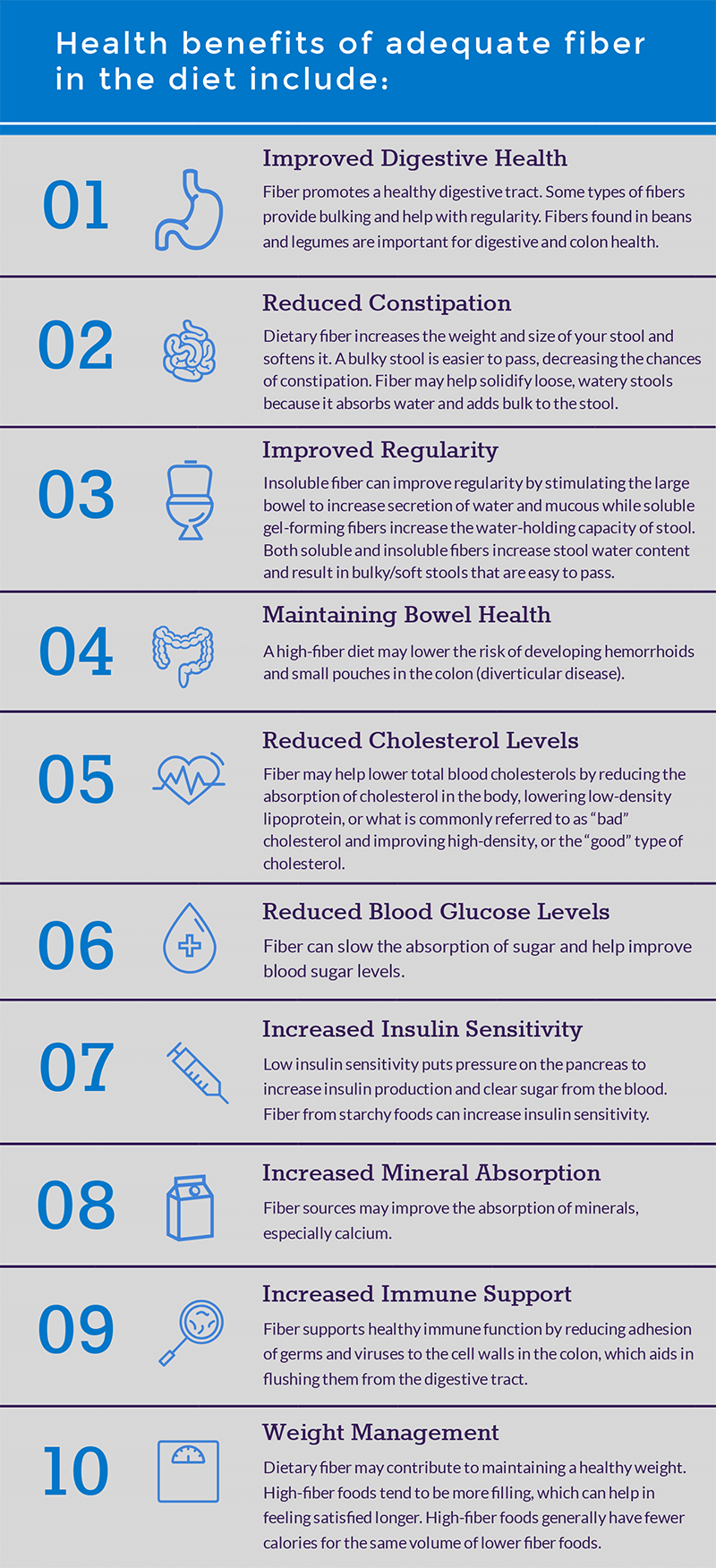
Dietary fiber or “roughage” is the portion of plant-derived food that cannot be completely broken down by digestive enzymes. Fiber isn’t digested by the body. Instead, it passes relatively intact through the stomach, small intestine and colon and out of the body. Fiber is mainly found in fruits, vegetables, whole grains and legumes, and is best known for its ability to prevent or relieve constipation. Foods containing fiber can provide other health benefits such as helping to maintain a healthy weight, helping to control blood sugar levels and aiding in lowering cholesterol.
Fiber is commonly classified as soluble, meaning it dissolves in water, or insoluble, which means it does not dissolve in water.
- Soluble fiber – dissolves in water to form a gel-like material. It can help lower blood cholesterol and glucose levels. Soluble fiber is found in oats, peas, beans, apples, citrus fruits, carrots, barley and psyllium (derived from the seeds of plantago ovata).
- Insoluble fiber – promotes the movement of material through your digestive system and increases stool bulk. Good sources of insoluble fiber are whole wheat flour, wheat bran, nuts, beans, and vegetables such as cauliflower, green beans and potatoes.
Most plant-based foods are good sources of both soluble and insoluble fiber, such as oatmeal, beans, celery, avocado, sweet potatoes and broccoli. The amount of each type of fiber varies in different plant foods. To receive the greatest health benefit, it is recommended to eat a wide variety of high-fiber foods.
Tips to adding more fiber to your diet:
Begin with breakfast
- High-fiber breakfast cereals
- Whole grain toast topped with sliced tomato and avocado
- Add a tablespoon of wheat bran or flaxseed to yogurt
Look for whole grains
- Breads that list whole wheat, whole wheat flour or whole grain as the first ingredient on the label
- Experiment with brown rice, wild rice, barley, whole wheat pasta, bulgur wheat
Add to baked goods
- Substitute whole grain flour for half or all the flour when baking
- Add unprocessed wheat bran, uncooked oatmeal, or flaxseed to muffins, cakes and cookies
- Substitute some of the oils with prune baby food or applesauce
Increase legumes
- Add beans, peas and lentils to your plate
- Add beans to canned soup
- Sprinkle canned chickpeas over a salad
- Layer a fiesta bowl with black beans, fresh veggies, whole wheat tortilla chips and salsa
Eat more fruits and vegetables
- Add blueberries to yogurt
- Slice an apple, pear or avocado
- Eat a banana
- Sauté fresh vegetables, sprinkle with feta or goat cheese, wrap in a whole grain pita or tortilla
- Make a simple frittata by sautéing frozen spinach, frozen broccoli, frozen corn, and herbs of choice, pour liquid egg white over the top, sprinkle with parmesan cheese
Make snacks count
- Raw vegetables and hummus
- Celery and apple with peanut butter
- Whole grain crackers
- Popcorn
- A handful of nuts or dried fruit
Hydrate
- Fiber works best when it absorbs water
Getting enough healthy carbohydrates is important. Without carbs, the body breaks down protein for energy. When protein is being used for fuel it is not able to perform its more crucial role of building or maintaining muscle, and other critical functions for healthy aging.