To make SilverSneakers Splash classes both effective and safe, we have created a list of exercises to avoid. Although these exercises may also be high risk for other classes you teach, this specific list was created with SilverSneakers members in mind.
The following checklist of high-risk movements for Splash is not exhaustive and does not include every high-risk movement that can be executed. While these movements should be avoided, continue to apply risk vs. benefit exercise selection principles when choosing any movement and exercise options for your Splash classes.
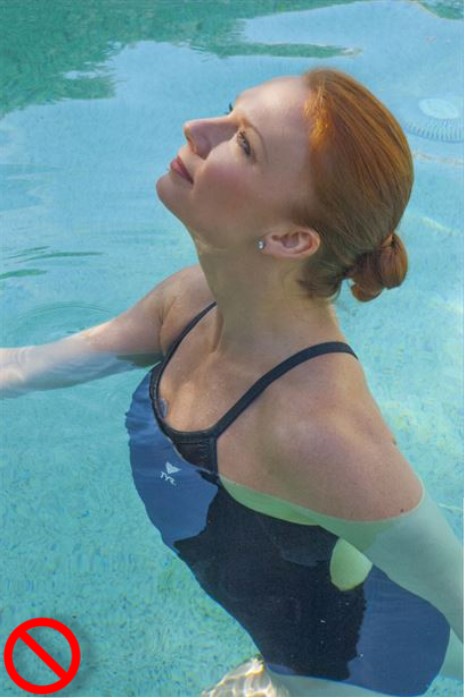
Avoid excessive or forced hyperextension and hyperflexion of neck, wrists, and knees.
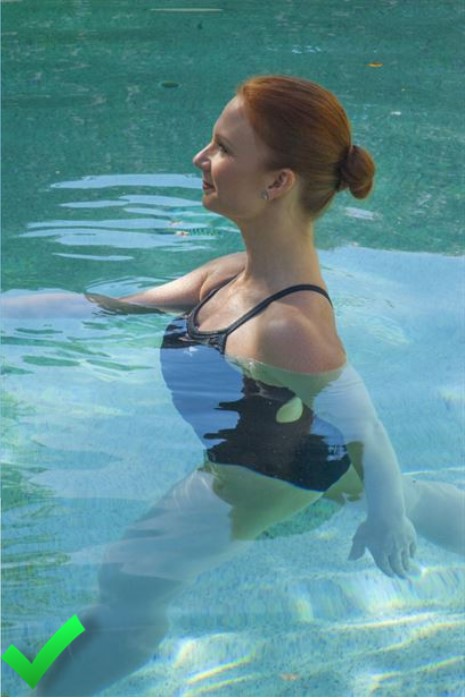
Avoid neck hyper-extension greater than 30 degrees.
Monitor front row students for cervical hyperextension. Teach on all sides of the pool when possible.
Avoid positioning students on the pool’s slope, as it can cause knee hyperextension after multiple heel strikes. Mark the slope with a cone, noodle or rope to make it easily visible.
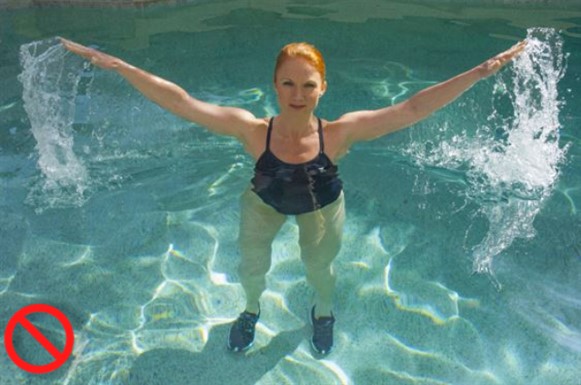
Avoid rapid shoulder abduction and hyperextension.
Avoid forcing the arms from below the water to above the surface. This may cause stress to the shoulder joint due to rapidly breaking the surface of the water.
Minimize overhead, out-of-water movements. Use the water for strength and resistance.
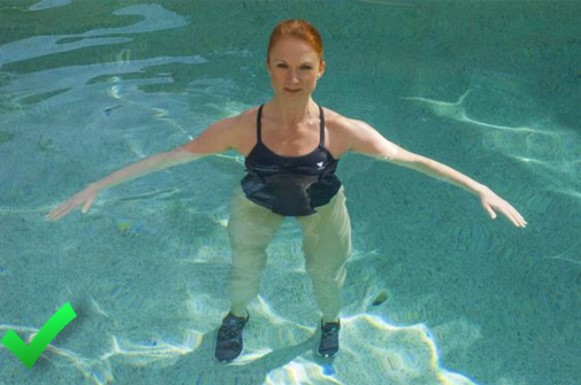
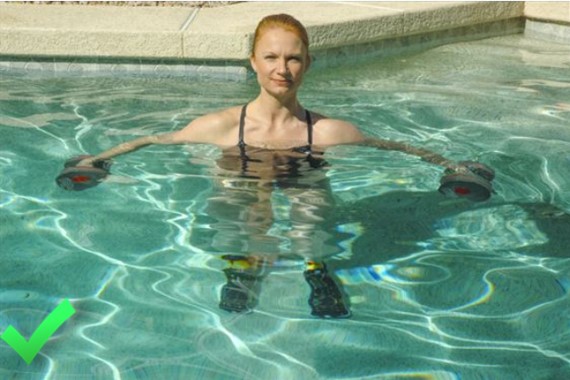
Avoid power movements with the shoulder abducted and in hyperextension with external rotation. Cue “arms at sides where you can see your hands.”
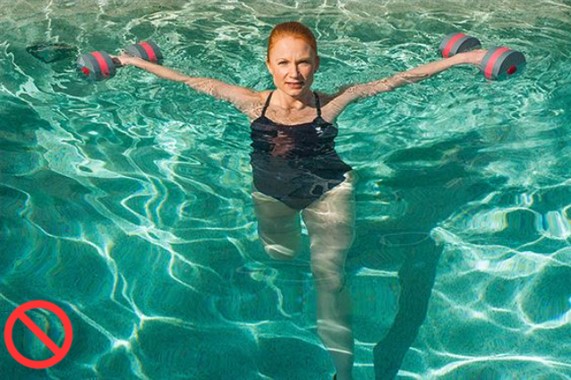
Avoid sustained shoulder abduction.
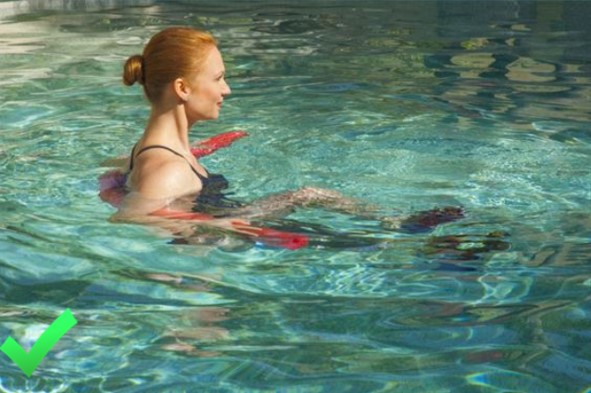
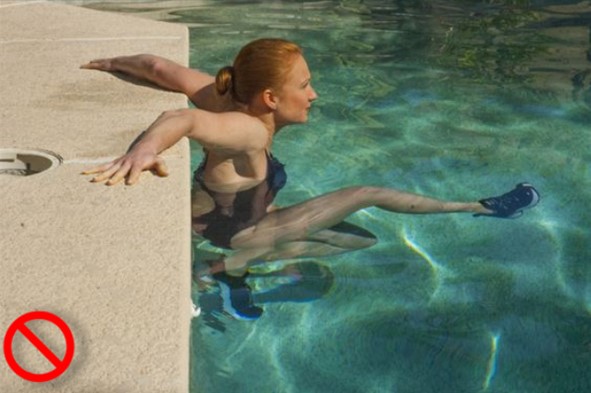
Do not hang from the pool wall to perform stretching and/or endurance exercises.
Avoid abducting the shoulders in a suspended position while holding hand buoys.
Avoid overuse of a joint or muscle group.
Avoid excessive submersion of the Splashboard. Submerge Splashboard 12-15 repetitions, then return to the surface to recover working muscles.