
Falls become more common with age, largely because certain risk factors tend to increase over time. These risk factors are often grouped into three categories: biological, behavioral, and environmental. While each category can independently raise the likelihood of a fall, most falls occur due to a combination of multiple factors working together.
Biological Risk Factors
These are physical or medical conditions that affect the body’s ability to maintain balance and mobility:
- Diminished sensory function (e.g., vision loss, inner ear dysfunction, reduced sensitivity in the feet)
- Medication side effects or the interaction of multiple medications (polypharmacy)
- Chronic or acute health conditions (e.g., Parkinson’s disease, stroke, dementia, diabetes, seizures, hypothyroidism, hypoglycemia)
- Decreased muscular strength, particularly in the lower body
- Slower reaction time, making it more difficult to recover from a loss of balance
- Reduced flexibility, affecting range of motion and postural control
- Cognitive changes or decline, which may impair judgment, attention, or awareness of surroundings
Behavioral Risk Factors
These involve individual choices or habits that increase the likelihood of a fall:
- Physical inactivity, leading to deconditioning, weakness, and poor balance
- Risky behaviors, such as standing on unstable surfaces or reaching for objects beyond safe limits
- Alcohol use, which can impair coordination, judgment, and reaction time
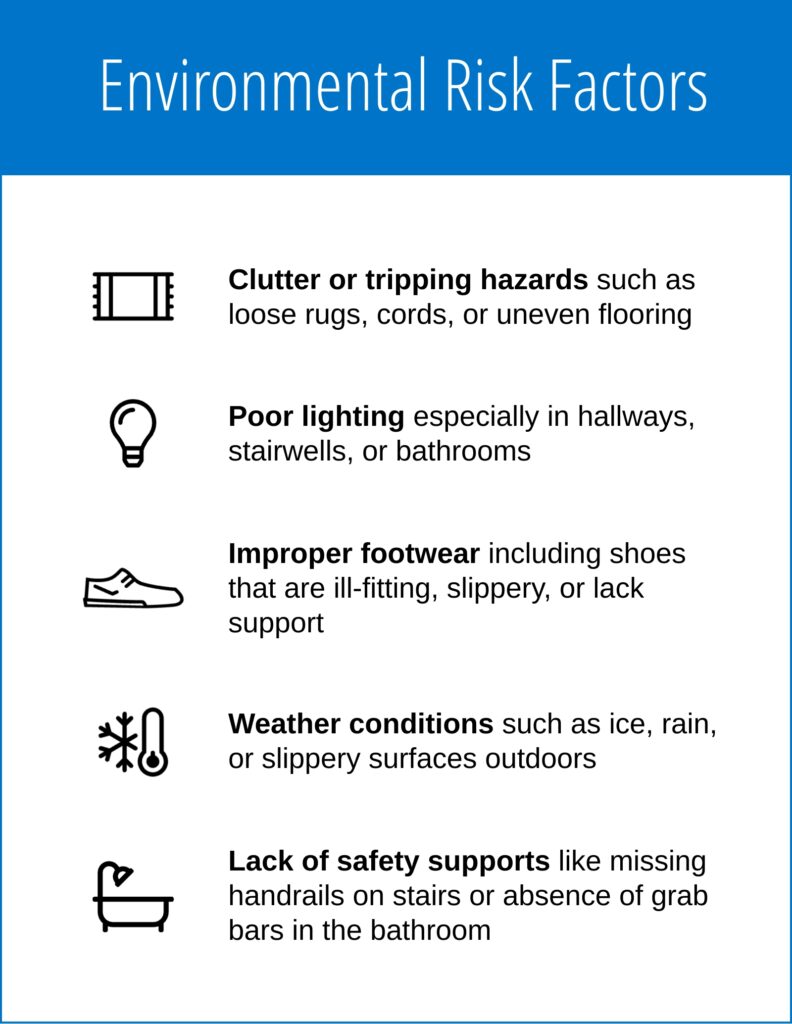
Environmental Risk Factors
These are environmental hazards that may contribute to falls:
- Clutter or tripping hazards, such as loose rugs, cords, or uneven surfaces
- Poor lighting, especially in hallways, stairwells, or bathrooms
- Improper footwear, including shoes that are ill-fitting, slippery, or lack support
- Weather conditions, such as ice, rain, or slippery surfaces outdoors
- Lack of safety supports, like missing handrails on stairs or absence of grab bars in the bathroom
Understanding the Cumulative Risk
Falls are rarely caused by a single factor. More often, it’s the interaction between multiple risk factors, such as poor lighting combined with reduced vision, that leads to a fall (Rubenstein & Josephson, 2006). The greater the number of risk factors, the higher the likelihood of falling (Tinetti, Williams, & Mayewski, 1986).
Many of these risk factors are modifiable. Among all available interventions, exercise remains one of the most powerful tools to reduce fall risk. Research consistently shows that the greatest impact comes from combining three key strategies: risk assessment, education, and targeted exercises (Rubenstein & Josephson, 2006).
The SilverSneakers® Well-Balanced program delivers a comprehensive, research-informed approach designed to help older adults understand their risk, build resilience, and move safely and confidently.