
Safe exercise selection highlights a demonstrated purpose for the exercise, the ability to make adjustments based on observation, options for varying intensity levels and benchmarks for demonstrated success. Exercise selection should also highlight safe and easy-to-follow transitions.
To achieve these objectives, consider class planning using the following steps:
- Write out the class format and note the timing of each segment. Consider one or two goals for the class. Examples include:
- Improve muscular endurance.
- Practice power training.
- Functional balance.
- Steady state cardio training.
- Cardio training with speed challenges.
- Improve mobility with dynamic flexibility.
Class planning templates are provided in the resource section of every SilverSneakers signature format training. Alternatively, you can download the generic class planning tool below.
Look over the example of timing segments. One example is for a signature SilverSneakers class format and another example is for a traditional FLEX class format, 45 minutes and 60 minutes. These are just examples of how segments could look.
SilverSneakers Circuit
(example)
45m
Today’s goal: Cardio “speed bumps”
BPM: 124-128
-
Warm-up and range of movement: 8m
-
Work: 24m
-
Cardio 4m
-
Strength 4m
-
Cardio 4m
-
Strength 4m
-
Cardio 4m
-
Strength 4m
-
Cool-down: 5m
-
Final stretch: 5m
-
Relaxation: 3m
FLEX Strength & Balance*
*Example of an approved FLEX class
45m
Today’s goal: Improve mobility with dynamic flexibility
BPM: 125
-
Warm-up and stretching 8m
-
Work: 17m
-
Dynamic/rhythmic balance 9m
-
Strength 8m
-
Cool-down: 5m
-
Core work: 10m
-
Stretch: 5m
- Decide on the music you will use. Create your own playlist in the Yes!FitnessMusic Go app or select your favorite SilverSneakers or other CD. Make sure you are using the correct BPM for the class format you will be teaching.
- Create your “work.” What exercises or movement combinations will meet the class objectives or the goal that has been set for the class?
- Use the six questions/markers discussed in the Foundations online training (Lesson 4.2) to help you decide if an exercise or movement pattern is safe and appropriate for your class.
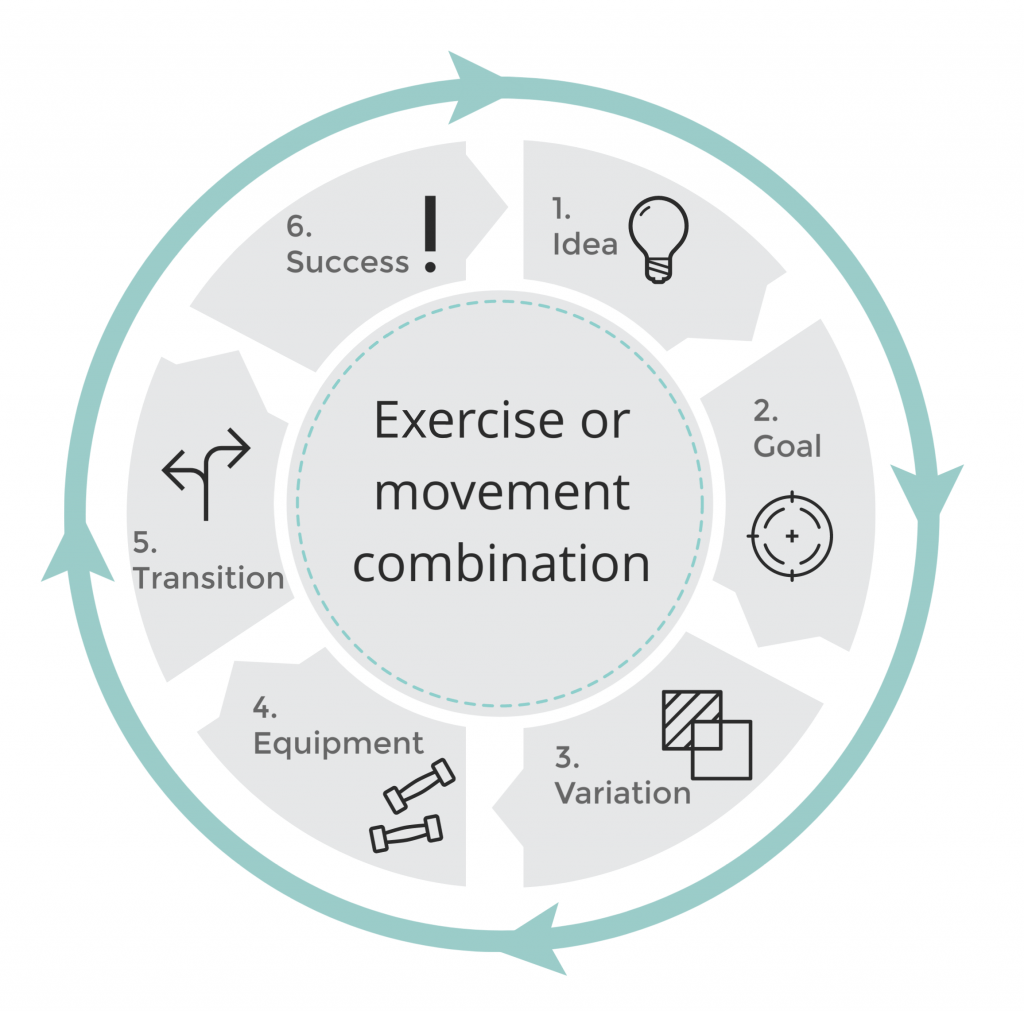
Concept
Question
Idea
What is the idea for the movement?
Goal
What is the goal or benefit of the movement?
Variation
Does/Can this exercise need to be adapted for intensity variations? How?
Equipment
What resistance tool to use for the best result?
Transition
How much time does it take to set up the movement with the resistance tool? Does it transition easily to another movement?
Success
How do you know it’s successful? Get feedback.
Example of using the six markers for safe exercise selection:
Idea – Add on combination to:
Lower body drill 1:
8ct march in place.
8ct 4x alt tap.
8ct 4x alt knee.
8ct 2x alt double knee.
What is the idea?
Add on idea:
8ct 1x 3-knee repeater + hold third knee.
16ct walk forward and around the chair, back to starting position.
8ct 2x squat in place.
Goal:
Provide a balance and agility challenge.
Variation:
Regression: 16ct walk in place.
Equipment:
SilverSneakers Classic or Circuit: chair.
FLEX class: if no chair, maybe traveling forward-backwards or a diagonal variation.
Transition:
Start standing on the right side of the chair for stability support.
Begin combination on right lead leg.
Repeat combination 2-4x. 32ct break to walk over to left side of chair and repeat combination from left lead leg.
Success:
Instructor comment: “The first time I practiced this combination with an 8ct walk, 8ct squat and 8ct added exercise. With the walk around the chair, there wasn’t enough time for everyone to successfully get all the way around the chair and back to starting position. I reassessed my drill, took out one exercise, and lengthened the walk around the chair to 16cts.”
- Following the design of exercises and movement combinations for the work segment, plan the warm-up using exercises and movement patterns that will prepare participants for what will be done in the work. Rehearse base movements at slower tempos.
Design cool-down exercises to transition from work to prepare for final stretching. Map out stretching exercises for all the major muscle groups and smaller joints.
- Save class planning notes. Progress the class plan by introducing a variation to the previous week’s exercises.
Tips for a successful presentation
- Use a microphone.
- Face your class. Speak slowly and clearly.
- Rehearse a movement or a movement combination.
- Present one task at a time.
- Cue for action, direction and remaining number of repetitions.
- Avoid presenting choreography that changes too quickly.
- Use your body as an exercise model, and smile!
- Teach from a standing position.
- Evaluate yourself by following these steps:
- Read the Self-assessment tool thoroughly.
- Record your class.
- Are you speaking clearly and enunciating each directive?
- Are you cueing before a move or during the exercise?
- Do you avoid saying “it”?
- Are your participants smiling and having fun?