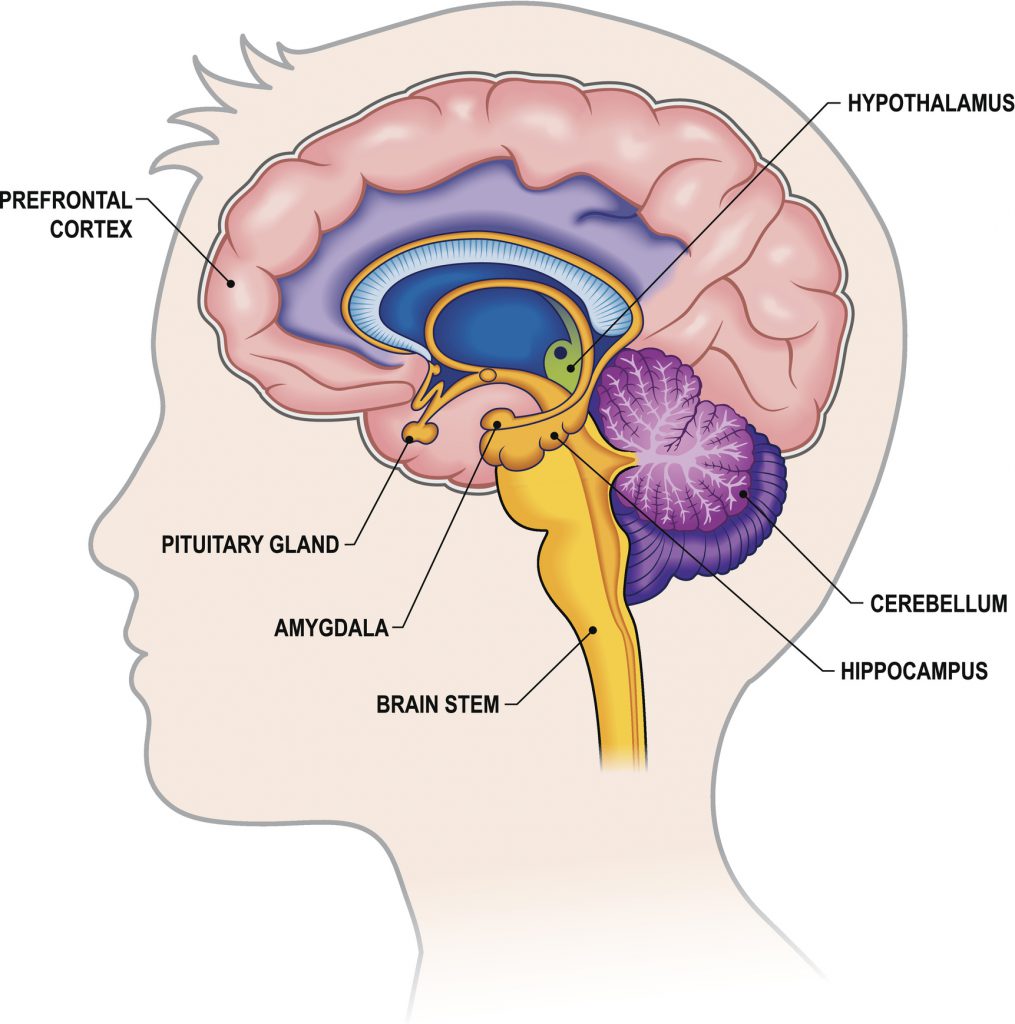
We have already learned that stress is not always detrimental to our health. The stress response can be handy for a quick burst of focus and energy, but when the stress response becomes constant, it actually begins to change the brain. Chronic stress, such as being the primary caregiver for a sick spouse or enduring constant financial worry, can affect the function, structure and even the size of the brain.
Over long periods of time, overexposure to cortisol can create problems in the brain. One area of the brain that is especially vulnerable to cortisol is the seahorse-shaped brain region called the hippocampus. The hippocampus is involved in learning and in the formation of memories. It is also part of the system that determines when a stressor or threat is removed, shutting down adrenal activity so the body’s systems can return back to normal. If the hippocampus is exposed to cortisol on a long-term basis, it can deteriorate, losing its ability to turn off cortisol production effectively.
In addition to making it more difficult to shut down our stress response, long-term exposure to increased levels of cortisol can affect the function and size of the brain. The prefrontal cortex is a primary target for chronic stress. This area of the brain is involved in planning, decision making, problem solving and emotional regulation. Too much exposure to stress hormones can interfere with the connections in this brain region, resulting in working memory loss and even causing the brain to shrink in size (Medina 2018). Over time, long-term stress can result in the generation of fewer new brain cells in the hippocampus, as well. This means chronic stress may make it harder to learn and remember things and may set the stage for more serious issues like anxiety, depression and even cognitive disorders.